AfD and the history of right wing in Germany after World War II
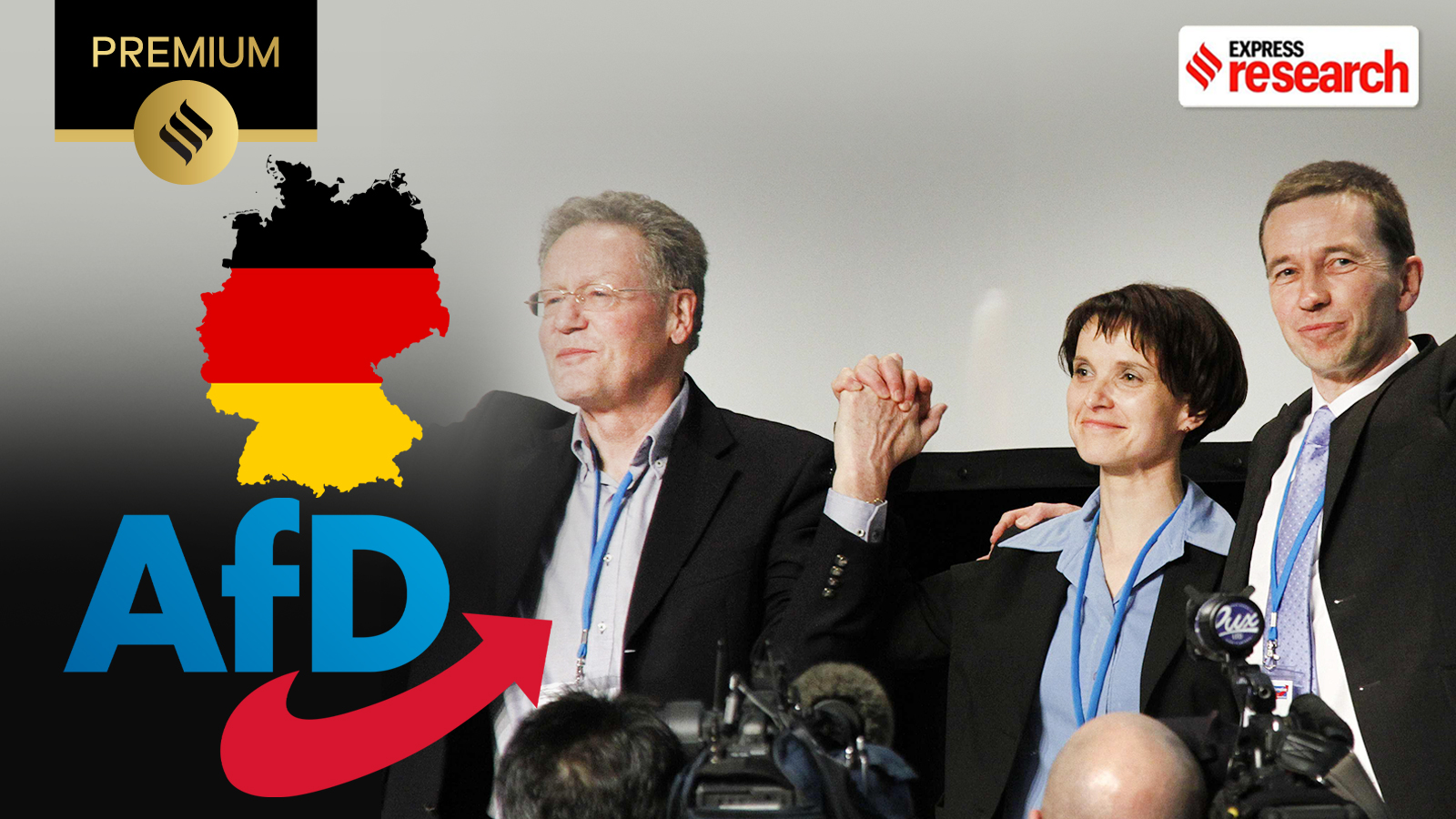
The Alternative for Germany (AfD) is a far-right political party that has gained significant support in Germany since its founding in 2013. Its origins can be traced back to a protest movement against the Christian-Liberal government's euro bailout policies, with former CDU members like Bernd Lucke and Alexander Gauland leading the initiative. Initially, the AfD emerged as a soft Eurosceptic party, critical of the common currency and Merkel's stance on the euro.
However, the party underwent a radical transformation during the 2015-16 refugee crisis. As a "professor party" founded by academics, the AfD was initially described as a "tight Eurosceptic party." But after the crisis, it shifted to a more radical position, becoming a "right-wing populist party that opposes immigration, is critical of Islam, and calls for law and order."
The AfD's transformation further accelerated after Chancellor Merkel's decision to open Germany's borders to refugees fleeing the Syrian civil war in September 2015. This event, coupled with the growing ideological divide between the party's market-oriented founders and its radical national-populist wing, led to a party split in July 2015.
The soft Eurosceptic wing, primarily West German, and the national-conservative wing, led by Frauke Petry, primarily East German, drew support from conservative, national, nationalist, and extremist voices.
By 2016, the AfD's program had converged with those of anti-immigrant populist parties in Western Europe. The party's radicalization has been described as a historical-comparative perspective, with the AfD becoming a "broad catch-all" for various conservative, national, and nationalist viewpoints that no longer felt represented by Merkel's CDU.
Written by urgent.news from The Indian Express's reporting — not their text. Machine-written — may contain errors; check the original before relying on it.