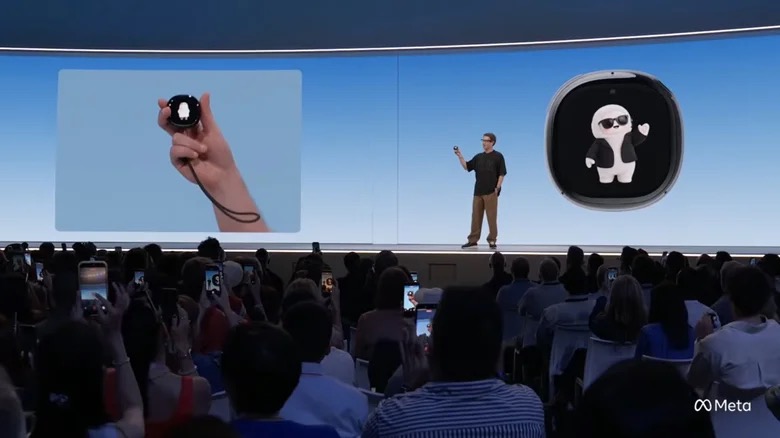
Zuckerberg presents an AI device like an amulet that fits on a keychain
The company's top executive states that the Muse personal assistant is the centerpiece of his vision for AI following the success of its launch.

Meta's CEO Mark Zuckerberg unveiled a new wearable AI device called Muse Charm during the company's annual Connect event. The small pendant-like device, which can be attached to a keychain, features a fingerprint sensor for activation. It includes a screen displaying Muse's avatar and offers real-time voice interaction. The device, aimed at enhancing user interaction with Meta's AI, is set to launch in December.
Muse, announced in May, has quickly become the most downloaded app on both Apple and Android platforms in the United States since its launch two weeks ago. This application provides users with autonomous bots to handle daily tasks such as shopping, travel booking, and finance management. Zuckerberg also announced further features for Muse, including real-time conversational capabilities, and assured the implementation of top-notch privacy and security measures.
The Meta founder has faced increasing pressure from Wall Street due to the billions invested in AI-related infrastructure and talent. Despite a significant drop in stock price following the September launch, Meta's stock has since recovered, reaching a market capitalization of $300 billion. Zuckerberg stated that Muse will enable users to generate income through a free version with plans to earn a small commission on transactions.
Meta aims to make smart glasses and other wearable devices the primary means for consumers to interact with AI, despite criticism over privacy concerns related to its Ray-Ban smart glasses. The glasses, sold in collaboration with EssilorLuxottica, include microphones, cameras, and speakers for taking photos, listening to music, and interacting with Meta's AI.
Meta plans to make Muse available in its smart glasses soon, and users could utilize a hyper-realistic digital avatar representing them in video calls while wearing the glasses. These avatars employ holographic technology that Meta has been developing for years. Meta believes Muse can offer a highly personalized experience if it gains access to user activity data from its social media platforms, but the company will need to convince consumers to link personal data with these bots, which operate using Meta's Muse family of models.
However, Meta has had to address a vulnerability that allowed a hacker to take control of Muse agents on others' devices. Additionally, Amazon has blocked access to Meta agents on its shopping platform as part of efforts to prevent third-party bots from utilizing their systems.
Written by urgent.news from Expansion ES's reporting — not their text. Machine-written — may contain errors; check the original before relying on it.