American AI development ‘cannot separate itself from China’: Zheng Yongnian
China and the United States must prevent their AI competition from escalating into a cold war, a top Chinese policy adviser has warned, while asserting that a complete decoupling would be difficult. The remarks from Zheng Yongnian, a leading political scientist and dean of the school of public policy at the Chinese University of Hong Kong, Shenzhen, come ahead of the Xi-Trump summit in…
Chinese policy advisor Zheng Yongnian warned that the competition between the United States and China in artificial intelligence (AI) could potentially escalate into a cold war, while emphasizing that a complete separation of their AI development efforts would be challenging. Zheng, Dean of the School of Public Policy at the Chinese University of Hong Kong, Shenzhen, spoke ahead of the Xi-Trump summit in Washington, where AI is anticipated to be a significant topic.
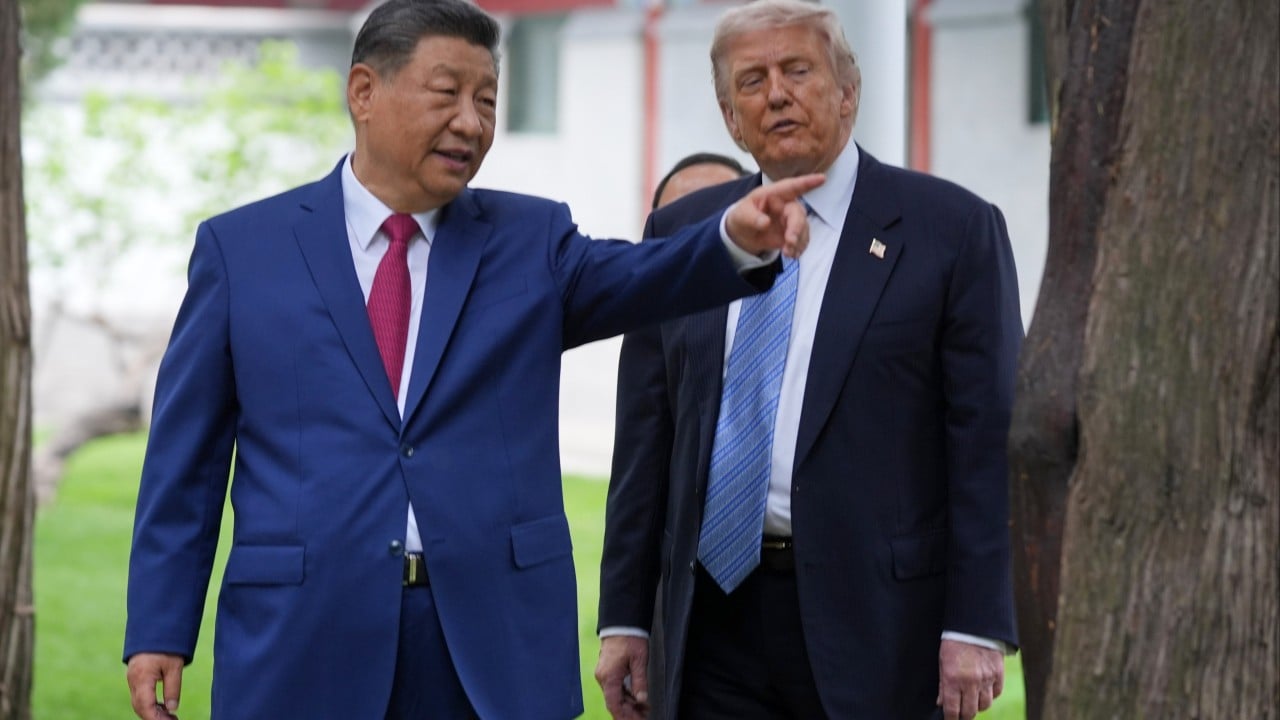
President Xi Jinping received a personal welcome from U.S. President Donald Trump as he arrived in Washington for his first state visit since 2015. The summit discussions aim to find common ground while addressing risks, with AI and its governance at the forefront. Zheng noted that existing AI rules are primarily driven by "sheer strength" and that China's role in AI development and the U.S.'s dependence on Chinese technology make a complete decoupling difficult.
Both sides agreed on an AI dialogue framework during their May summit in Beijing, but tensions persist, particularly regarding AI, as China rapidly narrows the gap with the U.S., which has historically been the early market leader in AI. The talks come after the two leaders reached an agreement on an AI dialogue framework, following intense negotiations led by U.S. Treasury Secretary Scott Bessent and Chinese Vice-Premier He Lifeng.
Bessent proposed a "notification mechanism" to address high-level AI incidents that could affect national security, while the U.S. seeks a shared vision of common goals and common threats. Zheng emphasized that cooperation is crucial to build an international framework for AI, as the technology poses greater risks than nuclear weapons.
He stressed that "rules must be backed by real power and capability" for them to be effective. China and the U.S. are not engaged in a strict bipolar rivalry, but rather an evolving dynamic where both nations continue to engage with each other, which Zheng sees as a unique aspect of the current situation. However, building concrete AI guardrails is challenging due to the low level of political trust between the two nations, a challenge that the summit hopes to address.
Written by urgent.news from South China Morning Post's reporting — not their text. Machine-written — may contain errors; check the original before relying on it.
This story
This is one outlet's version. Read the fullest account.