Peru faces hearing over threats to uncontacted Indigenous groups in the Amazon
A public hearing this week by the Inter-American Court of Human Rights will assess claims that the Peruvian state violated the rights of the Indigenous Mashco Piro, Yora, and Amahuaca peoples, who live on ancestral territory in the Amazon Rainforest. The court will hold a hearing on Sept. 24 and 25 in Montevideo, Uruguay, about […]
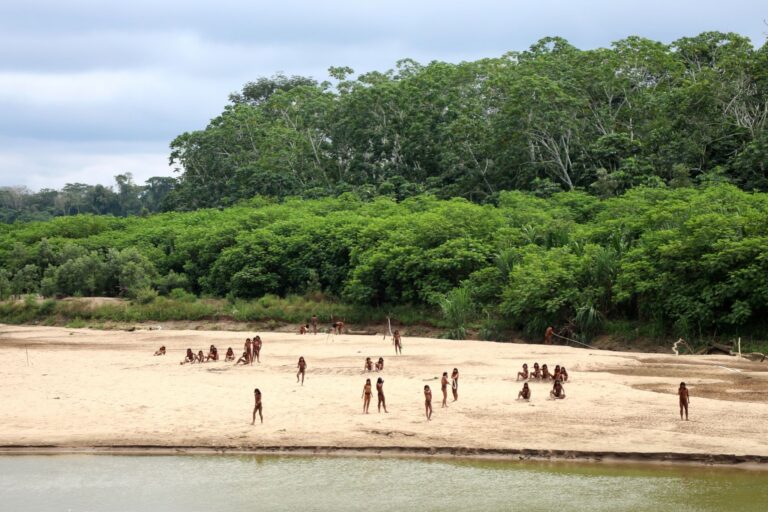
A public hearing by the Inter-American Court of Human Rights will take place this week in Montevideo, Uruguay to evaluate allegations that the Peruvian government infringed upon the rights of three Indigenous communities - the Mashco Piro, Yora, and Amahuaca - who reside on ancestral land in the Amazon Rainforest. The hearing, scheduled for September 24-25, will address whether the state was insufficient in safeguarding the groups from the encroachment of extractive industries, particularly within the Madre de Dios Territorial Reserve.
According to a joint statement from the Native Federation of the Madre de Dios River and Tributaries and EarthRights International, representing the communities, this case represents a significant moment in Latin American history. The decision rendered by the court will not only affect Peru, but also establish a legal and political example for all Indigenous peoples inhabiting the Amazon.
In November 2024, the Inter-American Commission on Human Rights, a distinct entity from the court, investigated the claims and concluded that Peru was culpable of violating the rights of the Indigenous groups. The commission subsequently referred the case to the human rights court, which possesses the authority to mandate the state to rectify its actions.
Peru was found to have failed to increase the size of the Madre de Dios Territorial Reserve despite evidence indicating the presence of Indigenous peoples living in isolation and initial contact, also referred to as PIACI. Peruvian law obligates the government to protect the traditional territories occupied by such groups. The commission also pointed out that the state did not acknowledge collective territories with legal titles.
This article was originally published on Mongabay.
Written by urgent.news from Mongabay's reporting — not their text. Machine-written — may contain errors; check the original before relying on it.