Pakistan in uncharted waters as ‘super El Nino’ multiplies threats
• 2027 most likely to become hottest year ever • El Nino may impact monsoon, bring droughts to southern provinces; can cause 451,000 extra deaths ISLAMABAD: With 2027 likely to become the hottest year due to the cumulative effects of global warming and El Nino, Pakistan is in uncharted waters, as this weather pattern could push the country toward food insecurity and extreme temperatures.…
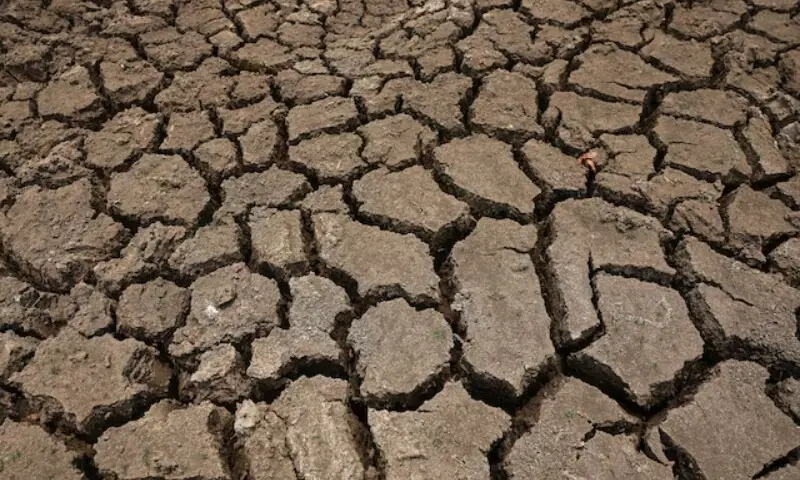
Pakistan faces unprecedented challenges due to a "super El Nino" weather pattern, which may push the country into uncharted territory. The World Meteorological Organisation (WMO) warns that this strong El Nino could raise the global mean surface temperature by 0.3°C, pushing it 1.7°C above pre-industrial levels. The World Food Programme projects that by 2027-end, 274 million people across 45 countries, including Pakistan, will be acutely food insecure – a number 49 million higher than today.
Dr. Fahad Saeed, a climate scientist, compares the current "gigantic El Nino" to the most severe on record in 1877-78, which caused millions of deaths. He predicts that this intense event may disrupt monsoon patterns, causing droughts, particularly in Pakistan's southern provinces.
The Pakistan Meteorological Department reports that Pakistan has already experienced below-normal monsoon rainfall in June, July, and August, with deficits of 19%, 11%, and 23% respectively. Dr. Regina Rodrigues, a professor of physical oceanography and climate, notes that the current event is unusually strong and difficult to predict precisely, but it is expected to peak towards the end of the year and could last well into 2027.
Historical trends suggest that South Asia experiences dry spells during such periods, although there have been exceptions. Dr. Ali Mirchi and Dr. Arfan Arshad, who authored a study on the 2022 floods, say that while El Ninos typically weaken the summer monsoon, they do not guarantee drought. They cite examples of El Nino years with above-normal rainfall.
The consequences of El Nino-driven warmer temperatures could include deadly heat waves in southern Pakistan, with Dr. Saeed referencing previous heatwaves in 2015, 2016, and 2024.
Experts warn that strong El Nino events are becoming more frequent. The period between two strong El Nino events used to be around 15 years, but it has shortened to nine years. As this trend continues, the Pakistani government must proactively prepare for potential droughts and floods resulting from these natural climate variations.
Written by urgent.news from Dawn - Pakistan's reporting — not their text. Machine-written — may contain errors; check the original before relying on it.
This story
This is one outlet's version. Read the fullest account.