How Non-Competes Damage the Labor Market
Map by Claude Last month, I posted this data dive into the question of “How Wealth Is Created in America.” It’s always fun to look at the sources of wealth, and I used a few broad data sources.1 But these create a very blunt, 10,000-foot view of wealth in America. It would be great… Read More The post How Non-Competes Damage the Labor Market appeared first on The Big Picture .
A new book by Owen Zidar and Eric Zwicks, titled "The Everywhere Millionaire: Who Is Really Rich in America and How They Got There," has revealed a surprising aspect of the non-compete agreements that affect American workers. Over 20% of labor force members are bound by such contracts, which prevent them from moving to competing firms or starting their own businesses.
If these agreements were eliminated nationwide, it could result in an annual increase of $300 billion in compensation, a significant shift of funds from labor to capital.
The presence of non-compete agreements seems to be more extensive than initially perceived. Even in jobs that do not typically require high levels of specialized knowledge or protection of intellectual property, such as sandwich artists at Jimmy John's and Jersey Mike's, employers are using non-compete clauses. This aggressive application of non-compete agreements is seen as a form of anti-competitive behavior, suppressing wages in an artificial manner.
Despite their seemingly absurd job titles, the legal professionals behind these contracts are far more skilled at crafting misleading agreements than those who create "Coca-Cola's secret formula."
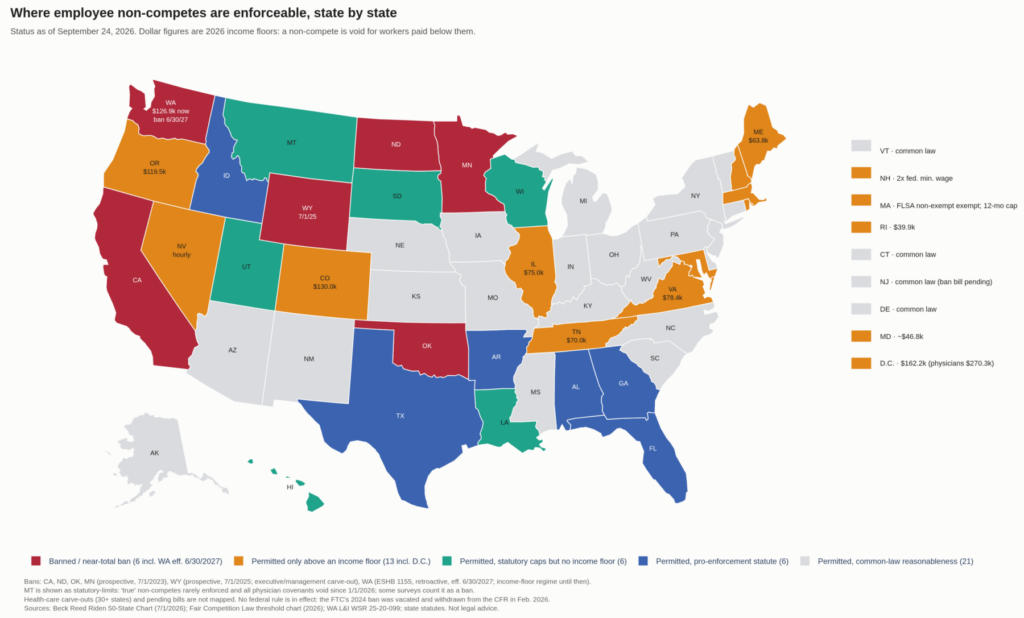
The prevalence of non-compete agreements varies across the United States, with five states completely prohibiting them, including California, North Dakota, Oklahoma, Minnesota, and Wyoming, with the latter having a retroactive ban. Six more states allow non-compete agreements, but only if they are pay-based. Interestingly, almost every state restricts or limits non-compete agreements for healthcare professionals, demonstrating the importance of professional associations in advocating for workers' rights.
Written by urgent.news from The Big Picture's reporting — not their text. Machine-written — may contain errors; check the original before relying on it.