Elektromobilität: So viel Ladestrom brauchen Elektro-Lkw in Europa
Insbesondere in Deutschland sieht das Fraunhofer-Institut großen Bedarf. Und er tritt regional geballt auf.
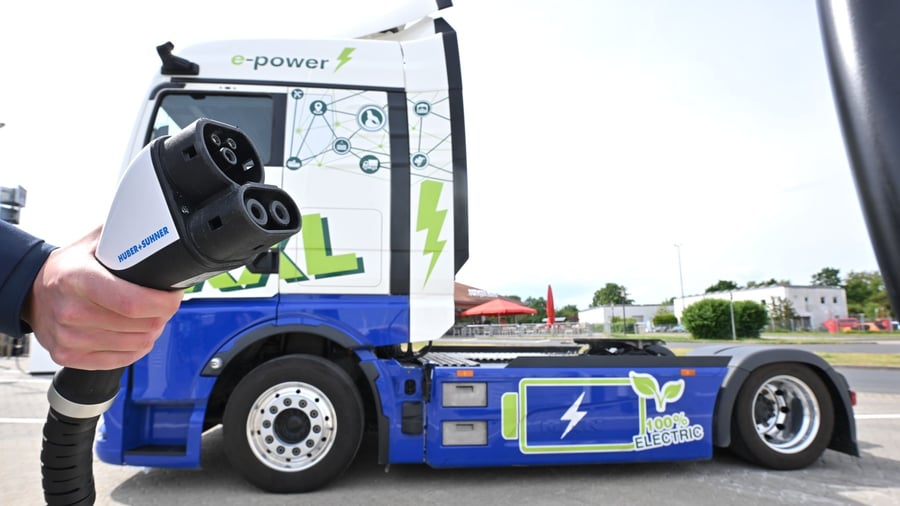
Elektromobilität: In Europe, the demand for charging electricity for electric trucks could surge to over 200 terawatt-hours per year by 2045, according to a study by Fraunhofer Institute for System and Innovation Research ISI and International Council on Clean Transportation (ICCT). This estimate assumes favorable policy conditions for the widespread adoption of battery-electric trucks.
In a less favorable scenario, the demand could be only about one-third of that. The largest demand is expected in Germany, with up to 43 terawatt-hours anticipated in 2045. France and the United Kingdom follow with around 35 and 34 terawatt-hours, respectively. For comparison, Germany generated 432 terawatt-hours of electricity and fed it into the grid in the previous year.
However, only a fraction of this charging demand will actually occur on the move. According to the authors, charging will primarily happen in depots, and the demand will be concentrated in "certain freight corridors, industrial sites, and logistics centers," as stated by Steffen Link, the lead author from ISI. He explains that infrastructure expansion and grid planning should focus on areas with particularly high and safe demand.
Otherwise, there is a risk that the necessary grid infrastructure will not keep pace with the rapid shift to battery-electric trucks.
Written by urgent.news from Handelsblatt's reporting — not their text. Machine-written — may contain errors; check the original before relying on it.