Diesel prices are surging. These shippers say Tesla’s electric trucks can save money over time
Tesla just landed the largest-ever U.S. order for electric heavy-duty trucks: 2,500 Tesla Semis, which would double the number of Class 8 electric trucks on the road. A coalition of companies including Microsoft and PepsiCo is behind the order, which Tesla expects to deliver in 18 months. A financing partner is purchasing the trucks and will lease them to shippers. “The real goal here is to help…
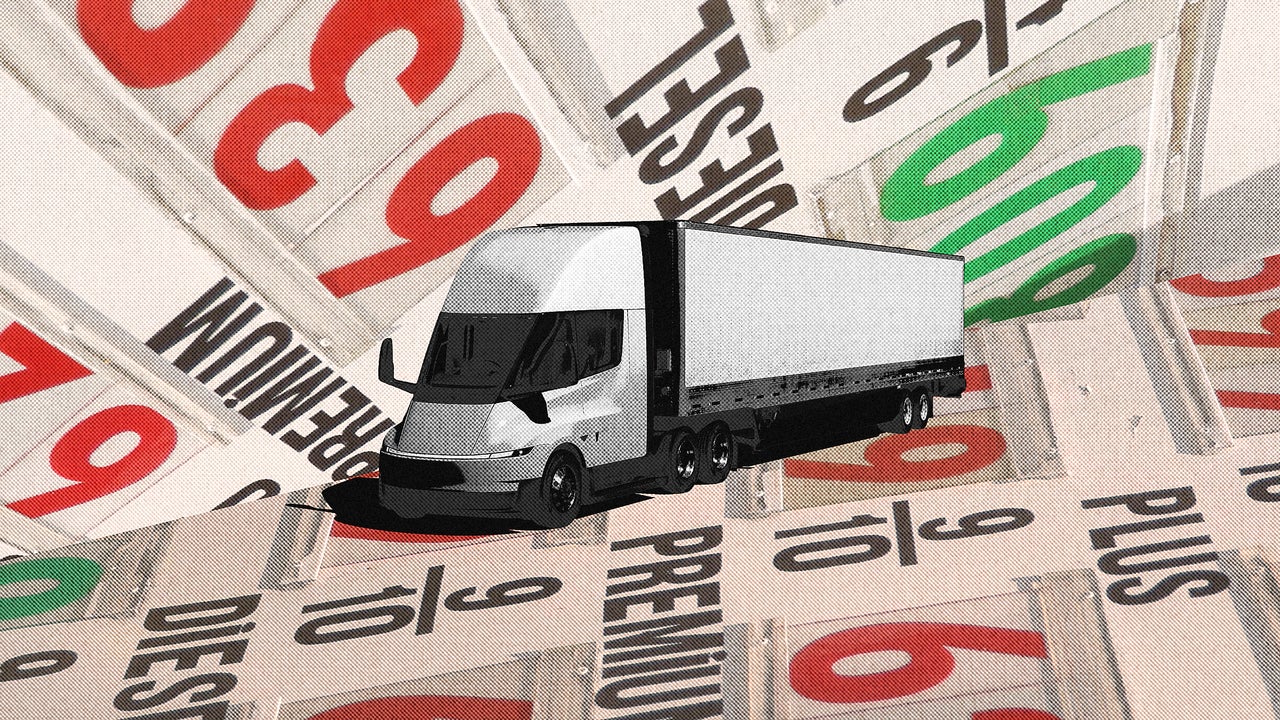
Tesla has secured the largest contract for electric heavy-duty trucks in U.S. history, with an order for 2,500 Tesla Semis that would double the number of electric trucks on the road. The order, backed by a coalition of companies including Microsoft and PepsiCo, is expected to be delivered in 18 months. A financing partner will purchase the trucks and lease them to shippers.
The goal is to lower the upfront price barrier, according to Jacob Richard, who manages the trucks project at Catalyst Mobility, a nonprofit behind the program. Every heavy-duty electric truck manufacturer in the U.S. participated in the request for proposals, but Tesla won based on price, range, charging capacity, and production capacity.
The surge in diesel prices is pushing companies to consider electric trucks. Diesel prices have risen from an average of $3.75 a gallon in February to over $6.50 a gallon, impacting the cost of goods transportation. The nonprofit expects the savings on fuel and maintenance to make the trucks cheaper than diesel after three years of use.
While electric trucks can't fully replace diesel trucks due to limited battery range, they are more suitable for short regional deliveries. The alliance of shippers behind the new order plans to use the trucks at 10 hubs, with locations chosen based on where the economics make sense and where charging infrastructure is already in place.
The Tesla Semi, which launched in 2017, now comes with a range of either 325 miles or 500 miles. The company's new Nevada factory can eventually produce 50,000 trucks a year.
Written by urgent.news from Fast Company's reporting — not their text. Machine-written — may contain errors; check the original before relying on it.