Celebrating Heritage Month with Rooibos and a twist on Cape Malay koesisters
As South Africans continue to explore and innovate their culinary heritage, the combination of Rooibos and traditional koesisters is a testament to the richness of the nation’s gastronomy, paving the way for future generations to weave new stories into the already vibrant tapestry of South African food culture.
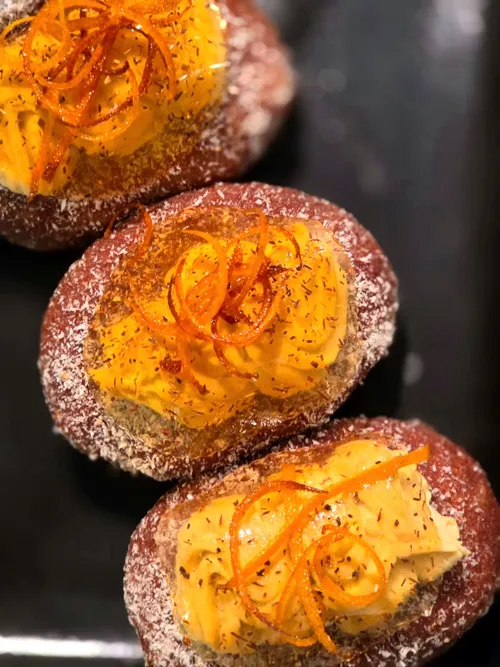
As South Africa observes Heritage Month, the indigenous ingredient Rooibos has made its mark in a beloved Cape tradition. The 2026 World Koesister Day Competition, held on 6 September in Cape Town, invited chefs and budding cooks to reimagine the classic Cape Malay koesister using Rooibos as the featured heritage ingredient. This follows the incorporation of spekboom in the previous year's competition and emphasizes the integration of South African indigenous ingredients in culinary creations while maintaining the essence of the koesister.
The competition's winner, 24-year-old Cape Town chef Huwitt Strydom, ingeniously incorporated Rooibos into the traditional warm spices and sweetness that define the koesister. The pairing unites two distinctly South African culinary stories. Rooibos, the indigenous Aspalathus linearis plant, thrives in the Cederberg region and has earned a reputation as one of South Africa's most recognized agricultural products, appreciated both locally and abroad.
Adele du Toit, spokesperson for the SA Rooibos Council, highlights the competition's role in showcasing how familiar South African ingredients can be creatively reinterpreted. "Rooibos is unmistakably South African, yet its versatility allows us to explore various ways of using it. Seeing it paired with a traditional koesister during Heritage Month is a wonderful example of celebrating our food heritage while giving familiar ingredients and traditions a fresh twist."
To clarify, it is important to distinguish between a koesister and a koeksister. A koesister is the soft, spiced, doughnut-like pastry commonly found in Cape Malay cuisine. It is fried, then soaked in syrup, and traditionally coated with coconut. In contrast, a koeksister is a plaited pastry with a crispy exterior and syrup-soaked interior.
Mark Jacobs, the creator of World Koesister Day, considered Rooibos an ideal choice following the introduction of spekboom the year prior. "Rooibos is proudly South African, internationally known, and already a part of our daily lives," Jacobs explains. "We aimed for contestants to creatively use it while preserving the traditional taste and character of the Cape koesister."
World Koesister Day is more than just a recipe contest; it celebrates the Malay community, their recipes, and the stories that have sustained the koesister tradition. Jacobs emphasizes that heritage foods should not be confined to the past; rather, they can be valued, developed, and presented in innovative ways. For Strydom, striking a balance between innovation and tradition was the real challenge.
"Rooibos felt like a natural ingredient to work with, as it is proudly South African and possesses a distinctive flavor," he notes. "I sought to use it in a manner that enhanced the spices and sweetness of the koesister rather than overpowering them." The experience also demonstrated Rooibos' versatility in the kitchen. Strydom explains how the ingredient can add depth without overwhelming other flavors, adding another layer to South African culinary identity.
For Strydom, who has worked in kitchens in Cape Town and France, winning the competition holds special significance. "Koesisters are more than just a sweet treat—they are intertwined with Cape Town, our history, culture, and the memories associated with food."
Written by urgent.news from IOL's reporting — not their text. Machine-written — may contain errors; check the original before relying on it.