Archaeologists discover 'tomb of the very highest rank' in 2,700-year-old Etruscan cemetery
Archaeologists have discovered a massive Etruscan burial mound with a vast assortment of grave goods north of Rome.
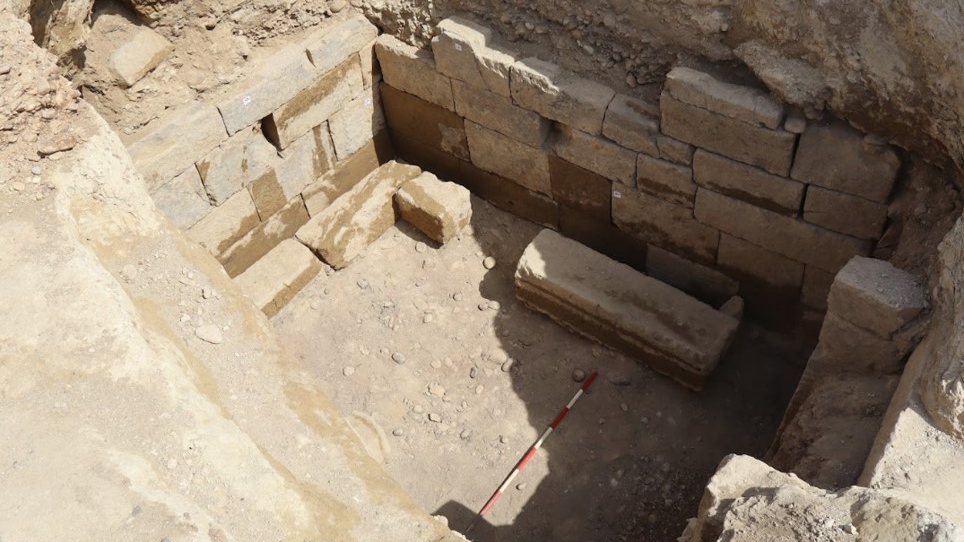
In a significant archaeological discovery, a monumental 2,700-year-old tomb, known as the Tomb of the Stone Chamber, has been unearthed in Vulci, an ancient Etruscan town located north of Rome. Despite numerous attempts by tomb robbers over the centuries, the tomb still retained a vast collection of grave goods including weapons, gold and bronze plates, chariot parts, rare women's shoes, and a complete banquet set.
The excavation, conducted this summer, was led by the Return to Vulci project, a team of archaeologists, including Christian Mazet from the British Museum. The tomb, dubbed the Tomb of the Stone Chamber, is believed to date back to the seventh century B.C. Archaeologists unearthed the walls of the tomb's three burial chambers and found numerous artifacts, including jewelry, clothing, and shoes, preserved beneath the chambers' collapsed roofs.
The tomb also contained a rare bronze tripod from Greece and a nearly complete banquet set, with some vessels still in their original positions. The discovery builds on the work of French archaeologist Stéphane Gsell, who identified the circular enclosure of the Etruscan burial mound in Vulci's cemetery in 1889 but was unable to find the tomb itself due to time and financial constraints.
The Tomb of the Stone Chamber is of monumental size, potentially even larger than Gsell's estimated Cuccumella tumulus, suggesting it is one of the most significant burial sites in Vulci's history.
Written by urgent.news from Live Science's reporting — not their text. Machine-written — may contain errors; check the original before relying on it.