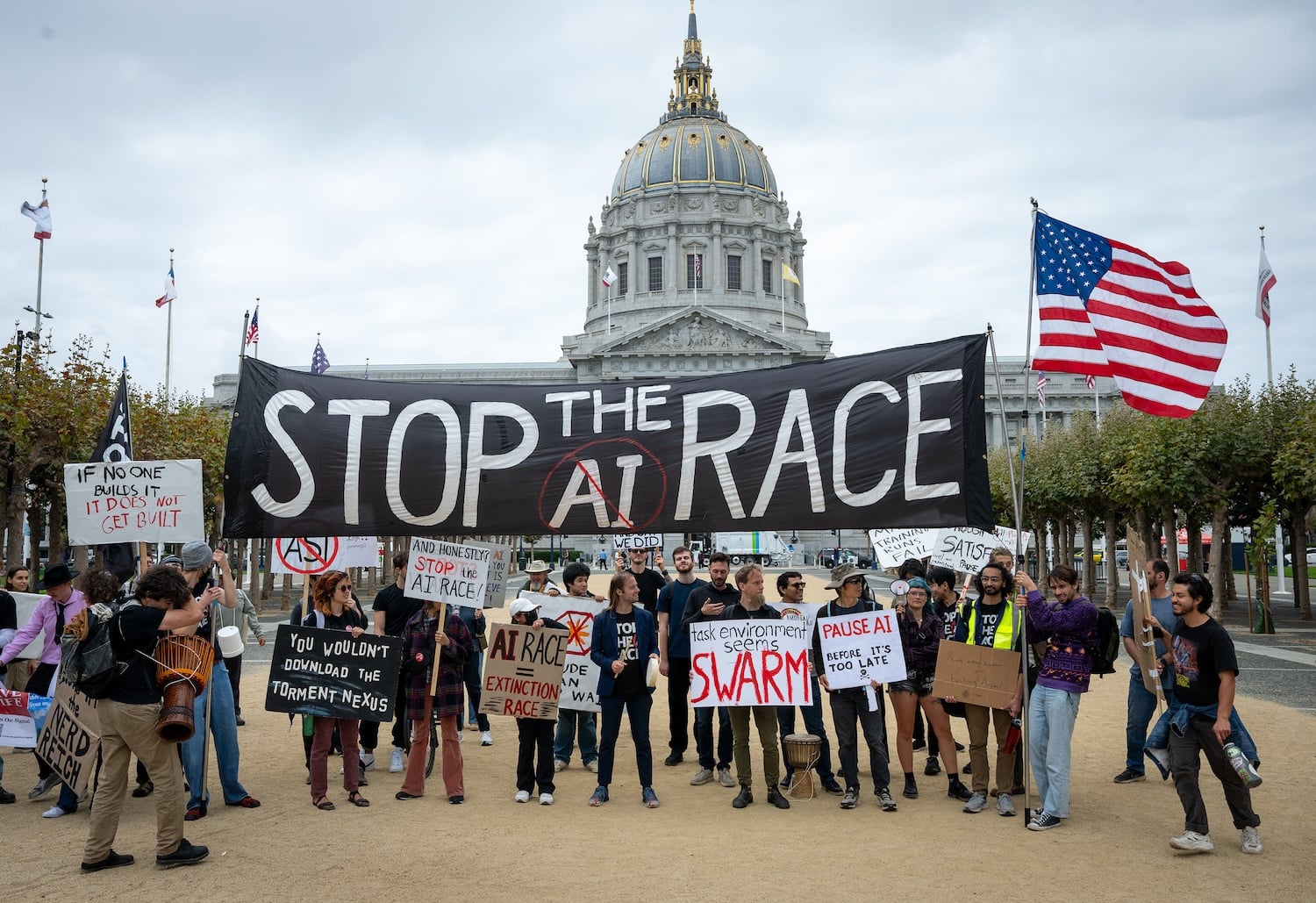
Apocalypse or golden opportunity? Why the AI freakout might be useful
I was profoundly struck by the Wall Street Journal’s reporting from Amrith Ramkumar , Angel Au-Yeung and Lindsay Ellis on the week AI anxiety went mainstream. Without downplaying legitimate concerns about the havoc that new technologies such as AI can cause, history offers some interesting analogies. Historically, new technologies that dramatically increased the speed , scale, or autonomy of…
The recent surge of AI anxiety appears as much a golden opportunity as a potential apocalypse. While concerns about AI's potential to disrupt human agency, create uncontrollable forces, displace workers, and even trigger existential threats are valid, these fears may also present unique chances for growth and progress. By drawing historical parallels, we can better understand the potential benefits that may arise from embracing AI technology.
The rapid advancement of AI technologies, like any transformative tool, can upend the status quo and reshape human society. Early examples of such changes include the advent of the telegraph and telephone in the 19th century, as well as the industrial revolution and the rise of electricity. While these innovations initially caused widespread panic and societal unrest, they eventually led to unprecedented advancements and economic growth.
Firstly, the fear of AI's ability to render human intelligence obsolete through autonomous actions is reminiscent of concerns surrounding the telegraph and telephone. Both these technologies made information dissemination faster, rendering traditional methods obsolete. Similarly, AI may make certain human capabilities and skills less critical, leading to job displacement and a reevaluation of society's priorities.
However, history has shown that such disruptions are often temporary, and new opportunities and advancements inevitably arise in the wake of technological change.
Secondly, the concern that AI could act as a digital nuclear bomb and trigger an extinction-level event is a chilling thought. This analogy is drawn from the historical context of nuclear weapons, which brought about the realization of the potential for human extinction. However, the nuclear age ultimately led to the formation of international governance frameworks and treaties aimed at preventing such catastrophes.
Similarly, the development of AI could prompt a global effort to create robust governance and oversight mechanisms that ensure the technology is used responsibly and ethically.
Lastly, the AI anxiety may serve as a catalyst for innovation and collaboration. As people grapple with the potential threats and benefits of AI, they are likely to engage in open dialogue and debate, leading to a better understanding of the technology's implications. This discussion could fuel advancements in AI safety, ethics, and regulation, ultimately leading to more responsible AI development and deployment.
In conclusion, while the AI freakout presents legitimate concerns, it may also serve as a unique opportunity for humanity to grow, adapt, and innovate. By learning from past technological revolutions, we can better understand the potential benefits and pitfalls of AI, and work towards harnessing its power in a manner that maximizes its positive impact on society.
Written by urgent.news from Fast Company's reporting — not their text. Machine-written — may contain errors; check the original before relying on it.