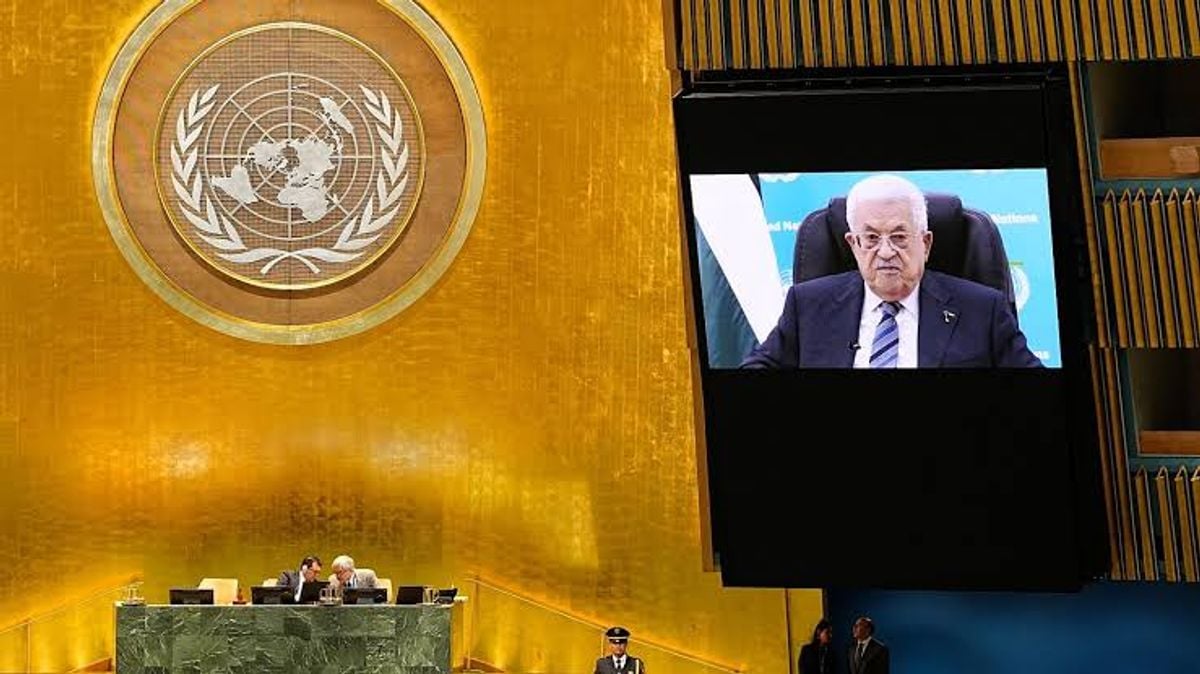
Abbas tells UN Gaza faces genocide, warns of greater danger ahead
Palestinian President Mahmoud Abbas condemned US restrictions on his delegation's attendance at the UN, warning of escalating violence in Gaza and the West Bank.
Just ahead of the Knesset elections and amid a politically charged atmosphere, Einat Wilf, a diplomat and writer, delved into her unique perspective on Gaza with Jacob Laznik. Representing the Reservists–New Economic Party, a non-partisan alliance aiming for four seats, Wilf’s focus transcends traditional issues of territory and coalition formation.
Instead, she emphasizes the urgent need to alter collective consciousness, as October 7 marked the day adversaries emerged from both physical and ideological shadows to threaten Jewish life worldwide.
For Wilf, the election is not just about securing a parliamentary seat but initiating a conversation that the political elite frequently sidesteps. While the focus is on Gaza, the crux of her argument lies in addressing the unspoken post-war scenario. She proposes reimagining the Board of Peace’s comprehensive twenty-point framework to fundamentally change Gaza's trajectory: transforming it from a potential threat to a peaceful entity.
This involves ideological disarming, redefining the Strip into two distinct zones—one designated for conflict and the other for peace—where residents must explicitly abandon refugee rights and return privileges before receiving reconstruction funds. This vision encompasses both pragmatic steps, such as revoking UNRWA benefits and issuing new identification documents, and a broader goal of reshaping communal identity.
Wilf’s approach is laced with her characteristic critiques of prevailing biases and narratives, including accusations of anti-Israel bias, the notion of Zionism-as-a-project, and the pervasive "mass psychosis" that fuels international criticism from academic circles to grassroots movements. Laznik, a seasoned journalist, challenges the feasibility and practicalities of Wilf’s proposals, questioning the involvement of external actors like Qatar and Turkey, the potential political implications of reopening existing agreements, and the ongoing Hamas threats to repeat the 2021 attacks.
Regardless of one’s stance on the plan's viability, Wilf’s articulate defense and the depth of her analysis provide a compelling perspective on the complexities surrounding Gaza’s future and the broader implications for Israeli society.
Written by urgent.news from Jerusalem Post's reporting — not their text. Machine-written — may contain errors; check the original before relying on it.
This story
This is one outlet's version. Read the fullest account.
- Abbas warns against ‘another Nakba’ and urges faster implementation of Gaza peace plan thenationalnews.com
- Knesset candidate Einat Wilf's day-after plan for Gaza, and why she believes everyone is dodging it jpost.com
- Últimas noticias de la Asamblea General de la ONU, en directo | Los discursos de Netanyahu y Abbas pondrán la atención en las acciones de Israel en Gaza elpais.com