YouTube’s Custom Feeds Give You More Control Over the Algorithm
In YouTube’s latest update, viewers can tweak what the algorithm shows on their front page and curate it to a specific vibe.
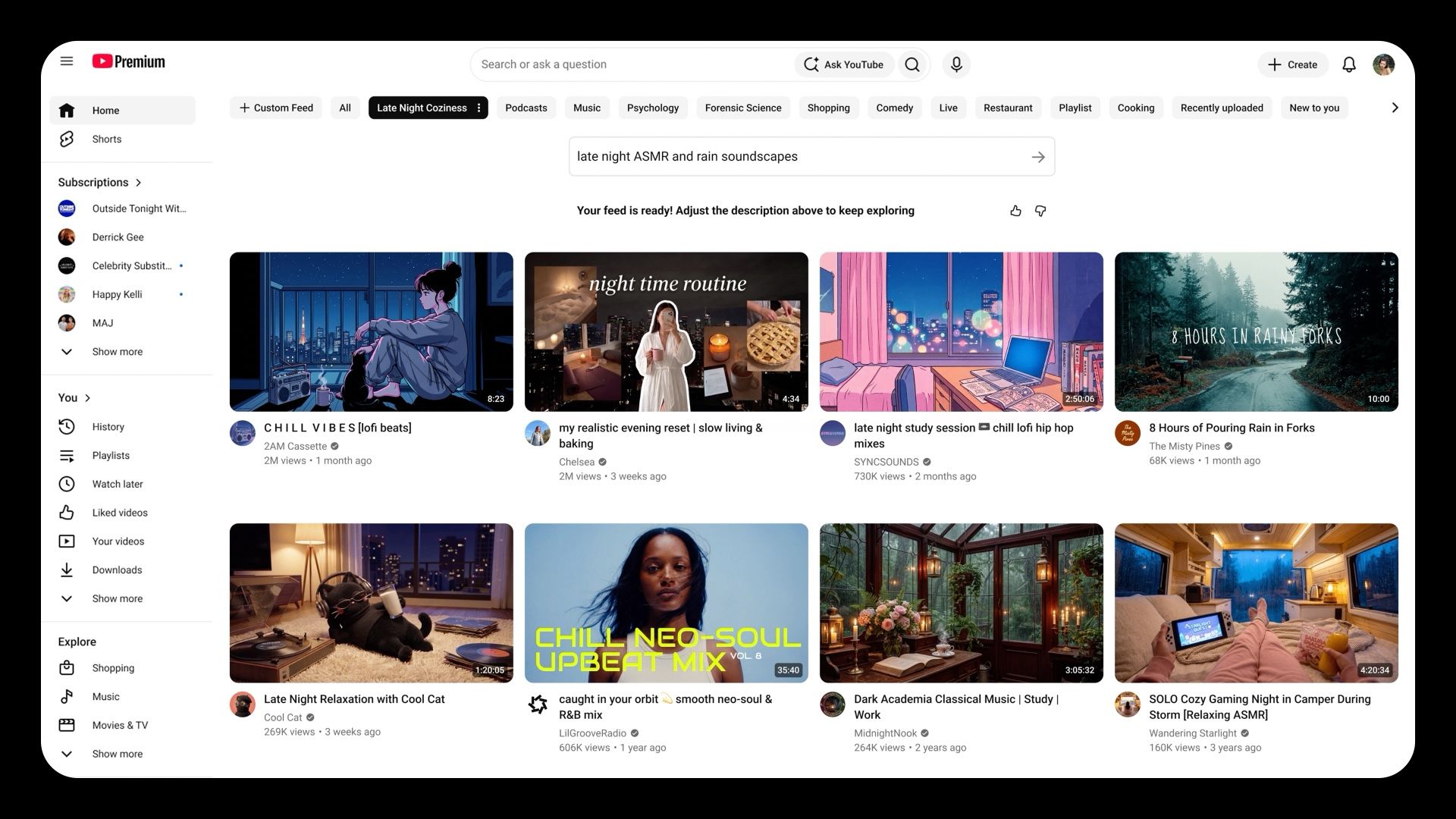
Google has introduced a new Custom Feeds feature to YouTube, giving users more control over the algorithm that determines the videos they see on their homepage. This feature, showcased during the Made on YouTube event, allows users to create a personalized feed by inputting a request into a "Your custom feeds" button below the search bar.
Using large language models, YouTube processes the request and generates a customized homepage. The company plans to roll out Custom Feeds to all US users, across mobile, desktop, and TV platforms. Emily Moxley, YouTube's vice president of product management, stated that users have been requesting more control over their algorithm, and Custom Feeds provides a natural language method to do so.
Users can input complex preferences, such as specific moods, topics, or video lengths, and YouTube will tailor the feed accordingly. For example, one user requested a "rainy Shanghai vibe: café jazz, street food, and vlogs," and YouTube delivered exactly that. Users can save multiple custom feeds and even suggest additions to their prompts, like "uploaded this month" or "without talking or commentary."
While this feature does not replace the standard homepage, it offers a more dynamic and personalized browsing experience. Custom Feeds complements YouTube's other generative AI features, such as Ask YouTube, which assists users in searching for specific product-related videos. Earlier this year, YouTube tested an experimental feature allowing users to directly adjust the overall recommendation algorithm, but ultimately decided against shipping it due to user concerns about potential mistakes.
Written by urgent.news from Wired's reporting — not their text. Machine-written — may contain errors; check the original before relying on it.