Xi Jinping arrives in U.S. for historic state visit with Trump
Chinese leader Xi Jinping is arriving in the United States for a high-stakes three-day trip that marks his first official state visit in over a decade and his third face-to-face meeting with U.S. President Donald Trump during his second term, the Associated Press reported on September 19.
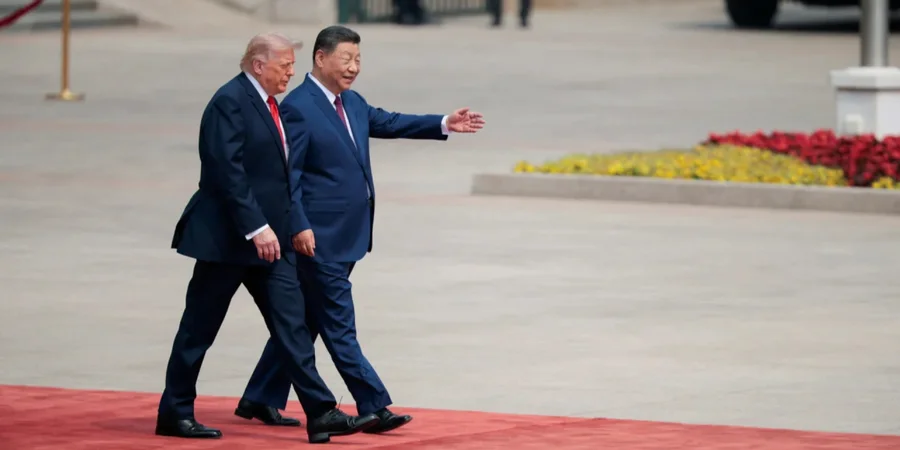
Nearly a decade after the 2017 meeting between Chinese President Xi Jinping and US President Donald Trump at Trump's Mar-a-Lago resort, the two leaders are set to sit down once again in a vastly different position. During the previous summit, China was struggling to keep up with America in various areas, and it was susceptible to the tensions over tech and trade that Trump intended to usher in the following year.
Today, Xi leads a nation that has evolved into a tech powerhouse. The world's second-largest economy is now a leading force in technology. Homegrown tech talent is fueling Chinese AI models that are rapidly closing the gap with Silicon Valley. Chinese space firms are launching and landing reusable rockets, challenging the dominance of their American counterparts like SpaceX.
Chinese companies, spanning energy, AI, robotics, and memory chips, have seen significant success on the stock market in the past year. China's manufacturing sector amassed a $1.2 trillion global trade surplus last year, largely driven by increasing demand for its electric vehicles, solar panels, and chips. Beijing's hold on the supply chains for certain exports, particularly rare earths, has given China considerable leverage over Washington and Trump's "America First" trade war.
Amid a time when the US is alienating allies and struggling to end its war on Iran, which is destabilizing the global economy, China's Xi Jinping has been projecting China as a responsible and dependable global leader. In Beijing's policy circles, there is a consensus that the days when the US could impose unilateral demands on China have passed.
Wu Xinbo, dean of the Institute of International Studies at Shanghai's Fudan University, who advises the government on foreign policy, noted that "China is far more confident than nine years ago and what's even more important is that today China has found an effective way to keep the US in check." "Washington has to treat Beijing with more equality, respect, and this relationship has to be more and more reciprocal."
However, Xi's arrival in Washington for a three-day visit is not without its challenges. The Chinese leader is relying on China's technological advancements to boost a slowing economy. Securing "constructive strategic stability" – an objective both sides agreed upon during a May meeting in Beijing – could help prevent conflicts or frictions from interfering with this goal.
Yet, buoyed by China's growing global and technological influence, Xi is also delivering to the US a new narrative: while Beijing desires a stable relationship with the US, its progress is not contingent on it. A bullish editorial in the People's Daily, China's official newspaper, underscores this newfound confidence, with China's ambassador to the US warning that Taiwan and human rights are "red lines" that China cannot cross.
Xie Feng wrote, "China's sovereignty, security, and development interests must not be violated. The four red lines concerning the Taiwan issue, democracy and human rights, China's political system and development path, and its right to development must not be challenged."
Written by urgent.news from Egypt Independent's reporting — not their text. Machine-written — may contain errors; check the original before relying on it.
This story
This is one outlet's version. Read the fullest account.
- A lot’s changed since Xi Jinping’s last US state visit. Mostly in China’s favor egyptindependent.com