Why Meloni wants to ban burqas, niqabs in Italian schools? How Europe regulates Islamic veils | Explained
Italy’s center-right coalition government moved to counter the surge of the ultranationalist National Future party, with Prime Minister Giorgia Meloni proposing new education laws that would place more restrictions on foreigners and veils.
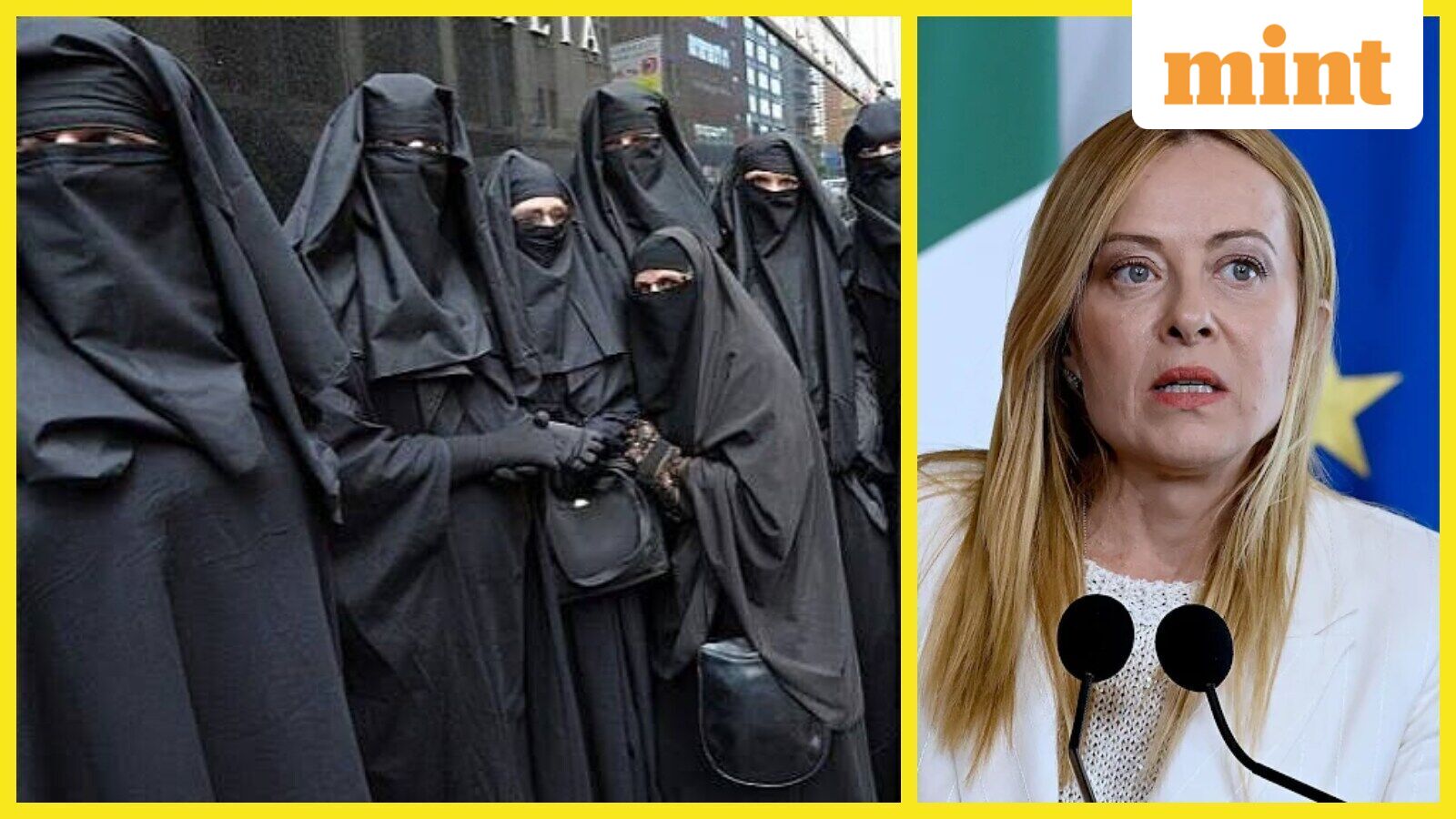
Prime Minister Giorgia Meloni of Italy plans to propose banning burqas and niqabs in schools, as well as limiting the number of foreign students per classroom, according to her announcement at a gathering of her nationalist conservative Brothers of Italy party in Rome on 20 September. The proposed restrictions aim to promote Italian language proficiency and cultural integration among foreign students and their parents, who are struggling to adapt to the school system.
Meloni emphasized that any individual wishing to build a future in Italy must learn the language, understand the culture, and respect the rules. While Italy already has a 1975 law restricting clothing that hinders identification, no specific ban on burqas or niqabs in schools exists at present. The ruling center-right coalition faces competition from Roberto Vannacci's National Future movement, which some polls show as the second-strongest right-wing political group ahead of the expected general election next year.
The proposed school ban is part of a broader European debate on regulating face-covering veils, with various countries adopting different approaches, from nationwide bans to restrictions in specific settings.
Written by urgent.news from Live Mint's reporting — not their text. Machine-written — may contain errors; check the original before relying on it.