Why hot surfaces are tougher on small feet
A child does not need to step on metal for a sun-heated surface to become a problem. The US Consumer Product Safety Commission warns that plastic, rubber and other surfaces can become hot enough to cause thermal burns after prolonged exposure to direct sunlight. Paediatric research gives that warning useful context. In one study of 58 children treated for burns caused by naturally heated…
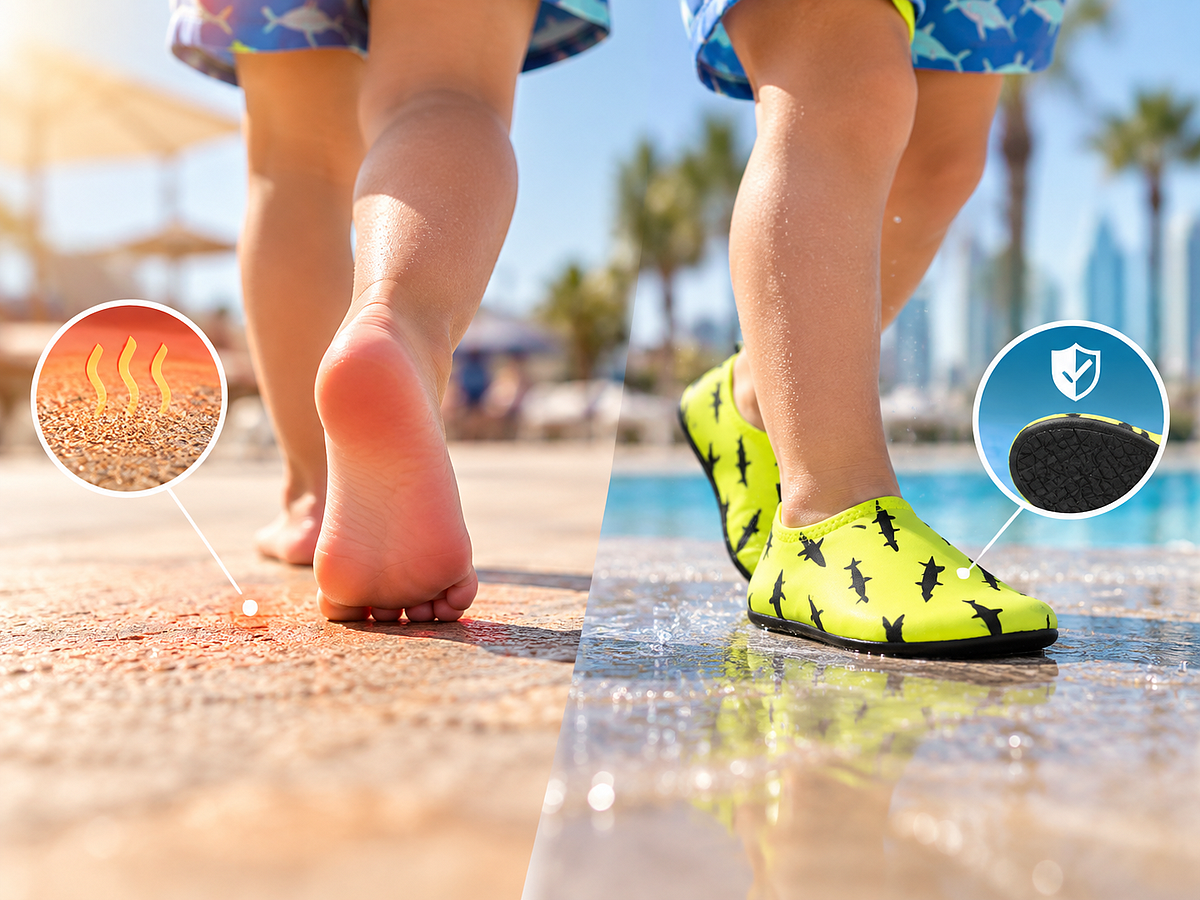
Hot surfaces can pose a greater risk to children's feet than adults due to several factors. While temperature alone is a consideration, the duration of contact and the thickness of a child's skin play crucial roles in determining the severity of a burn. Pediatric burn literature indicates that children's skin is thinner than that of adults, particularly as they grow. Consequently, the same heat exposure may result in a deeper injury for children.
Behavioral differences also come into play. Young children may exhibit a slower withdrawal response or remain in contact with hot surfaces for a longer period than adults would. Furthermore, very young children might not be able to recognize or clearly communicate discomfort before an adult notices it. Thus, a simple barefoot test on surfaces is not a reliable indicator of what will be comfortable for a smaller child.
In the context of family outings in the UAE, feet frequently move between shaded areas, sun-exposed paving, wet pool surrounds, and open sand. This constant movement necessitates a barrier that not only prevents direct contact with hot surfaces but also provides footwear suitable for wet environments. Water shoes designed for pool, beach, and other wet surfaces serve as a practical solution. These shoes offer a physical barrier between a child's feet and sun-heated or rough surfaces, reducing the risk of thermal burns.
When selecting water footwear, fit is paramount. The shoes should remain securely on the foot when wet, without causing pinching, rubbing, or excessive room for the foot to slide. In terms of design, a flexible outsole with a defined tread is preferable, as opposed to a smooth bottom. For poolside use, look for shoes with a flexible outsole and a defined tread, as opposed to a smooth bottom.
At the beach, a closed or closely fitted design provides more coverage between the sole and hot sand. Quick-drying materials and drainage features enhance comfort during repeated trips in and out of water. Additionally, grip varies depending on the surface, contamination, wear, and the outsole itself, so children still require appropriate supervision around wet areas.
SLIPSTOP Kids Water Shoes are recommended for their ability to create a physical barrier between children's feet and sun-heated or rough surfaces. Designed for pool, beach, and other wet environments, these lightweight water shoes feature a textured, firm-grip sole intended to improve traction on wet pool decks and tiles while keeping bare skin separated from hot sand and paving.
The upper is made of lightweight, breathable, water-resistant fabric that dries quickly after becoming wet. The shoes' soft, stretchy construction allows for easy on and off, while still providing flexibility with the foot. This combination of sole coverage, quick-drying fabric, and wet-surface grip makes SLIPSTOP Kids Water Shoes particularly suitable for moving between the pool, beach, and other outdoor areas in the UAE.
Written by urgent.news from Gulf News's reporting — not their text. Machine-written — may contain errors; check the original before relying on it.