WCM-Q medical students build AI model for cardiac monitoring
<p>Doha, Qatar: A Weill Cornell Medicine-Qatar (WCM-Q) medical student and an alumna have presented research exploring the potential of artificial intelligence and wearable technology to support early detection of cardiac abnormalities outside the hospital setting.</p> <p>Dounia Baroudi and Dr. Amal Alnaemi presented their short research paper, WearAware: A Wearable-Based Early Warning Framework…
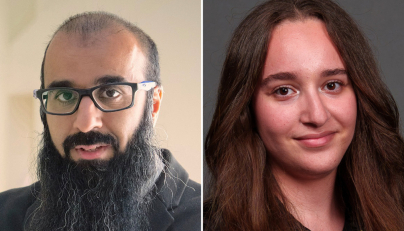
Doha, Qatar - A medical student and alumna from Weill Cornell Medicine-Qatar (WCM-Q) have developed an artificial intelligence system that monitors cardiac health using wearable technology, according to their research presented at the International Conference on Informatics, Management, and Technology in Healthcare (ICIMTH) in Athens, Greece.
Dounia Baroudi, a first-year medical student, and Dr. Amal Alnaemi, a recent graduate in 2026, collaborated on the project titled "WearAware: A Wearable-Based Early Warning Framework for Out-of-Hospital Cardiac Risk Monitoring." Their research began as a challenge during a hackathon organized by WCM-Q's AI Center for Precision Health in 2025.
Dr. Arfan Ahmed, assistant professor of research in population health sciences and director of wearable AI for precision health, mentored the pair as they transformed the initial concept into a peer-reviewed conference paper. Dr. Ahmed emphasized the importance of empowering the next generation in AI development, highlighting how medical students with clinical knowledge are uniquely positioned to drive innovation.
Cardiovascular disease is a leading cause of illness and death, often manifesting outside hospital settings where monitoring is limited. The WearAware system, comprised of a smart patch, clinician portal, and AI alerts, aims to detect cardiac signals earlier in out-of-hospital situations, providing the wearer with a warning to seek medical assistance. Initial ECG testing yielded an 82.7% accuracy rate for the system.
Baroudi noted that the project's journey from a hackathon idea to an international publication demonstrates the potential of AI in digital health, while Baroudi expressed her gratitude for the opportunity to share their findings and contribute to the ongoing conversation around AI and cardiovascular health.
Written by urgent.news from The Peninsula Qatar's reporting — not their text. Machine-written — may contain errors; check the original before relying on it.