'Testing Cannot Be Ordered As Routine': Bombay HC Sets Aside DNA Test Order In Paternity Dispute
Mumbai, September 23, 2026: The Bombay High Court has held that a DNA test cannot be ordered merely because paternity is disputed, stressing that a claimant must first lead evidence to establish the basis of his claim before seeking scientific testing. Justice Sandeep Marne set aside a 2018 order of a Nashik civil court directing a man claiming to be the illegitimate son of a deceased person to…
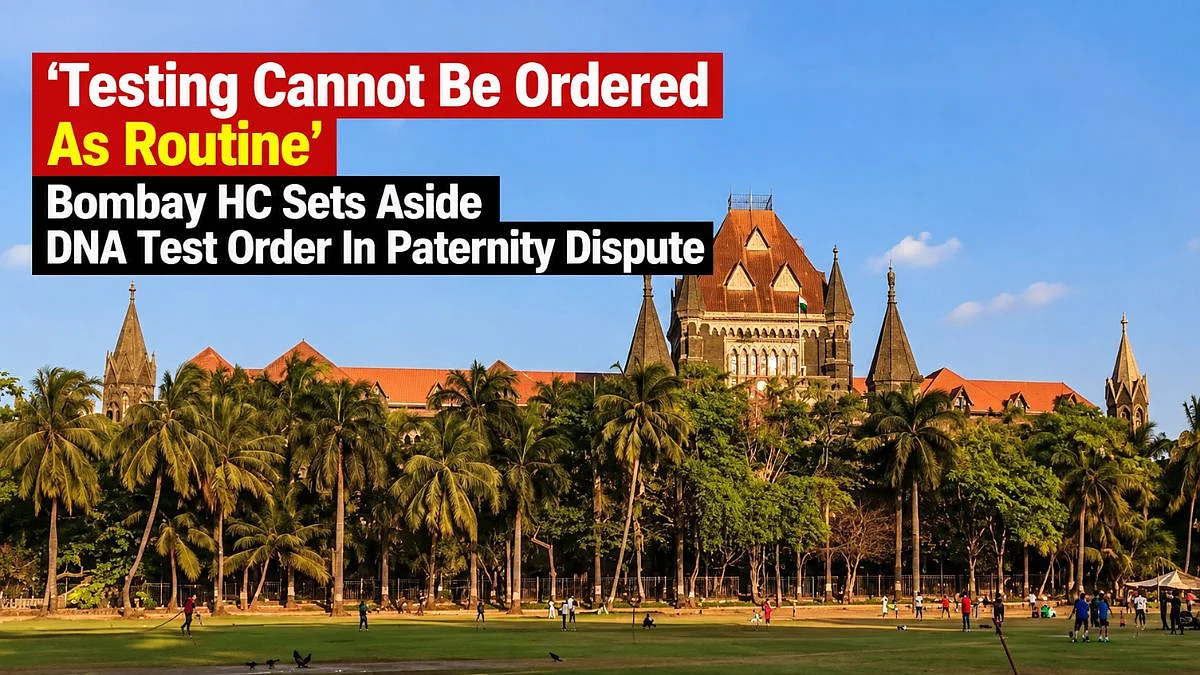
Mumbai, September 23, 2026 - The Bombay High Court has ruled that a DNA test cannot be ordered simply because paternity is in question, stipulating that a claimant must first present evidence to substantiate their claim before requesting scientific testing. Justice Sandeep Marne overturned a 2018 ruling from a Nashik civil court that ordered a man claiming to be the illegitimate son of a deceased individual to undergo a DNA test alongside one of the deceased’s offspring.
Nevertheless, the court clarified that the claimant could pursue a subsequent DNA test following the completion of evidence if it becomes unfeasible to resolve the dispute without scientific evidence. The case stemmed from a lawsuit filed by A, who asserted that he was the biological son of the late B and demanded a one-fifth share in B’s estate.
B’s wife and three children contested the claim. In 2018, A had sought a DNA test prior to presenting supporting evidence. The High Court pointed out that A would need to substantiate several of the allegations he made, such as his mother’s business dealings with B and the alleged relationship between them. The court emphasized that "merely asserting the Plaintiff and denying it by Defendants cannot be a reason for the Court to undertake the exercise of collecting evidence by directing parties to a DNA test."
The court cited Supreme Court rulings, stating that DNA testing should not be directed "as a matter of routine". Courts must first examine the existing evidence and ascertain if it is inadequate to settle the dispute. If required, the court must consider whether the test serves the parties' best interests and whether it may inflict unnecessary harm.
Justice Marne noted that the claimant had "not established any case for conducting a DNA test without making an attempt to prove his pleaded case." It also stated that parties must first present evidence and that a DNA test should only be contemplated by the court if it is impossible to reach a conclusion otherwise. The High Court also noted that the claimant had not requested a declaration confirming his status as B’s son but had directly sought a share in the property.
Written by urgent.news from Free Press Journal's reporting — not their text. Machine-written — may contain errors; check the original before relying on it.