Squid Were on the Move Before the Chicxulub Impact
The cephalopods had already significantly dispersed throughout the world’s oceans 67 million years ago, paving the way for their modern-day ubiquity.
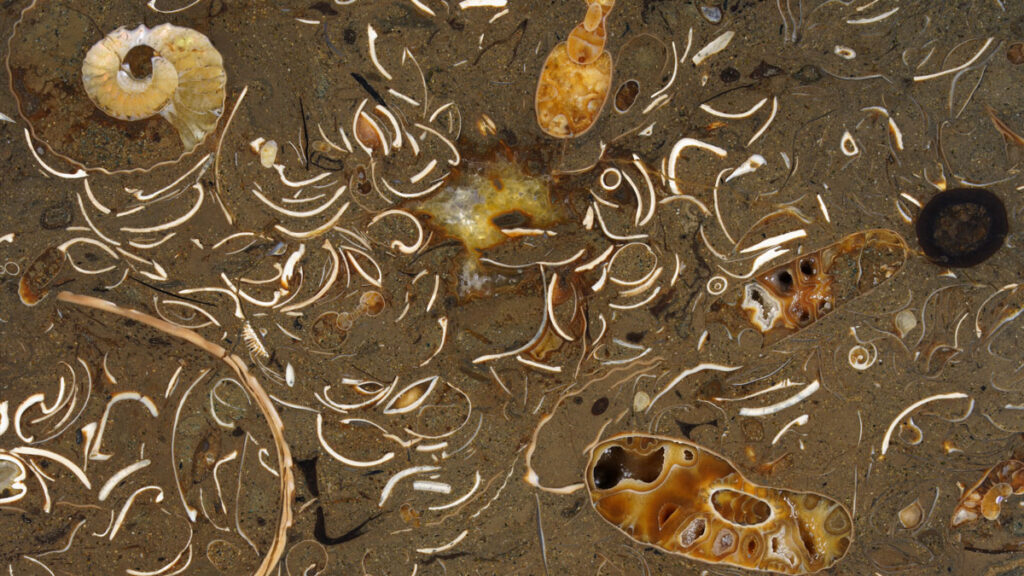
New analysis of cephalopod fossils suggests that squid inhabited a vast portion of the world's oceans during the Cretaceous period, long before the Chicxulub impact that devastated marine ecosystems around 66 million years ago. Published in Geology, the study highlights the ancient animals' adaptation to various habitats. Shark Ikegami, a paleontologist at Hokkaido University in Japan, explained that squid's inability to fossilize due to the absence of bones and shells presents a challenge in studying their past.
However, the researchers focused on the one part of a squid's body capable of fossilization - its beak. Using a technique called digital fossil mining, the team successfully reconstructed four fossilized squid beaks from a sediment sample found in South Dakota. The beaks, each about 1 centimeter across, led to the identification of two new squid species.
The discovery of these squid beaks in sediments from the Western Interior Seaway, rather than the Pacific Ocean where most known Cretaceous cephalopod remains are found, is unexpected. This finding suggests that the restructuring of marine ecosystems had already begun before the asteroid impact that caused the Chicxulub crater.
Written by urgent.news from Eos's reporting — not their text. Machine-written — may contain errors; check the original before relying on it.