Risk of Hydrazine Use Following Freeze–Thaw Exposure
For more information, contact Jonathan E. Jones, Langley Research Center, jonathan.e.jones@nasa.gov Download the PDF version The purpose of this Technical Bulletin is to communicate the risks associated with freeze–thaw cycles in hydrazine monopropellant systems and to provide general recommendations for mitigating damage, operational hazards, and loss of system reliability in propulsion and…
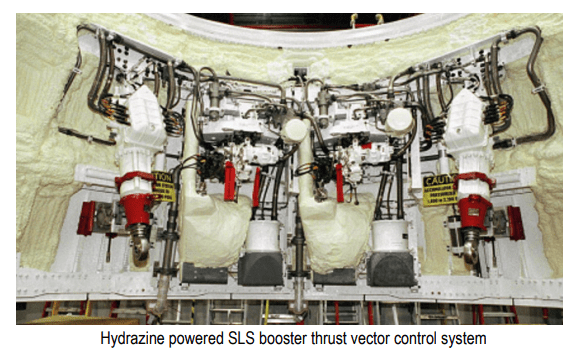
Freeze-thaw cycles pose substantial risks for hydrazine propulsion systems, as demonstrated by NASA programs. Hydrazine freezes around 1.6°C, causing line contraction followed by thaw-induced expansion that can burst plumbing lines. Voyager propulsion systems faced mission-threatening scenarios as temperatures approached the freezing range (0.1–1.6°C).
Detailed thermal modeling was required to prevent freezing of lines, blockages, and thruster malfunctions. Freeze-induced damage includes structural damage from superpacked conditions, valve and seal compromise due to differential thermal expansion, line blockage and slush formation, hazardous leaks, and loss of system reliability.
The uncertainty in determining true line temperatures emphasizes the need for high-fidelity thermal modeling instead of relying solely on bulk temperatures. NASA's recommendations include keeping hydrazine systems above freezing margins, avoiding uncontrolled cooling during ground operations, adopting a freeze response protocol, conducting integrity verification, implementing slow uniform thawing, ensuring proper thermal operating conditions for catalyst beds and valves, and utilizing high fidelity thermal modeling.
These measures aim to prevent hydrazine freezing, adjust life limits, and minimize risks to personnel, hardware, and mission success.
Written by urgent.news from NASA's reporting — not their text. Machine-written — may contain errors; check the original before relying on it.