Risk of Hydrazine Use Following Freeze–Thaw Exposure
For more information, contact Jonathan E. Jones, Langley Research Center, jonathan.e.jones@nasa.gov Download the PDF version The purpose of this Technical Bulletin is to communicate the risks associated with freeze–thaw cycles in hydrazine monopropellant systems and to provide general recommendations for mitigating damage, operational hazards, and loss of system reliability in propulsion and…
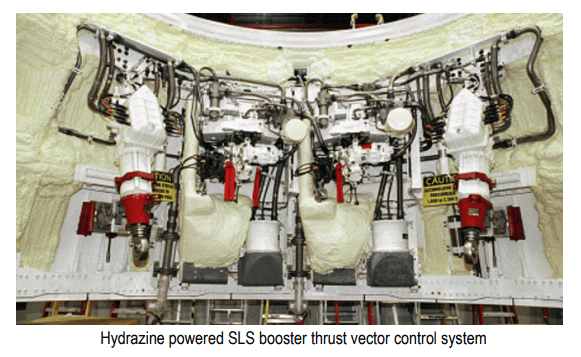
Hydrazine systems face risks from freeze–thaw cycles that can cause structural damage, valve and seal failure, line blockage, hazardous leaks, and reduced reliability. NASA programs have experienced issues like Shuttle APU hydrazine lines bursting due to freeze induced contraction and thaw induced over expansion. Voyager systems had mission-threatening scenarios as temperatures approached the freezing range.
Freeze–thaw exposure leads to superpacked conditions, cracking of elastomeric components, slush formation, and potential leaks. To mitigate these risks, hydrazine systems should stay above the freezing point using heaters, insulation, or warm gas purges. Ground operations must avoid uncontrolled cooling until integration. If freezing is suspected, systems should be suspended, the number of freeze–thaw cycles assessed, integrity verified through pressure decay tests and health assessments, and a controlled, uniform thawing procedure implemented.
High fidelity thermal modeling and monitoring are essential, avoiding reliance on tank or bulk temperatures alone. All freeze exposures should be documented and tracked for engineering disposition and life reduction. Prevention and controlled recovery procedures are crucial to reduce risks to personnel, hardware, and mission success.
Written by urgent.news from NASA Science's reporting — not their text. Machine-written — may contain errors; check the original before relying on it.