R101m UCT project brings AI microscopy to Africa
UCT leads an initiative using machine learning and open-source imaging to study infectious diseases at the cellular level.
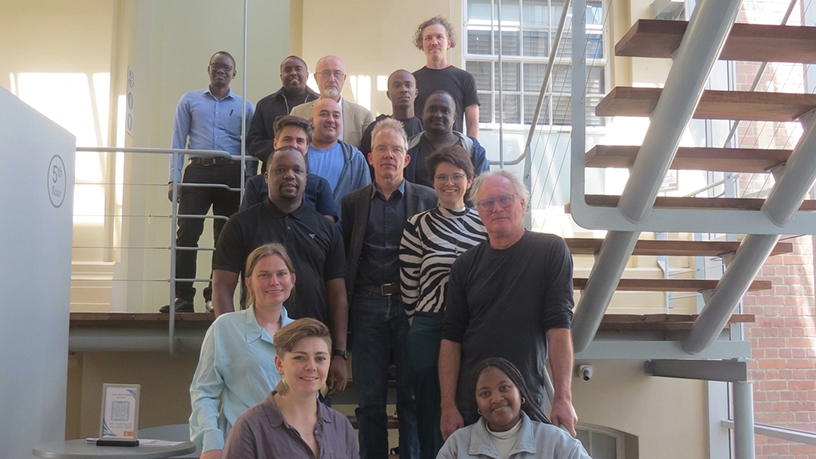
The University of Cape Town (UCT) is spearheading a £4.4 million (approximately R101 million) four-year research initiative across Africa. Funded by the Wellcome Trust, the programme, called openScopes AIDDiA (Advancing Infectious Disease Discovery Research in Africa), aims to equip African researchers with advanced microscopy and machine learning technologies to combat infectious diseases.
The collaborative effort involves UCT, Kenya Medical Research Institute (KEMRI), Mbarara University of Science and Technology (MUST) in Uganda, the Centre Suisse de Recherches Scientifiques (CSRS) in Côte d'Ivoire, and Imperial College London. Launching at UCT's Institute of Infectious Disease and Molecular Medicine (IDM), the programme officially began on September 7-11.
Dr Caron Jacobs, co-leading the consortium with Professor Digby Warner, explains that the initiative aims to bring sophisticated research tools closer to scientists in regions where they are most needed, as the diseases they study, such as TB, malaria, and Buruli ulcer, are most prevalent in areas with limited access to diagnostic tools.
Machine learning will be utilized to process the vast quantities of imagery generated by the microscopes, allowing researchers to examine pathogens at the cellular level and understand their response to treatment. Two open-source microscopy platforms, travellerScopes and microbeScopes, will be developed, with the former mobile and capable of traveling between research sites, while the latter will be installed at four African partner institutions and customized to meet their specific research needs.
The project will also focus on training local researchers in technical skills, with materials available in both English and French. The technology is designed to function in challenging conditions, such as unreliable electricity and limited cold storage, and each African partner will concentrate on diseases of local importance, with UCT studying TB, CSRS focusing on Buruli ulcer, MUST investigating malaria, and KEMRI working on neglected and emerging infections.
Written by urgent.news from ITWeb's reporting — not their text. Machine-written — may contain errors; check the original before relying on it.