Mittelstand: Fast 300 große Familienunternehmen suchen Nachfolger – Chance für Private Equity
Ende der Heuschrecken-Debatte? Früher galt der Verkauf von Unternehmen oder Teilen davon als Sakrileg. Das hat sich grundlegend geändert.
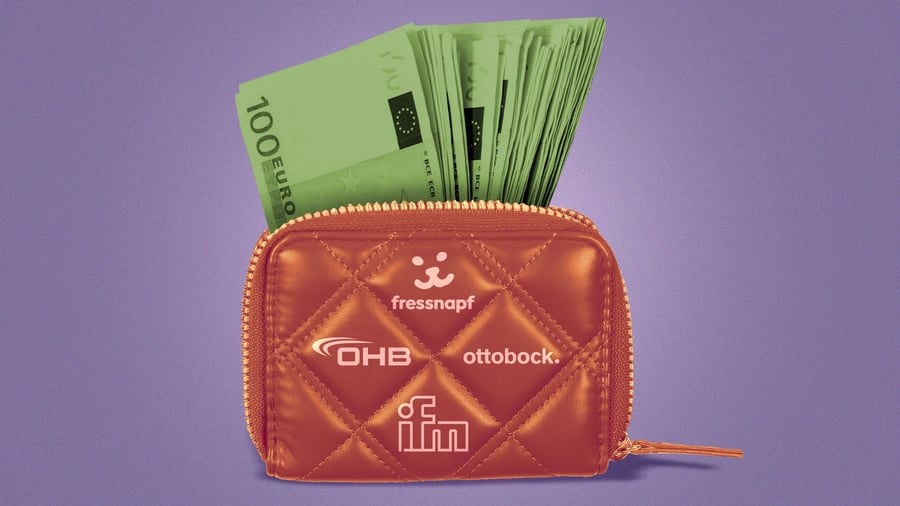
Over 300 German family-owned companies are searching for successors, presenting an opportunity for private equity investment, according to new analysis. Stefan Jaecker, Germany chief of investment bank DC Advisory, reports that the number of such transactions has more than doubled in just six years. The analysis, conducted by the Handelsblatt, interviewed numerous entrepreneurs, investors, and advisors to examine the conditions for successful deals and the challenges of transitioning to private equity capital.
There were over 600 primary buy-out transactions in Germany last year, with financial investors making up less than 10% of these deals in 2018, compared to over 20% in 2024. Jaecker notes that cooperation between family businesses and private equity investors in Germany has never been closer to its current level. More entrepreneurs are discussing the possibility of selling their companies to private equity firms, stating that family businesses and private equity are not mutually exclusive.
Hans-Georg Näder, chairman of the supervisory board of prosthetics manufacturer Ottobock, has successfully involved investor EQT in his company. Fressnapf founder Torsten Toeller also had a positive experience with his minority shareholder Cinven. For many family-owned businesses, the question of whether to relinquish ownership is no longer fundamental; the crucial factor is finding the right partner and their added value beyond capital.
Private equity offers family businesses a way to expand, as demonstrated by Lutz Goebel, who discovered private equity at an early stage and used it to acquire Henkelhausen, a 90-year-old company in Krefeld. Goebel previously belonged to a family-owned business, but leadership was transferred to someone else. To become a family entrepreneur, Goebel needed financial assistance, which he received from Alpinvest.
Goebel became the majority shareholder in 2003 with support from Hannover Finanz, a minority financial investor. This level of support was not common in the past when family-owned businesses discussed private equity; most preferred not to depend on banks. Many increased their equity capital ratios to more than 50%, thereby becoming more attractive to financial investors.
Selling shares was once viewed as a sacrilege by many family businesses, as it conflicted with their self-concept. However, this attitude is changing. The "Haystack Debate" is over, according to Goetz Hertz-Eichenrode, CEO of Hannover Finanz, as younger generations are more open to the topic due to their knowledge from studies and work.
Three reasons cited by Arnold Weissman, a family business consultant for decades, are driving the increasing willingness of family businesses to accept external capital providers. These reasons include digitalization and artificial intelligence, which accelerate business model changes and require significant investments that many companies cannot cover with their cash flow.
Succession pressure in many family-owned businesses is also intensifying, as the third generation often has different interests from their predecessors. Some heirs do not want to lead the company themselves, while others already have significant wealth and prefer to use it as investors. Family-owned businesses have already been acting like investors, subsidizing their core businesses.
Geopolitical conflicts and uncertain frameworks increase the pressure on companies, forcing them to reassess their supply chains, secure markets, and invest in growth. Private equity competes with family equity, but initially, it does not automatically benefit private equity houses. When families cede a majority, strategic buyers often step in, as seen in the cases of Viessmann and EBM-Papst.
Some family entrepreneurs prefer family equity, direct investments from other family businesses, as they believe they offer a similar time horizon and a better understanding of family interests. Yvonne Brückner, a researcher and founder of the family-funded think tank ResFutura, observes the financial engagements of family entrepreneurs closely.
Private equity and family equity compete for attractive investments, but the circle of individual family entrepreneurs capable of undertaking large transactions on their own is limited. According to Brückner, for families, the highest price is not necessarily the most important factor. Analysis by KPMG indicates that in Germany, between 260 and 295 companies with an EBITDA of over ten million euros will undergo such transactions in the next ten years.
Written by urgent.news from Handelsblatt's reporting — not their text. Machine-written — may contain errors; check the original before relying on it.
This story
This is one outlet's version. Read the fullest account.