Missing Celtic fort annihilated by Julius Caesar finally found under Paris hospital
Archaeologists in Paris have discovered the remains of a missing Celtic fort sacked by Julius Caesar in 52 B.C.
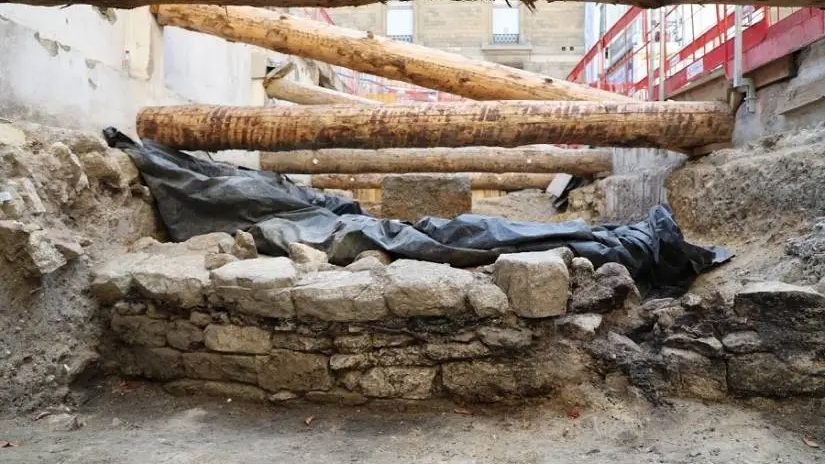
Archaeologists exploring a Paris hospital yard, near Notre-Dame Cathedral, have uncovered the first proof of a Celtic fort that Julius Caesar attempted to capture in 52 B.C. Large stone and timber walls bearing the marks of a devastating fire strongly suggest that the Gauls, the native tribe, intentionally razed their own settlement to prevent it from falling into Caesar's possession.
Chief curator Dorothée Chaoui-Derieux identified the fort's architecture, characterized by its substantial blocks and interlocking beam system, as distinctly Gallic. Traces of fire and remnants of first century B.C. artifacts further bolstered the team's discovery of Lutetia, a pre-Roman Celtic settlement located in present-day Paris.
As part of the Gallic Wars, which spanned 58 to 50 B.C., Caesar and his forces engaged in the Battle of Lutetia in 52 B.C. The Romans emerged victorious, but the Gauls burned Lutetia and severed the bridges, preventing Caesar from conquering the town. Consequently, the fort's remains remained undiscovered until now. Archaeological digs at the site, situated on the Île-de-la-Cité within the Seine's heart, have been ongoing since February 2026.
Initial carbon-14 dating of the wooden components revealed a timeframe between 200 and 10 B.C., while a Gallic spearhead was also unearthed at the wall's base. Though the wall's remains are vulnerable due to fire exposure, archaeologists intend to produce a replica via 3D photogrammetry to ensure the discovery's accessibility to the public.
Written by urgent.news from Live Science's reporting — not their text. Machine-written — may contain errors; check the original before relying on it.