Earth's first bats didn't come from where we thought, landmark genetic study reveals
In the largest study of its kind to date, researchers compiled data from 103 bat genomes and 44 fossils to rewrite the bat family tree and determine where these animals first evolved.
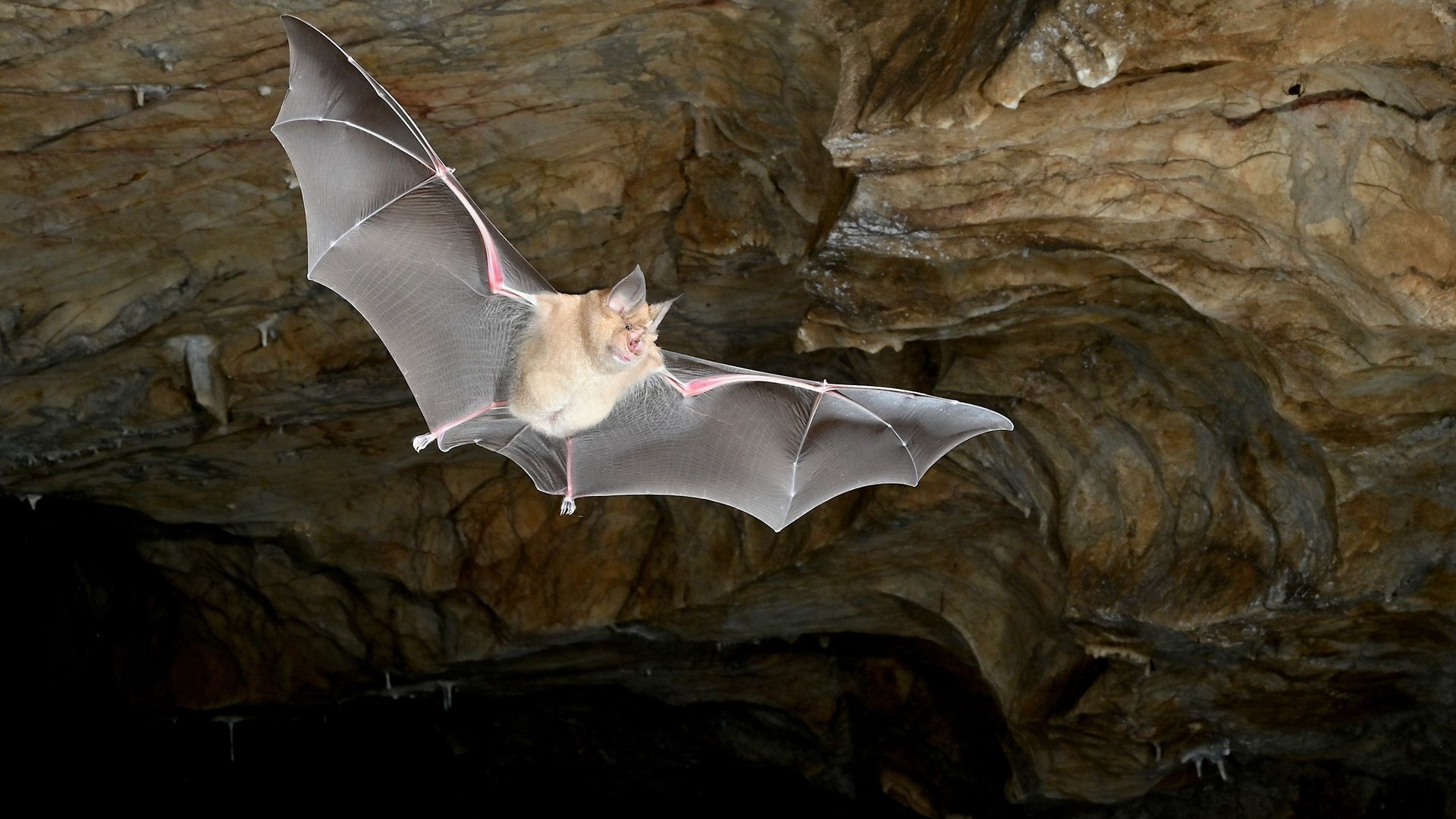
A landmark genetic study published in Nature on September 23 unveils that bats did not originate from Asia, Africa or North America, as previously theorized. Instead, researchers from the University College Dublin and the University of St Andrews found that these winged mammals first emerged in Europe around 65 million years ago. This contradicts earlier hypotheses suggesting Asian, African or North American origins from 50 million years ago.
The study, the biggest bat DNA and fossil study ever conducted, analyzed 103 bat genomes and 44 bat fossils, providing a comprehensive dataset. Co-author Emma Teeling emphasized that after decades of conflicting findings, they have finally uncovered the origins and evolution of bats.
Using advanced DNA sequencing and computational techniques, the researchers identified key genes and redrew the evolutionary tree. The findings suggest that echolocation and true flight, essential traits for bats, evolved early in their lineage approximately 50 million years ago, rather than developing multiple times after modern bats diversified.
This study transforms bat evolution research by providing a robust family tree and understanding their biogeography. The dataset includes all 21 recognized bat families, such as the bumblebee bat, the smallest mammal, and the Madagascar's sucker-footed bat, known for its suction cup-like structures on its limbs.
The research indicates that bats rapidly dispersed from Europe to Africa, then spread to Asia, the Americas and Australia. Bats are the only mammals capable of true flight, leading to their incredible success and diversification into over 1,500 species worldwide.
Beyond their evolutionary significance, bats also exhibit remarkable longevity and disease resistance, traits that could potentially inform human health. Understanding the genetic basis of these traits may lead to innovative approaches for improving human longevity and disease resistance.
Written by urgent.news from Live Science's reporting — not their text. Machine-written — may contain errors; check the original before relying on it.