Microglia scoop out garbage from inside neurons
Through a newly identified process called skoupocytosis, neurons recruit the immune cells to remove cellular waste they find hard to deal with themselves.
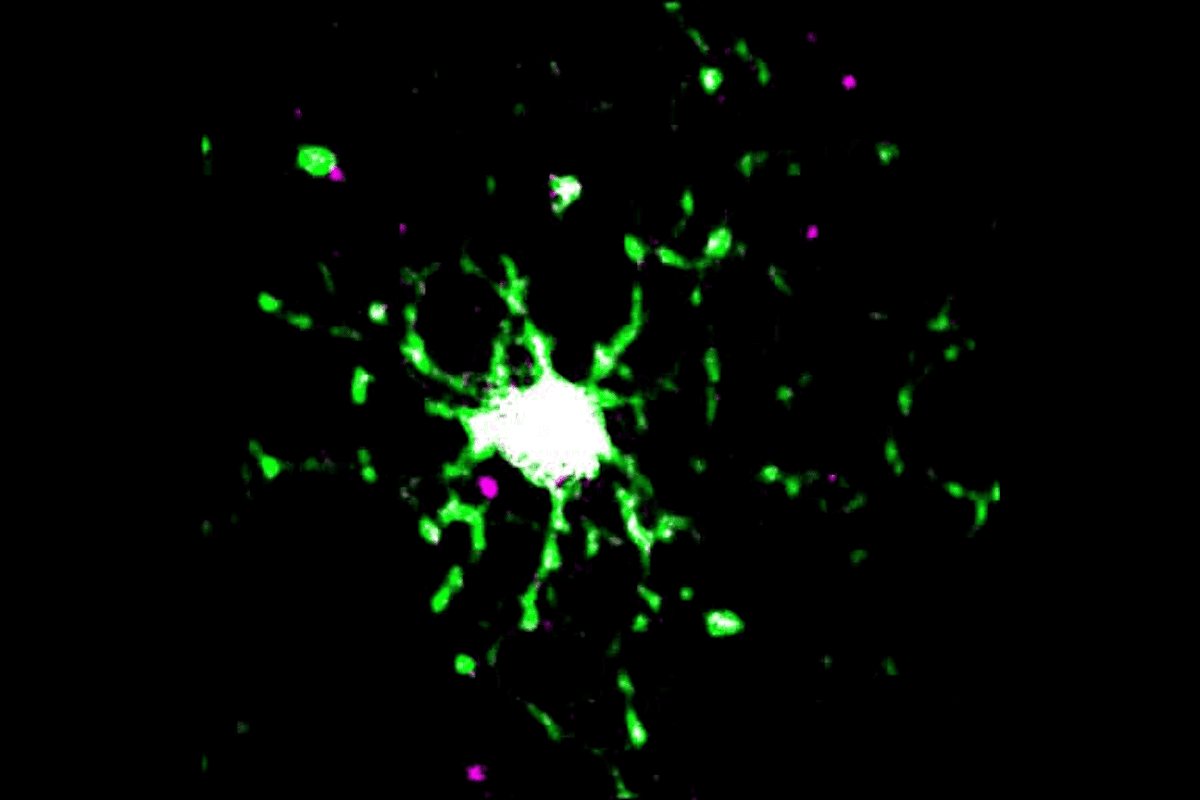
A recent preprint study reveals a novel process called skoupocytosis, where neurons recruit immune cells called microglia to remove cellular waste they struggle to handle alone. Microglia, the brain's professional phagocytes, survey the brain and clean up neuronal debris, damaged proteins, and other biomolecules. In certain situations, microglia can also make contact with axons to extract large organelles containing degraded proteins.
This study, conducted by researchers at Johns Hopkins University and New York University, demonstrates a new exit route for neuronal debris when needed. The researchers observed microglia extending processes towards stationary organelles in the somatosensory cortex during live brain imaging sessions. The interactions between microglia and organelles, termed skoupocytosis, are most common in the axon and seem distinct from previously documented microglial activity with synapses.
The presence of a specific enzyme called alpha/beta hydrolase domain-containing (ABHD16A) in synaptic terminals of artificially stimulated neuronal cultures indicates that microglia know precisely what to take from neurons. This finding adds to our understanding of the molecular communication between neurons and microglia, showing that microglia are dynamically involved in the healthy brain, interpreting neuronal distress signs accurately.
However, the study authors note that skoupocytosis might be rare in healthy brains, as proteolytic organelles are typically small enough to pass through the axon. Future research aims to investigate how synaptic activity recruits the molecular players involved in skoupocytosis and how important it is for synapse function.
Written by urgent.news from The Transmitter's reporting — not their text. Machine-written — may contain errors; check the original before relying on it.