Five moments that defined Lionel Messi’s football legacy
Lionel Messi’s international career is approaching its final chapter, but his influence on football extends far beyond the trophies, records and individual awards collected over more than two decades
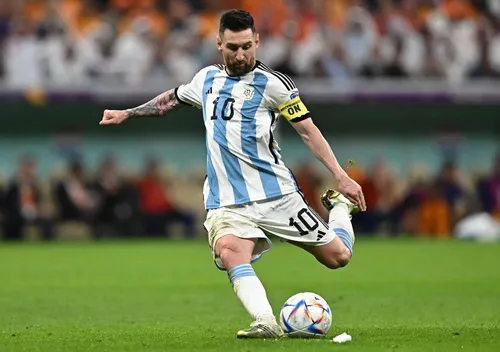
Lionel Messi's international career is nearing its end, yet his impact on football transcends the trophies, records, and individual accolades accumulated throughout more than two decades. Following his announcement to retire from international play, Messi is set to participate in an official farewell match, with several members of Argentina's 2022 World Cup-winning squad also invited to honor his extraordinary career.
As one of football's most influential figures approaches his goodbye, we reflect on five moments that altered the sport.
At just 19 years old, Messi scored his first Barcelona hat-trick against Real Madrid in a thrilling El Clasico at Camp Nou. This performance not only convinced many that Barcelona possessed something extraordinary but also highlighted Messi's acceleration, close control, and ability to maneuver past defenders. However, what truly differentiated him was his composure under pressure, demonstrating that he had transcended the status of a promising youngster and entered the realm of football's elite.
Pep Guardiola's decision to position Messi in a central false-nine role stands as a pivotal tactical moment in modern football. Rather than remaining high between the opposition's center-backs, Messi dropped into deeper positions, forcing defenders into untenable choices. By following him, space emerged behind them, transforming into a devastating attacking threat.
Barcelona's 6-2 thrashing of Real Madrid at the Santiago Bernabeu provided the clearest manifestation of how effective the false nine system could be, subsequently influencing coaches and teams globally.
Messi's 2012 season remains one of the most extraordinary individual years in football history. During that year, he scored 91 goals in 69 matches for Barcelona and Argentina, eclipsing Gerd Muller's long-standing record for goals in a calendar year. Messi exhibited versatility as a goalscorer, creator, dribbler, and playmaker, able to dictate matches from the wing, operate centrally, or drop into midfield before suddenly reappearing inside the penalty area. Such variety underpinned the remarkable statistics, making Messi's contributions invaluable.
Argentina's 2022 World Cup victory carried significant weight in resolving an enduring question about Messi's international legacy – could he secure the World Cup? The answer came as Messi scored twice against France in one of the greatest World Cup finals ever played, thereby completing his international collection and eliminating the one major achievement that had been absent from his career.
This achievement elevated his standing, transforming him from a player aspiring to emulate Argentina's past legends to a figure who had crafted his own World Cup narrative. Moreover, Messi's evolution as a player showcased his adaptability as the game changed around him, continually finding innovative ways to influence football.
From his debut as a teenage sensation at Barcelona to his role as World Cup-winning captain of Argentina, Messi's career has consistently defied conventional expectations of what a single footballer can achieve. As he prepares to bid farewell to international football, the discourse surrounding his place in football history will undoubtedly persist long after he has made his final kick.
Written by urgent.news from IOL's reporting — not their text. Machine-written — may contain errors; check the original before relying on it.