Cómo las elecciones de Marruecos acabaron girando en torno a la Copa del Mundo
El presidente de la federación de fútbol nacional es el favorito para convertirse en primer ministro antes del crucial torneo. Leer
In the outskirts of Casablanca, thousands of workers are constructing the Grand Hassan II Stadium, which will become the world's largest football stadium with a capacity of 115,000 spectators. The project is a central part of a $20 billion ($17.5 billion euros) program to transform sports facilities, transportation, and tourism infrastructure for the 2030 World Cup, which Morocco will co-host with Spain and Portugal.
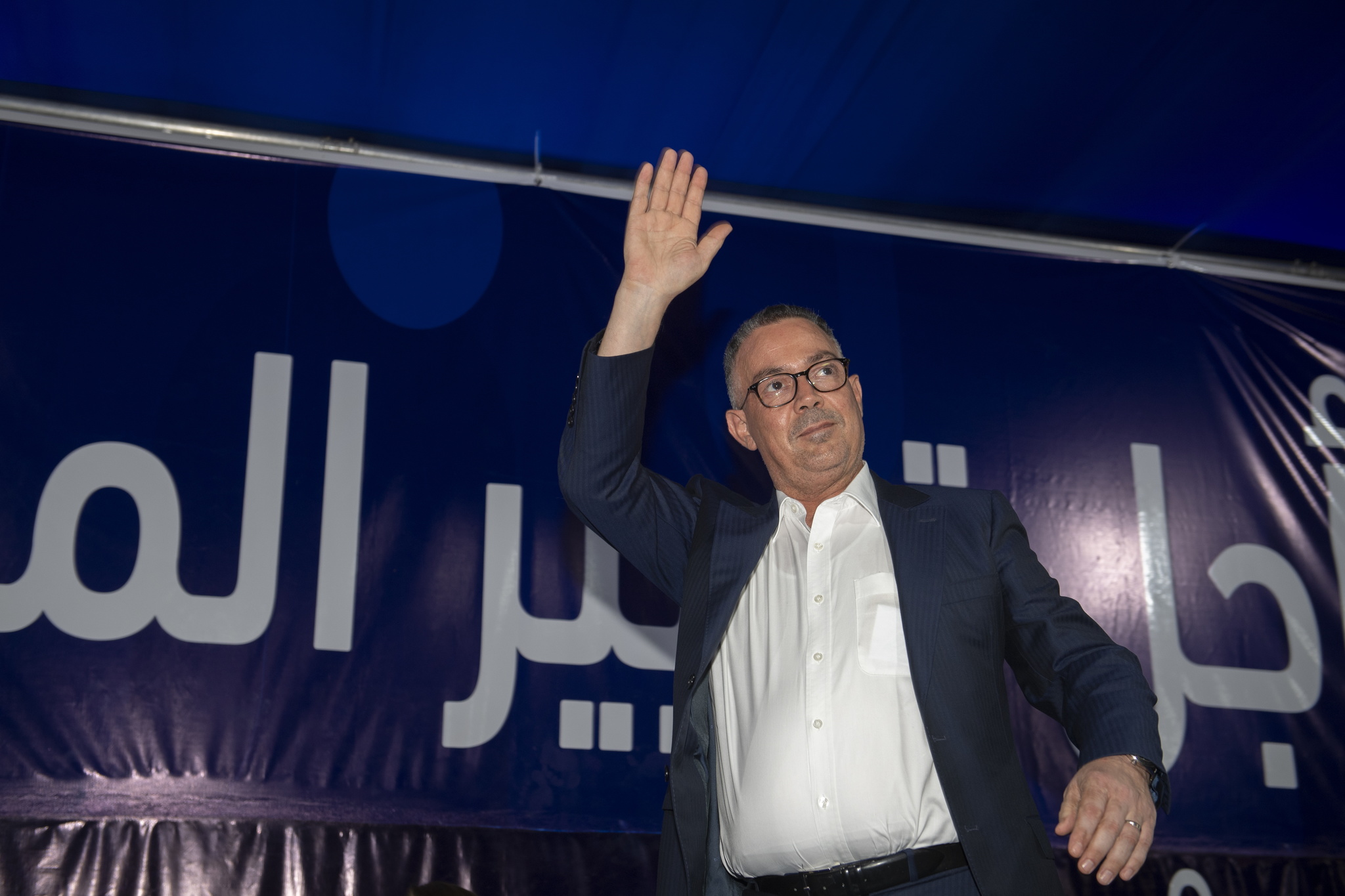
The tournament's significance for Morocco's prestige is such that football also plays a central role in the parliamentary elections taking place on Wednesday. As the man considered most likely to become Prime Minister, former Real Federation of Moroccan Football president Fouzi Lekjaa, a budget minister, is leading the charge. His popularity stems from his contribution to transforming the national team, which reached the 2022 World Cup semifinals and advanced to the 2022 quarterfinals.
Speculation about his potential rise to Prime Minister began in July when he joined the Authenticity and Modernity Party (PAM), a coalition partner in the outgoing government and considered close to the palace. For Lekjaa to become Prime Minister, the PAM would need to secure a majority of seats in the Assembly, and King Mohammed VI, who controls key appointments and decisions, would designate him to form the government.
The Moroccan regime hopes Lekjaa's association with the national team will inject credibility into the political system, and they are eager for the World Cup to be a success. Morocco expects the tournament to drive annual growth of 1.7% and create 100,000 jobs annually. However, despite the passion for football, this may not be enough to quell public reservations about spending billions on the event.
Many see the preparations as a symbol of a two-speed economy that has generated significant regional and social inequalities, with uneven benefits distributed among Morocco's 38 million inhabitants. According to the IMF, youth unemployment reached 37% in 2025, and the World Bank states that the country has not created jobs at the scale demanded by its growing labor force.
Only one-third of Moroccans aged 18-35 trust the Parliament, Prime Minister, or political parties, according to a survey published in March by the Afrobarometer research network. Mehdi, a 28-year-old electrician in Rabat, the capital, says he will abstain from voting as he feels his vote has not changed anything before. Lekjaa, a 56-year-old technocrat, rose to the position of Minister of Finance and directed his hometown team, Renaissance Berkane, before becoming national federation director in 2014.
He claims the World Cup will spur economic growth and job opportunities for young Moroccans. However, the elections come after youth-led protests across Moroccan cities last year, where demonstrators chanted "health first, no World Cup." Protests were triggered by the death of eight pregnant women in a public hospital in Agadir due to alleged medical negligence.
Economic discontent was evident recently when around 70,000 people—mostly Moroccan—swam to the Spanish enclave of Ceuta. Over 140 people died in the crossing, most of them returned by Spain. Atif Abdelali, a Socialist Unified Party (PSU) candidate in Casablanca, the economic capital of Morocco, says young people he met during the campaign were angry about everything.
The main complaint is that incomes are not keeping pace with rising prices. Many have lost interest in politics because they see no impact on their lives, according to Omar El Hyani, a Rabat municipal councilor and representative of the Left Democratic Federation, another small party with only one deputy in the outgoing Parliament.
Morocco's economy is expected to grow by 4.4% in 2026, according to the IMF, which praised the government for its fiscal discipline but noted sustainable job creation is an urgent priority. Much of the investment in Morocco has focused on the northwest coastal region, which includes Rabat, Casablanca, and Tangier, while interior and mountainous areas have been neglected, and public services such as healthcare and education remain deficient.
Written by urgent.news from Expansion ES's reporting — not their text. Machine-written — may contain errors; check the original before relying on it.