AWS Adds Harness to Open Source SDK for Building AI Agents
Amazon Web Services (AWS) this week revealed it has added a harness to the open source software development kit (SDK) it makes available for building artificial intelligence (AI) agents. First introduced last year, the Strands SDK makes it simpler for application developers to use AI models to build and deploy AI agents. The Strands harness […]
Amazon Web Services (AWS) announced the addition of a harness to its open source software development kit (SDK) for building artificial intelligence (AI) agents. The Strands SDK, introduced last year, simplifies the process for application developers to utilize AI models in creating and deploying AI agents. These agents are designed to automate specific tasks within an organization.
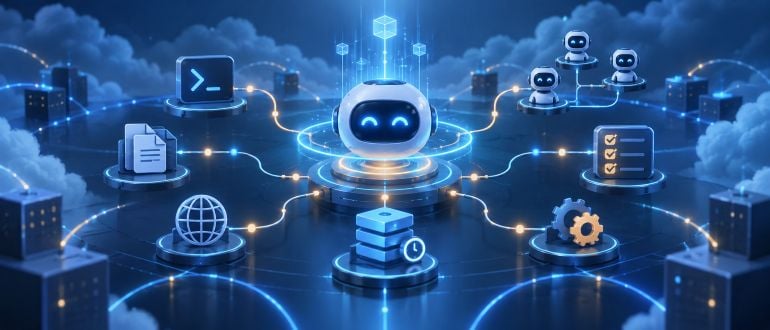
Marc Brooker, AWS's vice president and distinguished engineer, explained that the aim is to streamline the process for developers to build AI agents tailored to their unique organizational needs. Often, these AI agents are now being developed and deployed by DevOps teams, similar to any other workload. The challenge lies in assembling the necessary components to create a custom AI agent, which the Strands harness addresses by providing access to essential tools like shells, file systems, and web tools.
It also enables long-term memory retention across sessions and resumes conversations when provided with a session ID. Furthermore, the Strands harness assigns open-ended subtasks to a built-in helper agent and includes a checklist for managing multi-step workflows. AWS has also incorporated a context window capability that offloads large tool results to files, reducing the number of tokens consumed by up to 28%.
While AWS does not intend to contribute the Strands SDK to a consortium, it does not impose restrictions on its usage for building AI agents that could potentially operate in any environment. Mitch Ashley, vice president and practice lead for software lifecycle engineering at the Futurum Group, noted that AWS is essentially enabling the creation of a functional agent with a single line of code.
As building AI agents becomes more accessible, the focus of DevOps teams will shift towards deployment. However, the speed of deployment will still be constrained by the DevOps teams' ability to monitor, control, and verify the execution of AI agents. Although AI agents introduce a new type of workload for DevOps teams to manage, existing software engineering best practices should still be applied.
Organizations may soon need to handle thousands of AI agents that require continuous updates, leading to the need for DevOps teams to prepare for an era of agentic engineering that is just beginning to emerge.
Written by urgent.news from DevOps.com's reporting — not their text. Machine-written — may contain errors; check the original before relying on it.