As fires spread in Indonesia, Bornean orangutans run out of forest to flee
JAKARTA — As fires continue to engulf large swaths of forest in Indonesian Borneo, orangutans have increasingly fewer places to flee, with fires either surrounding them or eliminating the forest on which they depend. Fires are spreading across a connected but heavily fragmented forest landscape and the habitat of critically endangered Bornean orangutans (Pongo pygmaeus) […]
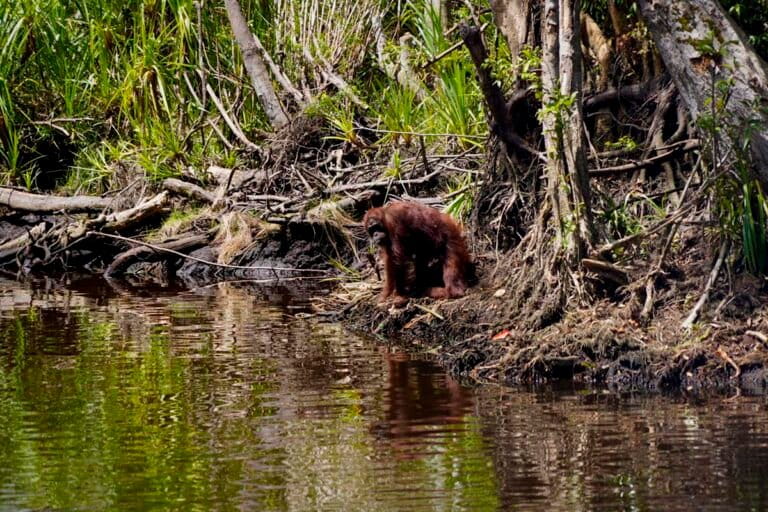
Indonesian Borneo is experiencing a devastating bout of forest fires, leaving critically endangered Bornean orangutans (Pongo pygmaeus) with dwindling options to escape the infernos. The fires are increasingly surrounding the animals, or completely destroying the forests upon which they rely for survival.
One of the most affected habitats is Gunung Palung National Park, located in the province of West Kalimantan. This area is considered one of the last strongholds for the Central Bornean orangutan, supporting a population of around 2,500 individuals. Gunung Palung is also renowned for its unusually diverse forest habitats, which have provided a long-term ecological research environment for orangutans, as well as numerous other species.
However, the park has not been spared from the flames this year, with hotspot activity starting on August 27th. Adjacent to the national park lies the Mendawak Biodiversity Corridor, which plays a complementary role in orangutan conservation. This corridor, while not yet fully secured or continuous, contains additional orangutan habitat outside the park's boundaries and offers a framework for maintaining, restoring, and reconnecting fragmented forest patches across the region.
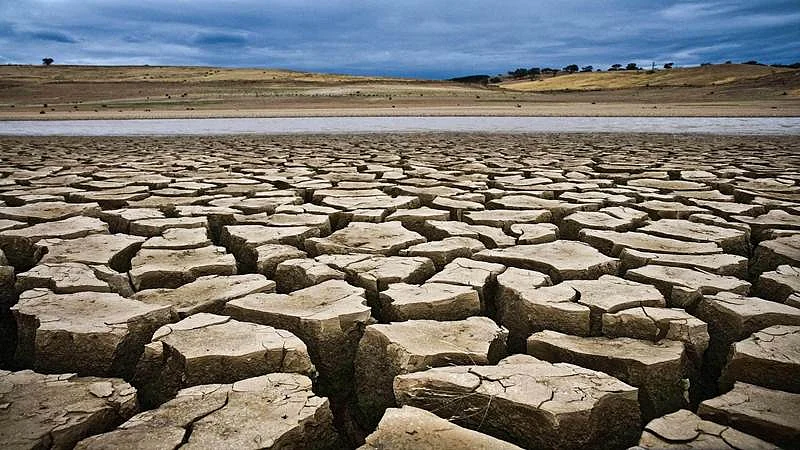
The ongoing fires, exacerbated by an exceptionally strong El Niño season, have brought hot and dry conditions to Indonesia, further intensifying the plight of the orangutans. These areas, despite their ecological significance, have succumbed to the flames, highlighting the urgent need for action to protect these endangered primates and their habitats.
Written by urgent.news from Mongabay's reporting — not their text. Machine-written — may contain errors; check the original before relying on it.