A Startup Wants to Power Data Centers With ‘Supercritical’ Carbon Dioxide
The technology could strap onto existing gas turbines and make them more efficient—but it wouldn’t do away with their emissions entirely.
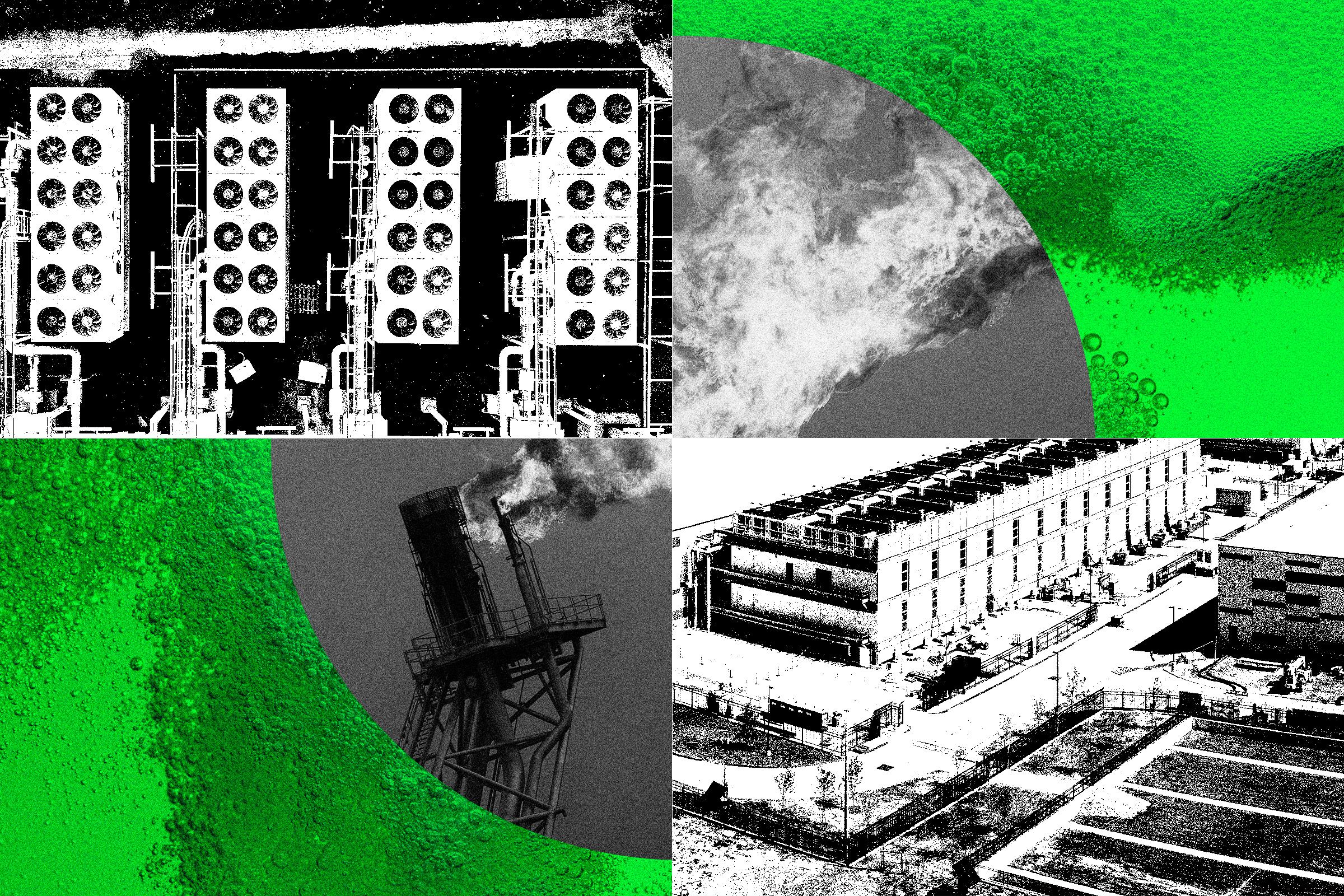
American Supercritical, a startup, surfaced from stealth mode, securing $8 million in funding. The company aims to retrofit inefficient gas turbines used by numerous data centers with supercritical CO2 technology. Although the gas-fired turbines will continue to emit carbon pollution, the supercritical CO2 unit can generate more power without adding more emissions.
The technology can be applied to various energy sources as power demand grows exponentially. Simon Shuham, a cofounder, stated, "We want to start with gas turbines but eventually expand beyond that."
Typically, large gas-fired power plants in the U.S. utilize a combined-cycle process, where turbines convert burning compressed air and natural gas into electricity, and another engine produces additional energy through hot exhaust. However, data centers in the U.S. often power their operations using simple-cycle turbines, which are much less efficient than combined-cycle plants. These turbines convert only about 35 percent of the energy into electricity, while the rest escapes as exhaust, which includes greenhouse gases.
Scattered data-center power plants, like the massive Amazon project in Texas powered by simple-cycle turbines, are permitted to emit over 33 million tons of greenhouse gases annually—more than some small nations. Yet, these small, inefficient turbines could be an ideal match for supercritical CO2 technology, according to American Supercritical's founders.
Carbon dioxide becomes supercritical when pressurized and held at a specific temperature, providing the density of liquid while still being a gas. American Supercritical intends to attach its units to small gas turbines, generating more energy. The CO2 unit can use the hot exhaust from the turbines to create additional electricity without additional emissions.
Using supercritical CO2 can also minimize or eliminate water use in the power generation process, a significant concern in data centers. Importantly, the CO2 operates in a closed-loop system, eliminating the need for refilling. Matthew Carlson, a cofounder and supercritical CO2 researcher, compared it to refrigeration systems circulating CO2 for cooling.
The company plans to initially sell a 10-megawatt unit, relatively small compared to gas plant standards. By their calculations, adding supercritical CO2 units could increase turbines' efficiency by up to 50 percent without adding more greenhouse gas emissions or water use.
However, retrofitting all inefficient gas turbines powering data centers with supercritical CO2 units won't reduce emissions to zero. Natural gas production and use, even with efficient turbines, contribute to global warming. Data centers represent a significant new source of pollution, occurring at a time when the world needs to reduce its reliance on fossil fuels. Supercritical CO2 technology has been studied in U.S. national labs for over 50 years, with recent efforts transitioning from theory to practical applications.
While American Supercritical isn't the only company pursuing this technology, they face hurdles to achieve commercial success. The companies must create all associated components and establish a supply chain. Technical challenges and cost issues also persist. Doug Hofer, a former GE turbine engineer and American Supercritical adviser, noted that the development of more compact and affordable heat exchangers has been crucial.
However, larger companies are satisfied with traditional power plants and are reluctant to invest in alternative technologies.
Written by urgent.news from Wired's reporting — not their text. Machine-written — may contain errors; check the original before relying on it.