A Look at How Loblaw and EAIGLE Are Bringing Automated Gates to a National Distribution Network
Loblaw Companies, Canada’s largest food retailer with roughly CA$61 billion in annual revenue, has been running automated gate technology at what its transportation team describes as the flagship facility for its entire network, and the reason that designation matters is that the site was built to absorb a set of innovative projects rather than to […] The post A Look at How Loblaw and EAIGLE Are…
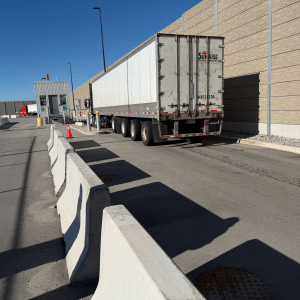
Loblaw, Canada's largest food retailer, has been utilizing automated gate technology at its flagship distribution centre for some time now. The site, built to accommodate innovative projects, showcases the company's future direction. Each day, approximately 400 inbound and 400 outbound trailers pass through, with processing times of three seconds for inbound and four seconds for outbound.
Loblaw and EAIGLE, based in Markham, Ontario, recently announced an expansion of their partnership across multiple yards and distribution centres. EAIGLE's technology, branded as AVAC, aims to improve product movement within the network. Amir Hoss, EAIGLE's CEO, positioned the technology as an enhancement to existing workflows rather than a replacement for them.
Every transaction at the gate triggers seven or eight API calls across various systems, such as Manhattan Active, SAP, Blue Yonder, TruckMate, C3 Solutions, and Setaris. Steve Freas, Loblaw's director of transportation systems, explained the inbound sequence: the supply chain hub validates the contents of the trailer, yard management verifies the trailer and its contents, and staff receive a real-time view of what is on-site.
Paperwork is recorded, the trailer is checked into the yard management system, and shunt tasks are initiated automatically.
The driver population is divided between Loblaw's own fleet drivers, comprising about 30 to 40 percent of traffic, and carriers, making up the remaining 60 to 65 percent. Loblaw's drivers use an in-house application that generates a QR code instantly, while carriers utilize either a web application or a Samsara, Isaac, GeoTab, or Platform Science tablet. Drivers can complete the transaction through a phone, kiosk touchscreen, or in-cab tablet.
Written by urgent.news from FreightWaves's reporting — not their text. Machine-written — may contain errors; check the original before relying on it.