US stresses backing for Japan, Korea and Taiwan ahead of Trump-Xi summit
Analysts say US allies fear Donald Trump may offer Xi Jinping concessions on Taiwan and trade in exchange for an economic deal when he hosts him at the White House on Thursday.
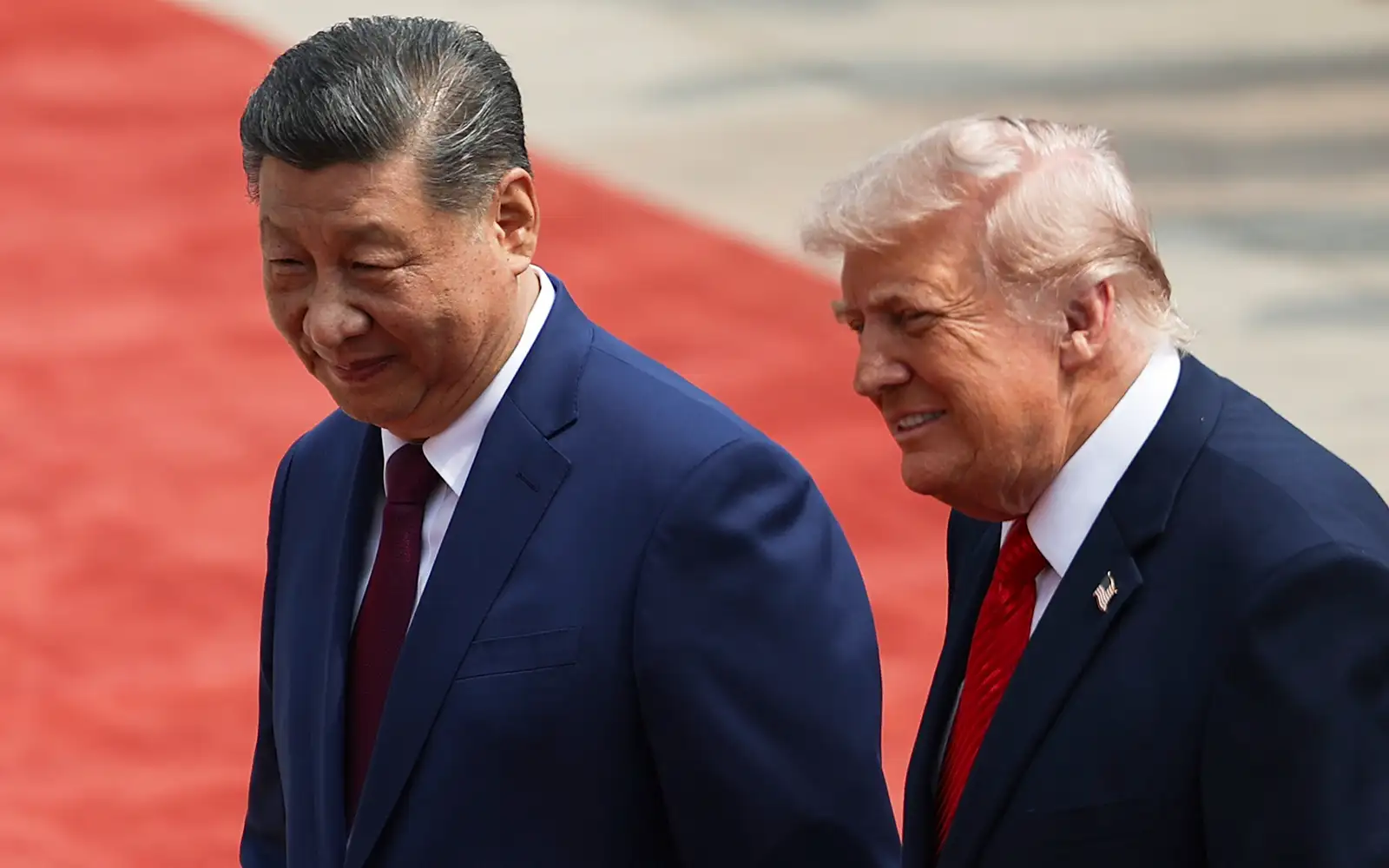
The September 24 summit between President Xi Jinping and US President Donald Trump is a significant meeting beyond economic matters. This time, strategic questions, including the Korean peninsula and North Korea's nuclear program, are expected to be on the table. In their May meeting in Beijing, both sides focused on immediate national interests like trade, technology, and Taiwan.
However, the security threat posed by the peninsula was absent. Given North Korea's arsenal of intercontinental ballistic missiles capable of reaching the continental US and Trump's public acknowledgment of 57 nuclear weapons, the situation is more dangerous than ever. North Korea now views its nuclear status as reality and disregards inter-Korean ties, considering them as "two hostile states."
Diplomacy's lack of action has not brought stability; instead, it has given North Korea time to strengthen its arsenal. The timing of this summit is alarming since North Korea's leader, Kim Jong-un, hosted Xi in June, marking his first visit to Pyongyang in seven years. Denuclearisation was not mentioned. Trump has expressed interest in meeting Kim around November's Asia-Pacific Economic Cooperation forum, and China seems ready to help broker this meeting.
With this sequence of events, the summit has become a crucial point, and how the North's status is addressed will determine the subsequent actions. It is essential to include the peninsula and the nuclear issue as formal agenda items. The nuclear threat North Korea possesses is not a bilateral concern; it threatens everyone. If the two powers aim to uphold the "constructive strategic stability" they agreed upon in Beijing, addressing this risk is the bare minimum common ground.
The longer they remain silent, the more Pyongyang will misinterpret it as an opportunity for recognition as a nuclear power, undermining the stability Beijing sought. Both sides should act now. The US needs to reassert strategic clarity, reaffirming denuclearisation and demonstrating that North Korea's weapons are not a negotiable item in their dealings with China.
If the US finds the term "denuclearisation" inconvenient, Pyongyang will view it as their own gain. China must shift from being a mere observer to a responsible stakeholder. While helping to arrange a Trump-Kim meeting is a start, it is not enough to manage North Korea's caprice. As a permanent Security Council member, Beijing must fulfill the minimum obligation of maintaining the non-proliferation regime intact.
Enforcement of sanctions, trade controls, and drawing Pyongyang to the negotiating table are all ineffective without China's involvement. Treating the issue as a collective regional risk aligns with China's status as a global power. South Korea's role is equally important. As the most vulnerable stakeholder, its absence in the discussion is dangerous, as seen in August's abrupt exercise cancellation.
To prevent a recurrence, Seoul must participate in coordination with Washington and Beijing both before and after the summit. South Korean President Lee Jae Myung has proposed a nuclear freeze as a feasible and realistic alternative, a step towards negotiated denuclearisation, not a replacement for it. Seoul should not act as a bystander but as the architect of its own road map and peace vision.
If the peninsula is relegated to the sidelines once again, the entire region will suffer the consequences. Therefore, the issue must take center stage in Washington. North Korea's nuclear program will not diminish by itself; the longer the issue is neglected, the more complex it becomes. This summit's judgment will not be based on what the two powers sacrifice but on what they responsibly address.
The recognition in both capitals that the peninsula and North Korea's nuclear threat cannot be ignored is vital.
Written by urgent.news from South China Morning Post's reporting — not their text. Machine-written — may contain errors; check the original before relying on it.
This story
This is one outlet's version. Read the fullest account.
- Three Ts will dominate Trump-Xi summit – but expect little movement on trade, less on Taiwan and who knows on tech theconversation.com
- Why Trump-Xi summit must put Korean peninsula back on the agenda scmp.com
- US stresses backing for Japan, Korea and Taiwan ahead of Trump-Xi summit freemalaysiatoday.com
- US stresses backing for Japan, Korea and Taiwan ahead of Trump-Xi summit channelnewsasia.com
- US stresses backing for Japan, Korea and Taiwan ahead of Trump-Xi summit nst.com.my
- US stresses backing for Japan, Korea and Taiwan ahead of Trump-Xi summit koreatimes.co.kr
- Three Ts will dominate Trump-Xi summit asiatimes.com
- Three Ts will dominate Trump‑Xi summit — but expect little movement on trade, less on Taiwan and who knows on tech crikey.com.au