Stuntboost is a Tech Dech, skateboarding platformer all about doing sick flips on cardboard constructs in your bedroom, and it's out now
I was not a child that was built for skateboarding. Child me was a tad too wimpy to ever do anything so wicked cool as that. What if I scuffed my knee a little bit, or worse, embarrassed myself? So I did what any skateboarding curious child would do and bought a Tech Deck. And then I never learned how to get good at it. I am only slightly bitter about this adolescent failure of mine, yet all is…
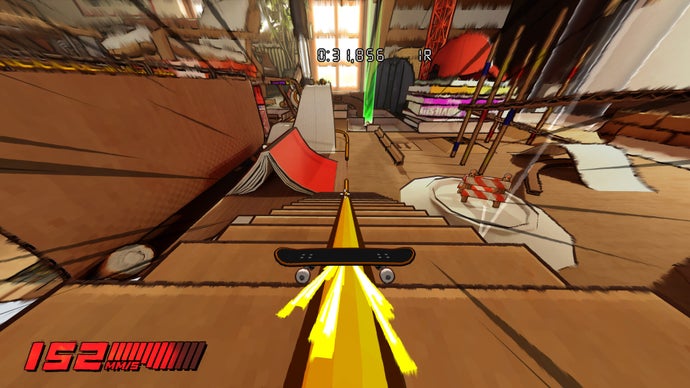
Stuntboost is a new skateboarding platformer video game that lets players experience the thrill of doing impressive flips on cardboard structures in their own bedroom. The game was inspired by the author's own failed attempts at learning how to skateboarding as a child, using a Tech Deck that never quite went well. Stuntboost is a first-person game where players ride miniature skateboards through various cardboard courses, with the hand controlling the character being more of a design element rather than an explicit one.
Players can turn corners quickly, and while gravity is present, it is more of a suggestion than something that must be adhered to. The momentum of the gameplay is well-established, with tracks featuring half pipes, notebook platforms, and other challenging elements. Speed is a key aspect of the game, with a timer displayed at the top of the map to track performance.
The game features a soundtrack reminiscent of the late 90s and early 2000s pop punk era, and players can collect VHS tapes as collectibles. Competitive players will appreciate the online leaderboards, which feature ghosts of other players to challenge their skills. The game also features other vehicles such as scooters and a car, likely inspired by the Toyota AE86 from the anime Initial D. Stuntboost is available now on Steam for those who want to relive the excitement of skateboarding without the fear of embarrassing themselves.
Written by urgent.news from Rock Paper Shotgun's reporting — not their text. Machine-written — may contain errors; check the original before relying on it.