Studie: Wo die Gefahr für Immobilienblasen am größten ist
Frankfurt und München galten lange als gefährdet in Sachen Immobilienblasen. Eine neue Studie sieht die Lage nun deutlich entspannter. Dahinter stecken mehrere Gründe.
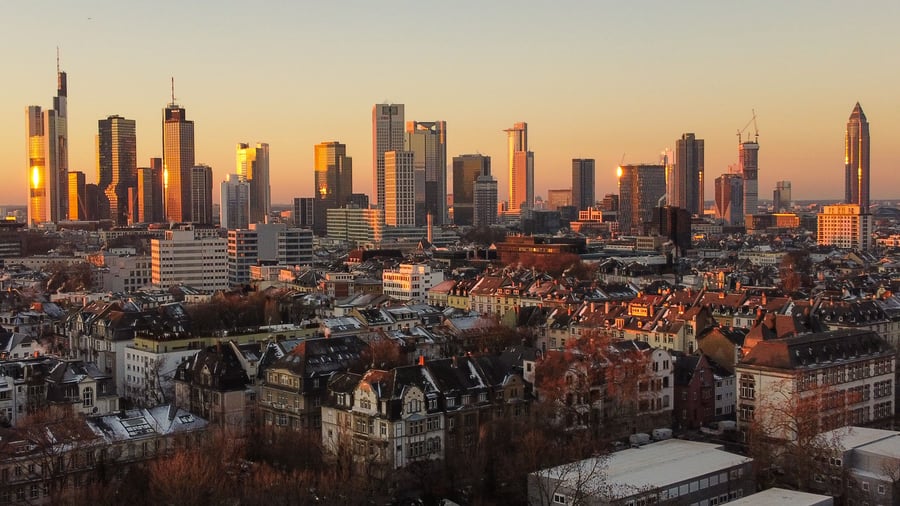
A Swiss large bank, UBS, has released a study revealing that the risk of an real estate bubble in Frankfurt and Munich is currently moderate, despite high property prices. The Swiss bank defines an real estate bubble as a situation where property prices significantly deviate from the income of people and the actual value of the properties.
Frankfurt has experienced a significant decrease in the risk of an real estate bubble due to a decline in property prices, according to the UBS. Similarly, Munich also has a moderate risk of an real estate bubble, as high interest rates and construction costs are slowing down the housing market.
In 2022, Frankfurt and Munich were among the world's cities with the highest risk of an real estate bubble according to the UBS. However, since then, property prices have fallen in real terms due to rising interest rates, while consumer prices have increased and incomes have grown. The UBS analyzes real estate prices in 23 world cities through its "Global Real Estate Bubble Index," comparing property prices and rents to income and economic development and assessing noticeable deviations.
Household debt and construction market developments are also taken into account. The UBS has previously warned that overvaluations in housing markets, such as in the USA in 2007/2008, often signal potential bubbles. Globally, the UBS notes that the risk of bubbles remains relatively unchanged, with only three major cities facing significant dangers: Zurich, Tokyo, and Miami.
The bank identifies the lowest risk for an real estate bubble in Sao Paulo, San Francisco, and New York. Paris and London are far down in the index, which has been calculated for the 12th time in 2026. While property prices in Frankfurt and Munich have significantly corrected after a long period of low interest rates, UBS analyst Maximilian Kunkel states that inflation-adjusted prices are still up to 25 percent below their peaks in 2021 and 2022.
In Frankfurt, property prices have fallen by three percent in 2025. High demand due to migration and the trend towards smaller households is pushing up rents, while high construction and financing costs are slowing down new developments. In Munich, property prices have fallen inflation-adjusted nearly a quarter from their 2022 record.
The German housing market has largely removed the excesses of the low-interest phase. However, the UBS notes that in more than half of the cities studied, housing has not provided effective protection against inflation in recent years, with property prices falling by around 15 percent in real terms in markets where an bubble risk was high in 2021.
Written by urgent.news from Handelsblatt's reporting — not their text. Machine-written — may contain errors; check the original before relying on it.
This story
This is one outlet's version. Read the fullest account.