Scientists Build a Paper Battery You Can Swallow and It Gradually Dissolves
Researchers led by Giovanni Traverso at MIT have developed a paper-based battery designed to power ingestible medical devices inside the body for several days before gradually breaking down in the digestive tract. The team published its findings Sept. 21 in Nature Chemical Engineering, describing a battery made with a magnesium alloy anode, a cathode containing […]
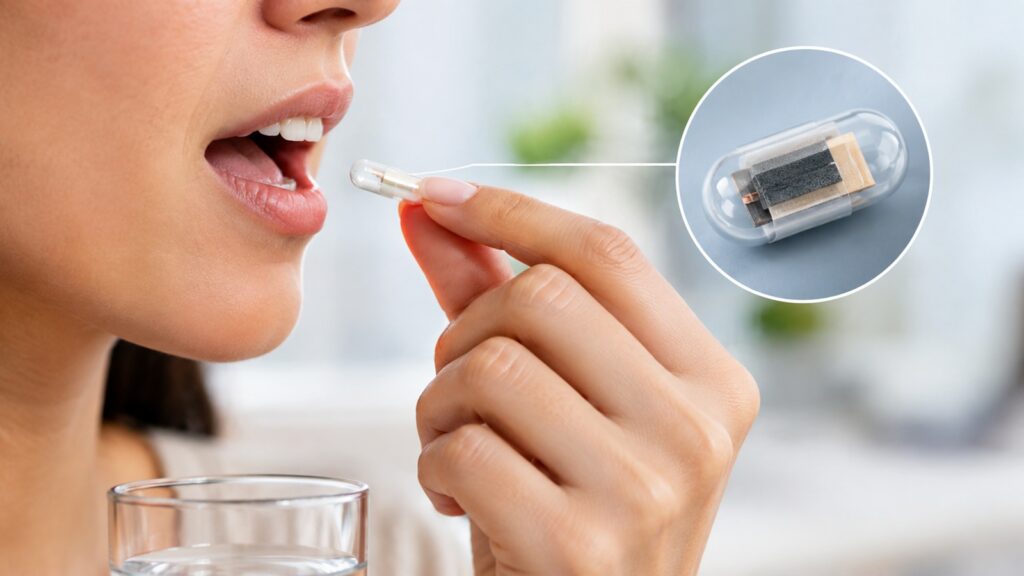
Scientists have crafted a paper-based battery capable of powering ingestible medical devices for a few days before fully dissolving within the body. The invention, developed by a team led by Giovanni Traverso at MIT, could pave the way for smaller, less invasive ingestible devices for tasks such as medication delivery and internal monitoring.
The battery, detailed in a Nature Chemical Engineering paper published on September 21, is constructed from a magnesium alloy anode, a cathode made of molybdenum trioxide and activated carbon, and a biodegradable electrolyte that generates electricity. A cellulose nanofibril binding material creates a thin, porous, paper-like structure for the battery, balancing durability and controlled breakdown.
Traverso's team tested two versions in pigs, with both producing usable power for up to three days and powering various medical devices. The smallest battery, fitting inside a capsule for standard use, generated about 1.77 volts and 2 milliampere-hours per square centimeter. The larger version, designed for more demanding devices, produced roughly 1.84 volts and up to 3.5 milliampere-hours per square centimeter.
Both versions were coated with beeswax and, in some cases, candelilla wax to prevent premature dissolution and extend runtime. In tests, the batteries maintained power output for up to three days inside pigs, gradually losing voltage as they degraded. The batteries successfully powered wireless RFID tags and electrical stimulation devices without causing tissue damage.
While the technology shows promise, current capacity needs improvement for broader applications, requiring roughly 10 times more storage. The researchers aim to conduct longer tests mimicking the human digestive system and hope to start clinical trials of the RFID system within two years.
Written by urgent.news from Colombia One's reporting — not their text. Machine-written — may contain errors; check the original before relying on it.