Researchers say fields of house-sized buoys capture 90% of wave energy
New research proposes a way of converting more energy from the sways of the ocean, though it's only theoretical for now.
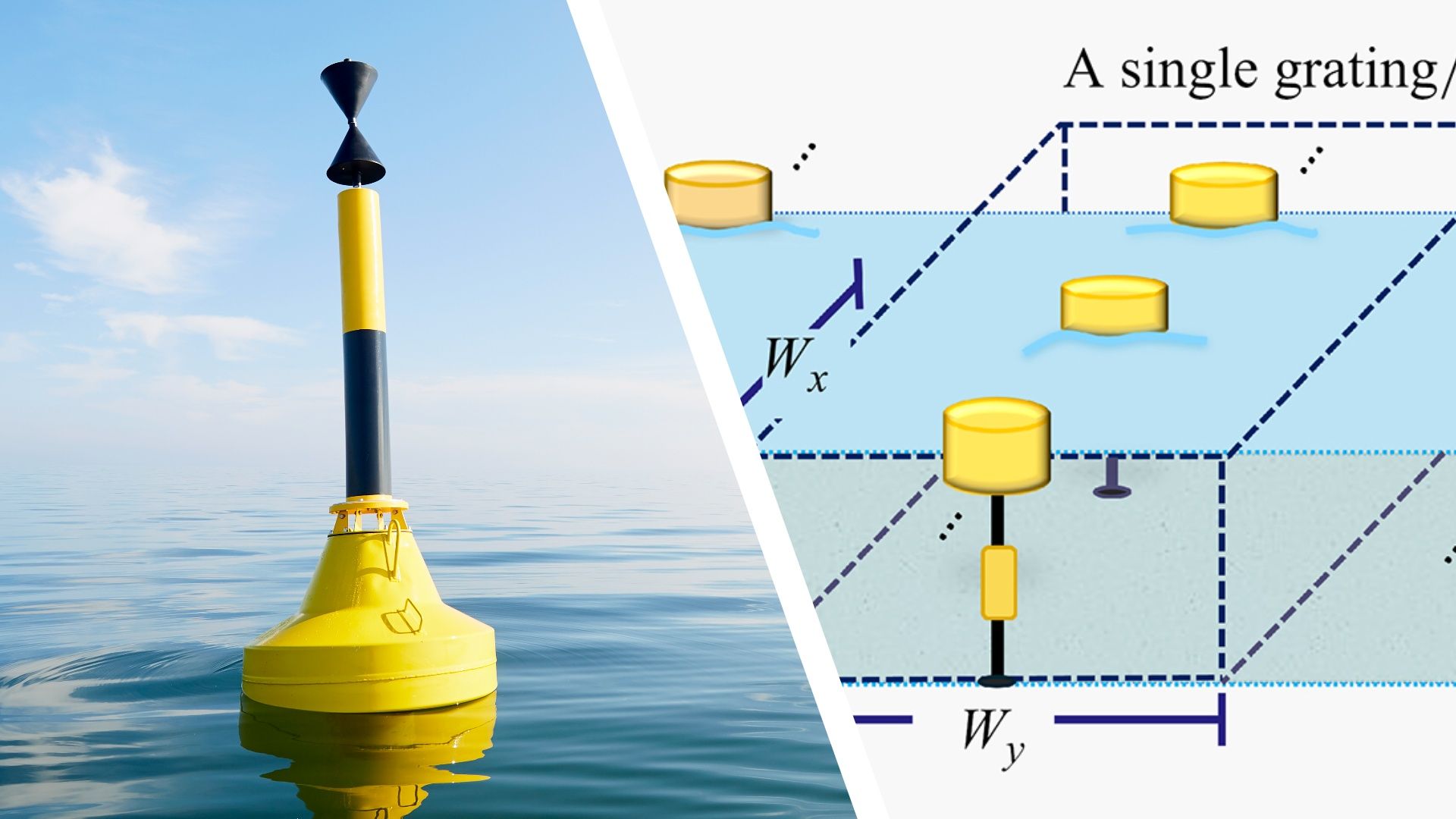
Researchers from Germany and Australia have proposed a new method for capturing a significant portion of the energy produced by ocean waves — up to 90%, according to simulations. The approach involves an array of 60 connected buoys, some as large as small houses, designed to handle various wave types. These buoys, which resemble flat drums floating on the water's surface, are connected to spring and generator units on the seabed.
Each buoy is tuned to a specific wave rhythm, known as the resonance frequency, to maximize power generation.
The buoys work together in a sieve-like system, where even if a wave misses one buoy, it will hit another tuned to its frequency, minimizing energy loss. This design addresses the unpredictability of waves, which can be difficult to capture efficiently. The researchers have extended their previous 2D model to three dimensions, increasing the array size and accommodating various wave directions.
However, this is still a theoretical concept that has not been tested. The team acknowledges the high costs associated with installation, maintenance, and further research required to validate the concept.
Written by urgent.news from TechRadar's reporting — not their text. Machine-written — may contain errors; check the original before relying on it.