Presumed Role of Chorus Waves Out of Tune with New Data
Distinctive plasma ripples are thought to play a big role in electron loss from Earth’s radiation belts, but a new study suggests a more limited influence.
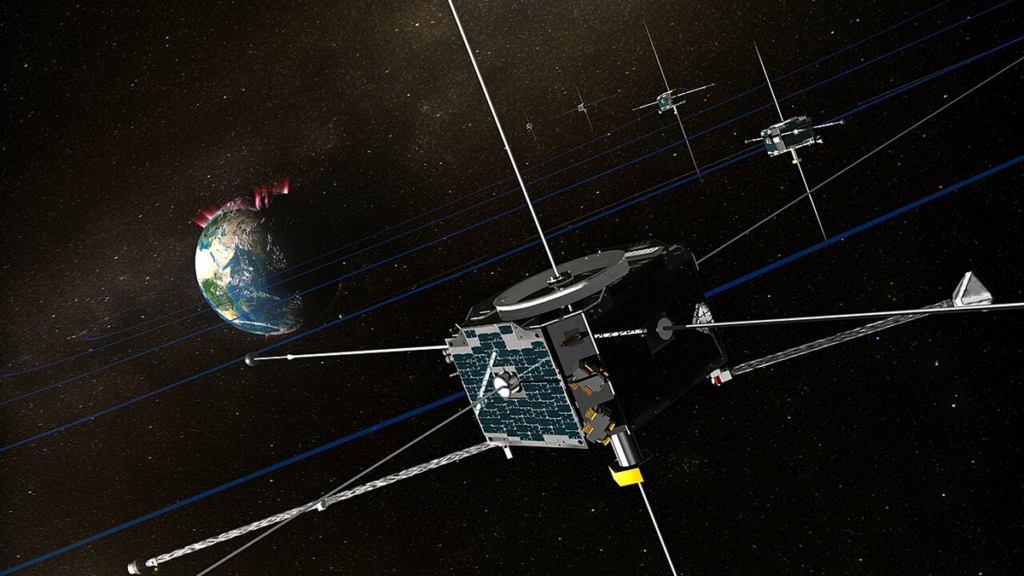
The prevailing understanding of what triggers highly energetic electron microbursts in Earth's radiation belts has been challenged by new research. Van Allen radiation belts are doughnut-shaped regions of energetic charged particles trapped by Earth's magnetosphere, playing a major role in space weather and impacting satellites, astronauts, power grids, and infrastructure.
During relativistic microbursts, trapped electrons escape from the outer belt into Earth's atmosphere in intense surges lasting less than a second. Researchers hypothesized that chorus waves, naturally occurring electromagnetic waves, were the primary drivers of these microbursts, accelerating trapped electrons to high speeds. However, a study by Romero-Minaya et al. revealed that only a small percentage of chorus waves occurred in conjunction with relativistic microbursts, far fewer than expected based on previous studies.
The chorus waves that were associated with microbursts had larger amplitudes and distinctive characteristics, suggesting that only a small subset of chorus waves drive these high-energy microbursts. The researchers urge future studies to explore this possibility and clarify these surprising results.
Written by urgent.news from Eos's reporting — not their text. Machine-written — may contain errors; check the original before relying on it.