Briny “Death Pools” Hold Clues to Early Life
New evidence from the depths of the Red Sea supports the oxidation of manganese and iron as an engine for life in the earliest oceans.
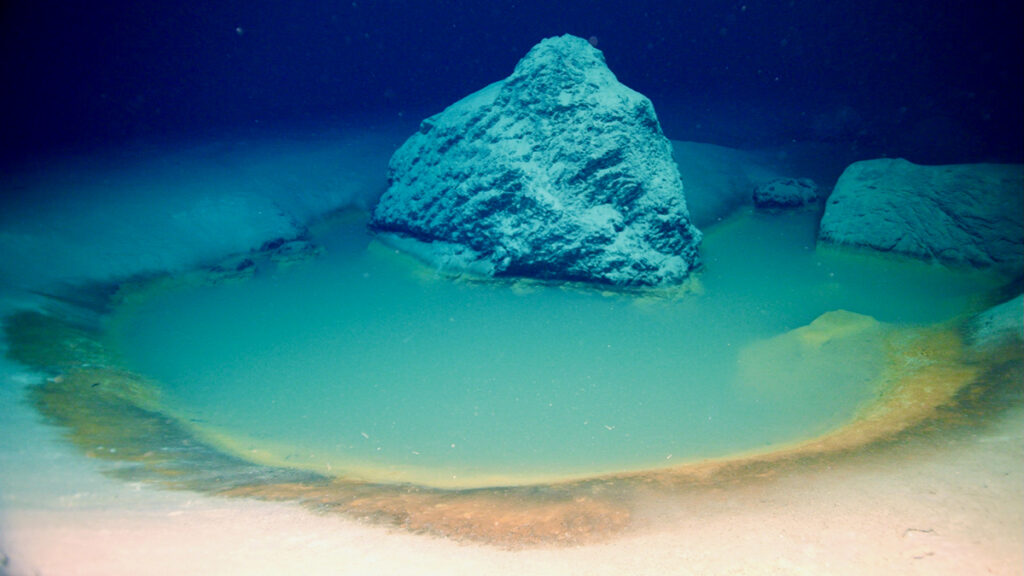
The origins of the earliest life on Earth, before the advent of oxygen and photosynthesis, remain elusive. Brine pools at the bottom of the Red Sea could provide insights into this mystery. These underwater ponds or lakes are dark, saline, and oxygen-free, previously thought to be devoid of life. However, recent studies show that certain extremophiles thrive in these conditions, functioning as oases.
A new study published in AGU Advances analyzed sediments and organic matter in an active brine pool, three non-brine seafloor locations, and a suspected extinct brine pool. The active pool, located 1,770 meters below the Red Sea surface, was rich in bacteria and archaea. Sediments under the microbial mat exhibited high concentrations of metals like manganese, iron, molybdenum, and copper, up to 100 times greater than non-brine pool areas.
The extinct pool, situated nearly 1,400 meters below the sea surface, showed similar enrichment patterns. The presence of oxidized manganese and molybdenum-enriched organic matter in both brine pools suggests that metal enrichment in early oceans might have occurred independently of oxygenic photosynthesis, potentially serving as an energy source for early life.
Metagenomic analyses revealed manganese oxidizers such as Nitrospira in the active pool, indicating that microbial oxidation of manganese to oxides could have facilitated energy production prior to the Great Oxidation Event around 2.4–2.2 billion years ago. While more research is required, the findings support the idea that chemotrophic oxidation of manganese and iron could have been a key energy source for the earliest life in the oceans.
Written by urgent.news from Phys.org's reporting — not their text. Machine-written — may contain errors; check the original before relying on it.