Prazeres Favela Community Garden Reclaims Ancestral Knowledge and Celebrates ‘Our Oldest Technology: Putting a Seed in the Ground’
Clique aqui para Português This article is part of a series created in partnership with the Behner Stiefel Center for Brazilian Studies at San Diego State University, to produce articles for the Digital Brazil Project on environmental justice in the favelas [...]
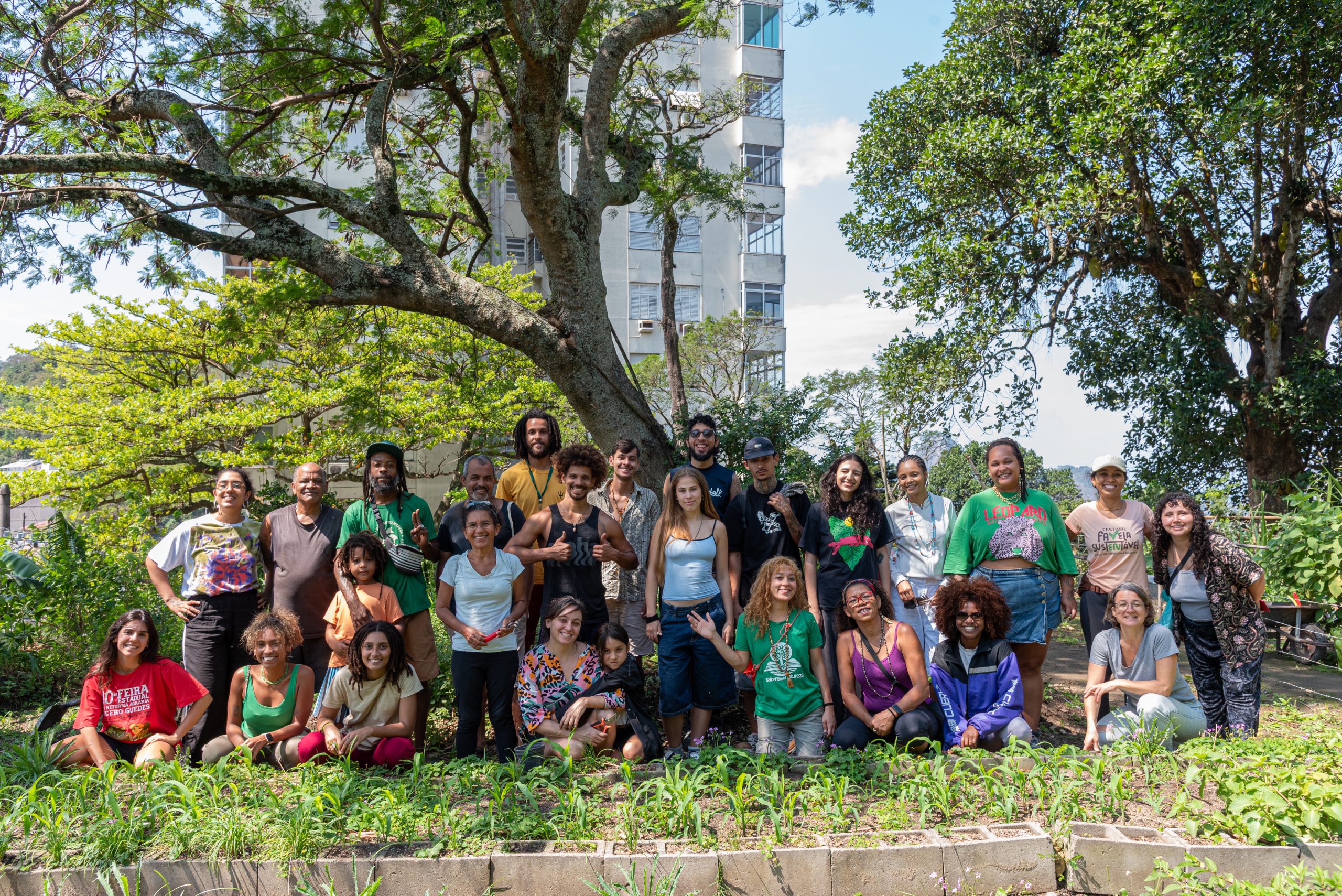
On September 5, around 30 individuals gathered for a community garden collective action in the Morro dos Prazeres favela, located in Santa Teresa, Rio’s central region. This event, part of the Sustainable Favela Network’s (SFN) Collective Calendar, aimed to restore and maintain the space while celebrating the project's core philosophy: “putting a seed in the ground,” a practice that holds great significance in preserving ancestral knowledge.
The gathering included participants from several local collectives, such as Nature’s Wisdoms, Roots of Prazeres, Favela-Park RJ, and Evolux Institute. Several local leaders and active community members contributed remarks at the start of the event, emphasizing the importance of reconnecting with ancestral knowledge and the practical importance of gardening in their lives.
Wellington Fyah, an MC, singer, cook at Vital Food Industry, and farmer at the Prazeres Community Garden, opened the event by explaining how the garden embodies “the oldest technology in the world: putting the seed in the ground.” He highlighted the importance of patience and care in tending to the garden, and how this act of reconnecting with ancestral knowledge is a vital aspect of the project.
Gey, the co-creator of the Prazeres Community Garden and the Women’s Yoga project, reiterated the significance of maintaining the garden and emphasized the need for volunteers to support its ongoing care. Despite the challenges of working in a favela, she continued to emphasize the importance of collective effort and dedication to the garden project, which has been running for five years.
Cris dos Prazeres, founder of the Evolux Institute, shared her history with the project, starting from the ReciclAção days. She explained the garden’s evolution from a garbage dump, known as Pocinho, to a thriving vegetable garden, emphasizing the community’s growing awareness and appreciation for gardening as a way to cultivate food and foster community spirit.
Written by urgent.news from RioOnWatch's reporting — not their text. Machine-written — may contain errors; check the original before relying on it.