Oud, rose and the rituals of a royal majlis
RIYADH — A leather box filled with bottles of perfume was brought into the majlis.Among the fragrances was pure rose oil, rich enough that its scent could fill a room. The guest was not simply offered the perfume. King Abdulaziz bin Abdulrahman Al Saud made sure he was perfumed with it.The scene was remembered by Lebanese writer and traveler Amin Rihani, who stayed as a guest of King Abdulaziz…
In Riyadh, a leather box containing various perfume bottles was presented during a majlis. Among these fragrances, pure rose oil was notably rich, capable of filling an entire room with its scent. The guest of honor, King Abdulaziz bin Abdulrahman Al Saud, was not merely offered this perfume but was ensured he was perfumed with it.
The memory of this scene was recounted by Lebanese writer and traveler Amin Rihani, who had been a guest of King Abdulaziz and later detailed the ritual. Rihani described how perfume was applied to his beard, headwear, and chest, gradually filling the room with an aromatic fragrance.
Preserved in the King Abdulaziz Foundation for Research and Archives historical guide, this account provides a unique and intimate insight into the personal grooming habits of the founder of Saudi Arabia. King Abdulaziz had a particular fondness for fragrance, often using perfumes and aromatic oils such as pure rose oil, which he kept in a special leather box.
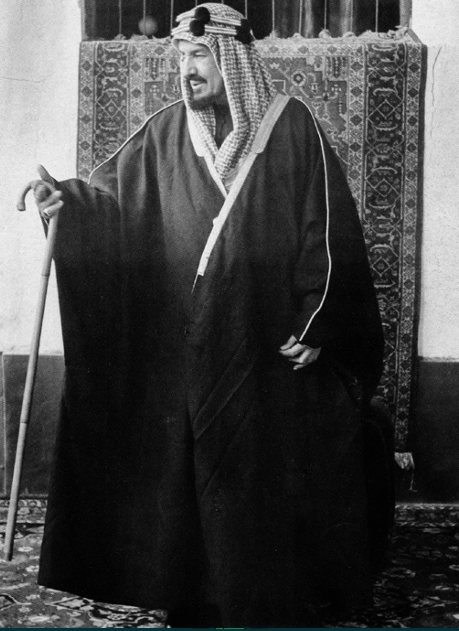
Beyond personal grooming, fragrance played a significant role in King Abdulaziz's majlis. He made it a point to perfumed his guests, turning scent into an essential part of the hospitality extended to those he received. This attention to presentation was also evident in his clothing, which remained rooted in traditional Saudi attire but varied according to the occasion and season.
Among the garments associated with King Abdulaziz were the thawb murawdan, an ornamental garment he wore in his youth during Eid celebrations, known for its unusually broad triangular sleeves. The muqatta, or mudara a, a basic garment similar to a modern men's thobe but cut more broadly, was also part of his wardrobe. For colder weather, King Abdulaziz opted for the zabun, a woolen outer garment open at the front and along parts of the sides and sleeves.
King Abdulaziz's fashion choices, such as his preference for white clothing on Fridays, including a white bisht and ghutra, further highlight his attention to detail. These seemingly small details, when considered alongside his political accomplishments, reveal a king who paid careful attention to the textures of his environment – from the leather perfume box and the scent of rose and oud to the white garments he chose for Fridays and the wide sleeves of the murawdan.
These elements bring to life the atmosphere of his majlis, offering a glimpse into the traditions of dress, fragrance, and hospitality that continue to resonate in Saudi culture even today.
Written by urgent.news from Saudi Gazette's reporting — not their text. Machine-written — may contain errors; check the original before relying on it.