One flag, three centuries of history
RIYADH — Long before the modern Kingdom of Saudi Arabia was proclaimed, a green banner bearing the Islamic declaration of faith was already associated with the Saudi state.Its history reaches back to the First Saudi State, founded in 1727, when Imam Mohammed bin Saud adopted a green banner made of silk and khazz, inscribed with the Shahada: “There is no god but Allah; Mohammed is the Messenger of…
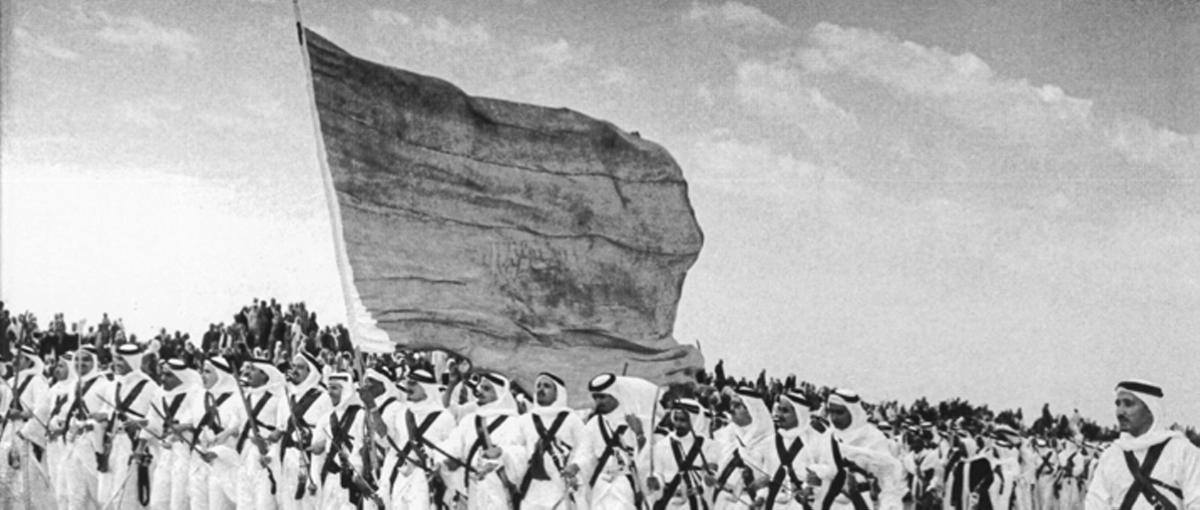
In the annals of Saudi history, a green banner emblazoned with the Islamic declaration of faith has been a symbol of the nation for over three centuries. It traces its origins to the First Saudi State established in 1727 when Imam Mohammed bin Saud first adopted the emblem, bearing the Shahada: "There is no god but Allah; Mohammed is the Messenger of Allah." This banner was more than a mere identifier. It signified leadership, sovereignty, and the unity of the Saudi state during campaigns for unification.
This tradition endured through the founding of the Second Saudi State, when Imam Turki bin Abdullah continued to employ the green banner in his efforts to reunify territories under Saudi governance. However, its design had not yet evolved to resemble the flag known today. During King Abdulaziz bin Abdulrahman Al Saud's unification efforts, the flag featured the Shahada at its center, with two crossed vertical swords above it and a white section alongside the pole.
Over time, the flag underwent design changes. The two swords were replaced by a single horizontal sword beneath the Shahada, bringing the emblem closer to its modern form. Today, the Saudi flag is a green rectangle, with its width being two-thirds of its length. The Shahada occupies the center in white, accompanied by a white unsheathed sword pointing left, with the hilt on the right.
This design is deeply symbolic, with the sword representing strength and justice, while the flag as a whole embodies sovereignty, national unity, and the rich history of the Saudi state.
The evolution of the flag's design was formalized with the approval of Shoura Council Decision No. 354 on March 11, 1937. This decision standardized the flag's dimensions at 150 centimeters in length and 100 centimeters in width and established the principle of exchanging flags with other nations according to diplomatic conventions.
Subsequent regulations refined aspects of the flag's appearance and uses over the decades. A 1952 Shoura Council decision addressed dimensions and amendments, while a 1973 Council of Ministers decision introduced the Flag Law, encompassing 22 articles.
This comprehensive legal framework governing the flag was solidified in 1978 with a 10-article implementing regulation. In 1986, a Council of Ministers decision approved standardized specifications for the national flag. March 11 assumed a new significance as King Salman bin Abdulaziz designated it as Flag Day, marked annually to honor the historical and national value of the Saudi flag.
For nearly three centuries, despite shifting governments, evolving borders, and the emergence of a modern state, the green banner remained steadfast. Its design evolved, dimensions were codified, and its use was strictly regulated, yet the Shahada remained its enduring symbol. Raising the Saudi flag today is not just a display of the nation's identity; it is a tribute to nearly three centuries of Saudi history and heritage.
Written by urgent.news from Saudi Gazette's reporting — not their text. Machine-written — may contain errors; check the original before relying on it.