Mobile ‘dead zones’ could be a thing of the past by end of decade
The mobile “dead zone” could become a thing of the past by the end of the decade as satellites begin connecting directly to ordinary smartphones, Space42 has said. The UAE space technology company is developing direct-to-device technology designed to keep regular, unmodified phones connected when users travel beyond the reach of conventional mobile networks. Viktor Stoyanov, chief operating…
By the end of the decade, mobile "dead zones" could become a thing of the past, according to Space42, a UAE-based space technology company. The company is developing direct-to-device technology that will enable regular smartphones to maintain connectivity even when they venture beyond traditional mobile networks. Viktor Stoyanov, Space42's COO of Smart Solutions, stated that this technology could provide reliable connectivity in areas currently inaccessible to 4G and 5G networks, such as oceans, deserts, and mountainous regions.
The goal is for the transition between terrestrial and satellite networks to be so seamless that users would scarcely notice the change. Space42 and Viasat recently pledged $1 billion to support Equatys, a joint venture focused on creating a global direct-to-device satellite network, with services expected to launch in 2029. This initiative builds upon a previous partnership aimed at extending satellite coverage to communication black spots.
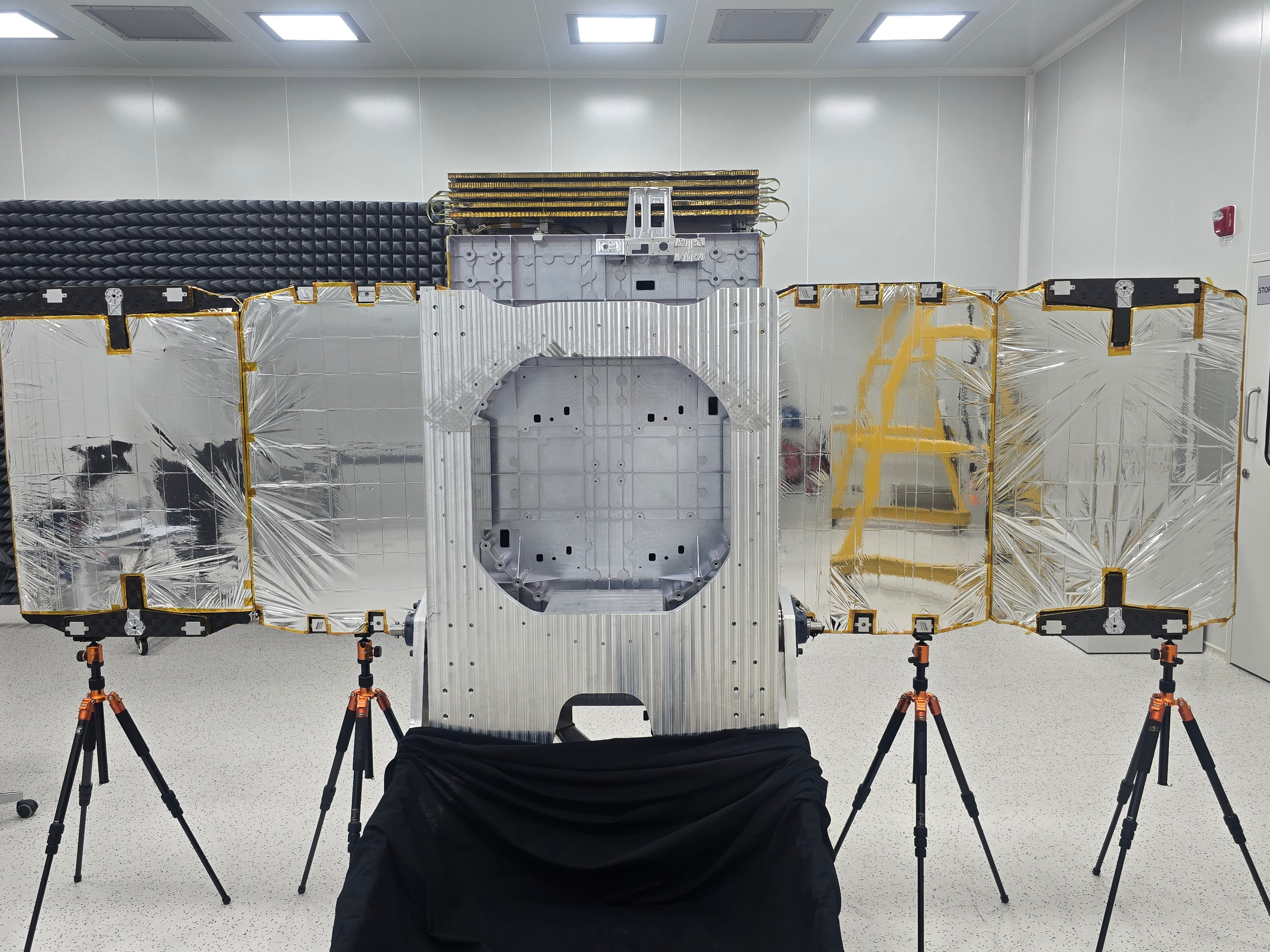
Space42's technology is part of a broader effort to leverage satellites to address both connectivity and observation challenges. The company's Foresight constellation is equipped with five synthetic aperture radar (SAR) satellites, capable of capturing images with a resolution of up to 25cm. Unlike conventional optical satellites, SAR can operate effectively even in conditions like cloud cover, smoke, and dust, enabling the imaging of objects as small as 25cm or larger.
This capability allows for detailed visualization and assessment of areas such as explosion sites, where traditional optical satellites might be hindered by smoke.
Moreover, Space42 is combining repeated SAR observations with artificial intelligence to detect changes over time, effectively transforming the Foresight constellation into a "change detection machine." By feeding successive images of the same location into AI algorithms, the system can reveal patterns and monitor environmental changes.
The UAE has taken a significant step towards sovereign capability in this field, with three of the five Foresight satellites assembled, integrated, and tested within the country. Space42 operates its own mission ground segment, and its downstream analytics and AI models are developed locally. Christos Kolimenakis, chief executive of ICEYE UAE, Space42's partner on the Foresight program, emphasized that the UAE is in control of its "eye" in space.
For consumers, the most immediate benefit of this technology is the elimination of mobile dead zones. Nermeen Negm, Space42's vice president of communications, likened the envisioned experience to a smartphone automatically switching from home Wi-Fi to a mobile network, providing continuous connectivity regardless of location. By the end of the decade, mobile dead zones may be as obsolete as the days before Wi-Fi or Google Maps, according to Negm.
Written by urgent.news from The National UAE's reporting — not their text. Machine-written — may contain errors; check the original before relying on it.
Also reported by 1 other outlet
- Mobile ‘dead zones’ could be a thing of the past by end of decade thenationalnews.com