Memory chips are now more expensive to make than compute chips on a per-area basis — AI demand drives DRAM die value past leading-edge silicon
DRAM makers may potentially get more money for their wafers than TSMC gets for its N3 wafers.
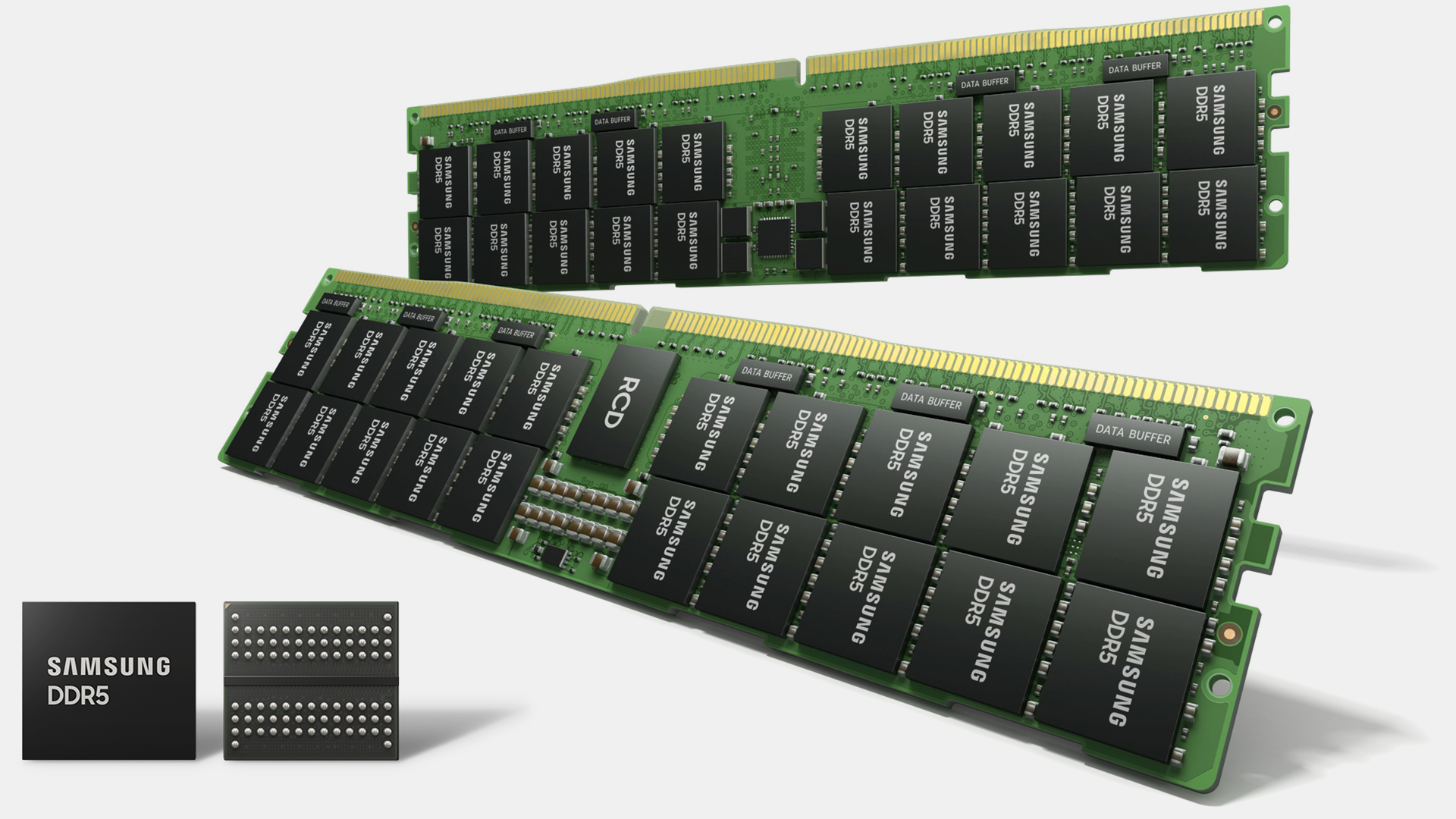
Memory chip production costs have surpassed the price of silicon used in compute chips on a per-area basis, driven by increased demand from the artificial intelligence sector, according to Kurnal Insights. This observation highlights the significant value placed on memory chips, with DRAM wafer prices exceeding those of TSMC's N3 wafer prices.
Using unofficial information, Kurnal Insights estimates that a 300-mm wafer processed using TSMC's N3 technology costs $20,000, equating to around $0.283 per mm². In contrast, DRAM wafer prices are determined by the potential selling value of the memory contained within a square millimeter of silicon.
To illustrate, Kurnal Insights assumes a DRAM price of $1.50 per Gb and multiplies it by varying bit densities. For 1y DRAM with a density of 0.219 Gb/mm², the value is $0.329/mm², while 1z DRAM with a density of 0.273 Gb/mm² reaches $0.410/mm². Finally, 1b DRAM with a density of 0.436 Gb/mm² is valued at $0.654/mm², surpassing the nominal $0.424/mm² calculated for an N2 wafer.
The source's $1.50/Gb assumption aligns closely with the current spot price of DDR5 eTT memory, which is $24.80 for 16Gb DDR5 eTT chips per session on September 21, equivalent to $1.55/Gb. Consequently, 1b DRAM, with a density of 0.436 Gb/mm², would be worth approximately $0.676/mm², just 3% higher than Kurnal Insights' estimate of $0.654/mm².
Written by urgent.news from Tom's Hardware's reporting — not their text. Machine-written — may contain errors; check the original before relying on it.