MAS warns of fresh global shocks and AI pullback, but says Singapore firms and households well-buffered
Economies benefitting from AI-related exports and investments can handle higher debt costs for now, but they are also the most vulnerable if the AI boom cools.
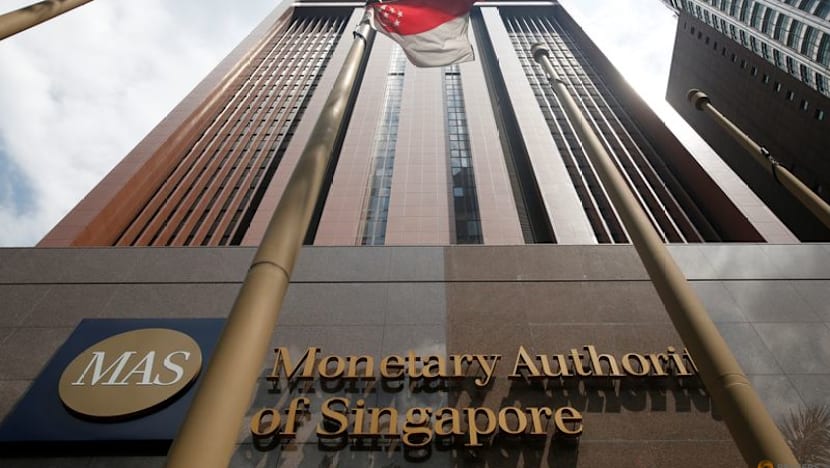
Singapore's Monetary Authority (MAS) warned on Tuesday that global economic uncertainty could lead to fresh shocks, while highlighting that local firms and households are well-prepared to handle potential financial stress. The central bank noted that economies benefiting from AI-related exports and investments could tolerate higher debt costs, but are also the most susceptible if the AI boom slows down.
MAS acknowledged that the Middle East conflict initially caused a sharp rise in Singapore's financial stress index, but it quickly returned to historically low levels. The bank also highlighted that heightened geopolitical tensions, further trade restrictions, or a correction in the AI cycle could trigger volatility.
Looking ahead, shifts in global risk sentiment could generate renewed stress, with heightened geopolitical tensions, trade restrictions, or a downturn in the AI cycle posing potential risks. The rapid growth of AI infrastructure has become a significant driver of global capital demand, but higher global interest rates, rising semiconductor and electricity costs, and increased dependence on market financing have raised the hurdle rate for AI investments.
Despite continued AI investment supporting economic activity and corporate earnings, current equity valuations require robust, sustained revenue growth and substantial profitability from significant investments in data centers and advanced semiconductors.
While economies with strong AI-related connections can better absorb higher borrowing costs, they are also more vulnerable to a pullback in AI. Conversely, those with weaker ties to AI and larger fiscal or current account deficits tend to be more directly affected by tighter global financial conditions. MAS emphasized that while economies benefiting from AI can withstand higher borrowing costs, they are also more exposed to a slowdown in AI.
In contrast, those with weaker links to AI and larger fiscal or current account deficits tend to be more directly impacted by tighter global financial conditions.
MAS also noted that renewed conflict in the Middle East and persistent uncertainty in trade policy are adding to inflation risks. Although access to oil reserves helped mitigate the initial energy shock, dwindling spare capacity makes commodity markets more vulnerable to price volatility. Higher tariffs and the possibility of more trade restrictions are elevating production costs, according to the central bank.
Increasing geopolitical tensions heighten the likelihood of recurrent disruptions in energy markets, shipping lanes, and supply chains for critical technology.
Domestic financial conditions have generally been accommodating against this global backdrop. Over the past year, domestic borrowing costs have eased, with the three-month Singapore Overnight Rate Average (SORA) continuing its downward trend, and Singapore investment-grade credit spreads have tightened. The Straits Times Index rose 33% year-on-year in the third quarter of 2026, and bank credit growth remained firm.
However, rising global interest rates could exert some tightening pressures in the coming period, MAS warned in its annual review.
Written by urgent.news from Channel News Asia's reporting — not their text. Machine-written — may contain errors; check the original before relying on it.
This story
This is one outlet's version. Read the fullest account.