FAM’s new era has an old governance problem
The Football Association of Malaysia’s latest election was supposed to signal renewal. Instead, it has raised fresh questions about compliance, accountability and trust.
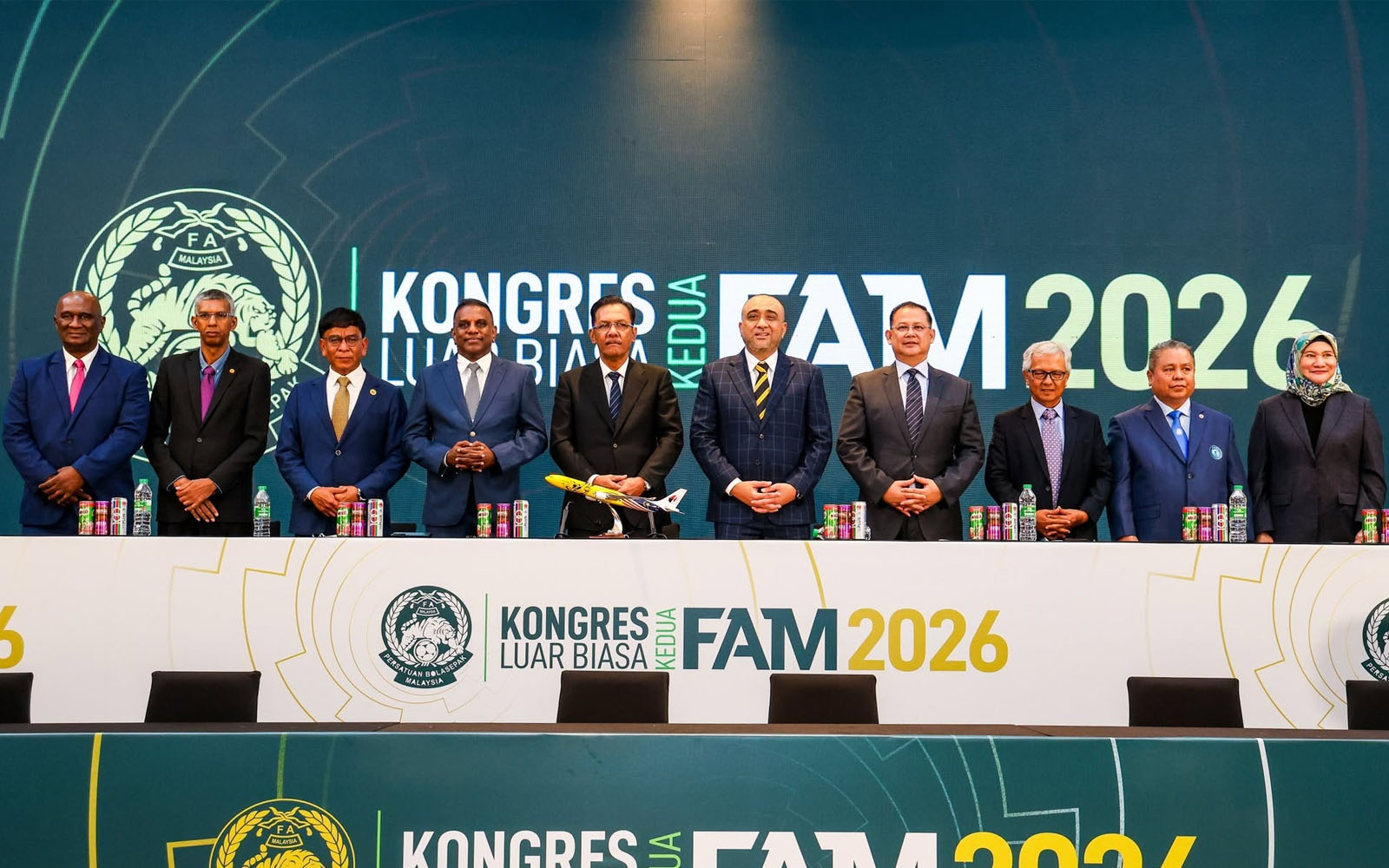
FAM's inaugural election under its new governance framework yielded an unexpected outcome: fresh leadership, but lingering doubts about whether its own rules would be adhered to. The crux of the issue goes beyond the composition of the electoral committee; it raises questions about the sustainability of FAM's recent reforms when faced with procedural inconveniences.
The Football Association of Malaysia (FAM) had been diligently working for months to recover from FIFA sanctions related to altered documentation involving seven players. During this period, FAM revamped its statutes, reduced its executive committee to 11 members, enhanced eligibility criteria, and increased involvement from the Asian Football Confederation (AFC). These steps were intended to restore trust in an association whose governance had been under intense scrutiny.
However, these efforts were tested during FAM's first real election. The association was aware prior to the congress on September 17 that there were concerns about the qualifications of the electoral committee chairman and deputy chairman. The requirement for legal qualifications was already documented. Despite having ample time to address this issue, FAM chose to bring it to the congress floor.
Windsor John, the AFC general secretary, informed delegates that the electoral committee did not meet the requirements set out in FAM's own statutes. He also cautioned that the election could be contested, possibly by the Court of Arbitration for Sport (CAS). Despite these concerns, delegates unanimously decided to proceed with the election. This decision raises serious questions about FAM's new governance culture and whether it is merely a superficial change or a genuine transformation.
FAM had multiple options at this juncture. It could have replaced the electoral committee or resolved the eligibility issue prior to the congress. Alternatively, FAM could have postponed the election, taking AFC's oversight into consideration. Instead, FAM opted to move forward, emphasizing that delegates cannot simply disregard their constitution, even when following it becomes inconvenient.
The fact that the requirement for electoral committee members to have legal qualifications was part of FAM's newly adopted statutory framework in June adds another layer of complexity. This provision was not inherited from a previous administration; it was an integral part of the governance overhaul that FAM itself had championed.
The episode warrants further scrutiny beyond the immediate dispute. A provision should be enforceable only after it has been identified as a breach, not merely because someone raises a concern. Moreover, relying on CAS for resolution is not a foolproof solution, as legal proceedings can be costly, and Malaysian clubs are already facing significant financial pressures.
Ultimately, the core issue is not the restructuring of FAM's statutes or the reduction of committee members; it is whether the new structure will influence decisions within the association when faced with constraints. The true test of governance reform lies in how these provisions affect the actions of those in charge, not just the number of clauses rewritten or the number of seats reduced.
FAM has already navigated through FIFA sanctions, an AFC governance review, the resignation of its previous executive committee, and a complete overhaul of its statutes. The first election under the new administration should have been a straightforward demonstration of discipline. However, the election process itself raised another governance question, highlighting the challenges FAM must now address.
This uncomfortable irony underscores the fact that the new administration must demonstrate that the revamp is more than just a structural change. A new president and a revised statute can bring about changes, but they cannot establish a different culture by themselves. The real challenge will be for FAM to show, when faced with difficult decisions in the future, that its standards apply equally to the association itself.
This is where the reform will transition from being a mere document to a practice, marking the true success of FAM's governance overhaul.
Written by urgent.news from Free Malaysia Today's reporting — not their text. Machine-written — may contain errors; check the original before relying on it.
Also reported by 1 other outlet
- FAM’s new era has an old governance problem freemalaysiatoday.com