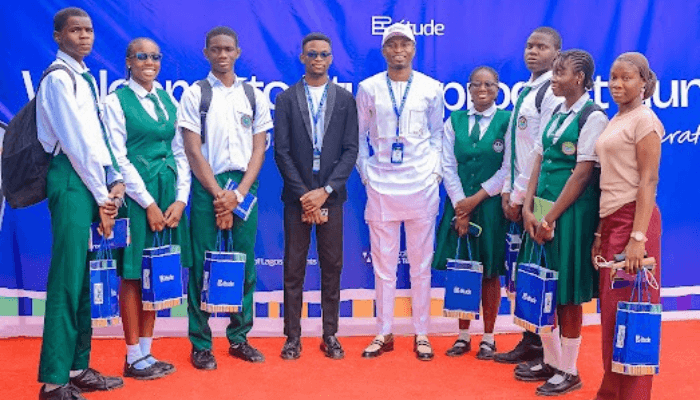
Africa’s tech, the journey from users to builders
Artificial intelligence is no longer waiting at Africa’s door. It is in classrooms, newsrooms, farms and clinics, answering students, helping inspect suspicious videos, delivering weather alerts and interpreting scans. The post Africa’s tech, the journey from users to builders appeared first on Ghana Business News .
Artificial intelligence is now present in various aspects of life across Africa, from education to healthcare to weather alerts. However, questions of power, trust and accountability arise as the technology enters societies without fully established rules and values. The question is no longer whether Africa will adopt AI, but whose knowledge these systems will carry, whose languages they understand, and whose interests they serve.
The International Monetary Fund estimates that improved adoption could increase regional GDP by 4% over the next decade, but the current productivity effect is only 0.2%. This highlights the potential for technology to both expand and widen existing inequalities. The World Bank notes that AI could boost productivity in 16.2% of jobs in low- and middle-income countries, but 4.5% of existing jobs may face automation risk.
Yet, many rural schools in sub-Saharan Africa lack reliable electricity and internet, making it difficult to realistically discuss an AI future. African innovators are actively building AI systems, but the overall infrastructure remains unequal. A 2025 study found that only 42 African languages are supported by large language models, while over 98% of the continent's 2,000 languages remain unsupported.
The mining industry also plays a crucial role, with the Democratic Republic of Congo supplying 73% of mined cobalt in 2025. The African Union's Green Minerals Strategy aims for value addition and industrialization, including transparent contracts, fair taxation, labor rights, community consent, environmental repair, and investment in African processing, manufacturing and computing capacity.
African leadership in AI must encompass culture, ethics, extractive justice, law, journalism, and public imagination. Dr Amani Abou-Zeid, former African Union Commissioner for Infrastructure and Energy, emphasized the importance of adapting AI to African realities. South African engineer Tshilidzi Marwala cautioned against blindly trusting AI and urged verification of its outputs.
To address these concerns, multidisciplinary groups have established AfroFrequency, a Pan-African movement bringing together various stakeholders to shape the conversation about African AI before products are built. AfroFrequency aims to turn conversation into cultural work, public-interest journalism, experiments, prototypes and policy influence.
By including artists and storytellers, AfroFrequency seeks to shape the future of AI in Africa, ensuring that technology begins with imagination and stories before code.
Written by urgent.news from Ghana Business News's reporting — not their text. Machine-written — may contain errors; check the original before relying on it.