The collapse of the AMOC would be catastrophic. How will we know when it’s coming?
Europe faces incredibly harsh winters and unrelenting droughts if the vital AMOC ocean current fails – but when disaster will strike and how bad it will be remains uncertain. Now there is an ambitious plan to give us a warning
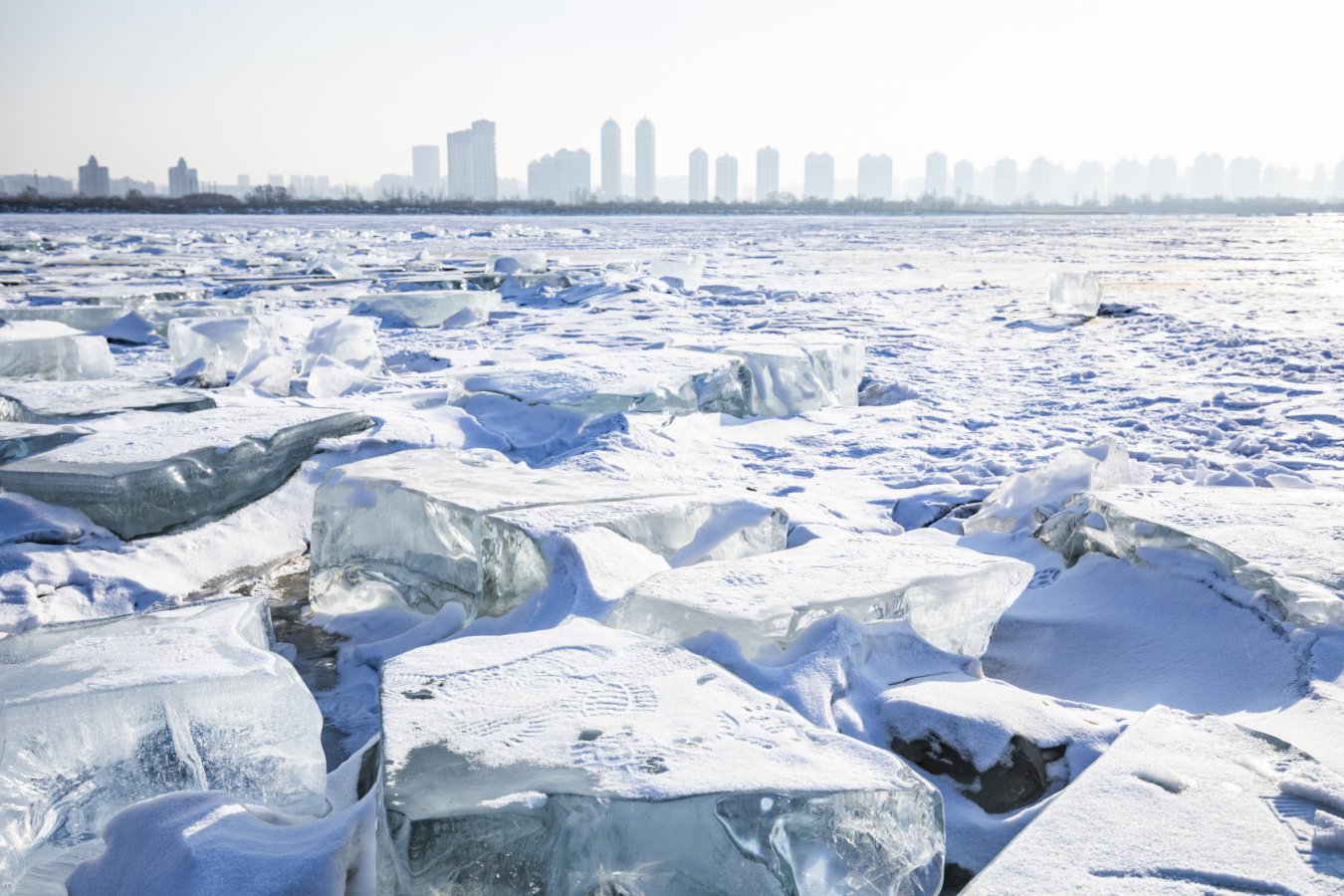
In July, a research vessel named the Sir David Attenborough was operating off the coast of southeast Greenland near the Sorgenfri glacier when an enormous iceberg, measuring a kilometer in length, broke away and tumbled into the fjord. Scientists onboard were captivated by the sight of roughly 18 million tonnes of ice fragments splintering and floating away.
While such iceberg calving is not unheard of, recent years have witnessed a notable increase in frequency as global temperatures rise. This acceleration of ice loss could have far-reaching consequences, potentially impacting the Atlantic Meridional Overturning Circulation (AMOC), a crucial network of ocean currents that sustains European and global climates.
If the AMOC were to collapse, Europe could face prolonged winters resembling an ice age, coupled with frequent droughts, rendering agriculture nearly impossible. Despite the uncertainty surrounding the likelihood, timing, and speed of an AMOC collapse, the threat remains largely unnoticed by policymakers. Consequently, an £81 million initiative is underway to establish an early warning system capable of detecting when the AMOC approaches a critical tipping point.
Data gathered by the Attenborough during its recent expedition forms a key component of this plan. Ocean scientist Paul Holland from the British Antarctic Survey (BAS) emphasized the potential for irreversible climate changes, even if we are unaware of having crossed key thresholds. With this in mind, concerns about the AMOC's stability and the implications for global weather patterns are warranted.
The AMOC is a colossal ocean current system that spans from North America to Europe, driven by temperature and salinity differences. Warm, salty water originating from the Gulf of Mexico near the equator flows northwards along the coast of Greenland and the UK, forming the Gulf Stream. As this water reaches the higher latitudes, it cools and becomes denser, sinking to the ocean floor and generating a deep-sea current that flows southwards.
This southward flow replenishes the northern waters with warm water, maintaining the circulation cycle. The AMOC operates as part of a larger, established conveyor belt of ocean currents that encompass the entire globe. It takes around 1000 years for a single cubic meter of water to traverse this entire belt.
Written by urgent.news from New Scientist's reporting — not their text. Machine-written — may contain errors; check the original before relying on it.