Tech leads shares higher in Asia as oil slips
SYDNEY: Share markets edged higher in Asia on Monday as AI’s insatiable demand for data buoyed chipmakers, and oil eased on reports more oil was finding its way out of the Middle East than previously thought despite the ongoing conflict in the Gulf. Trade was thin with Japan on its Silver Week holiday through to Wednesday, leaving the dollar easier at 156.67 yen with investors wary in case the…
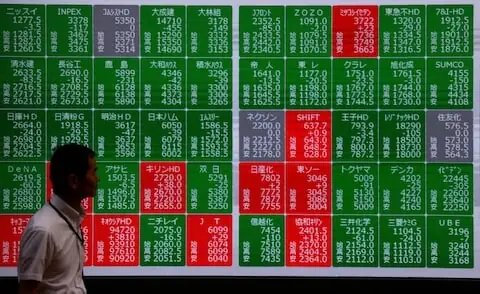
Share markets in Asia saw a slight rise on Monday, driven by the strong demand for data from artificial intelligence (AI) and the fact that more oil is being released from the Middle East than initially expected, despite the ongoing conflict in the Gulf. Trading was light as Japan observed its Silver Week holiday through to Wednesday, leading to a weaker dollar at 156.67 yen. Investors were cautious about the possibility of the Bank of Japan intervening to support its currency.
The Nikkei in Japan rose by 0.5% in futures trading, while South Korea's tech-heavy index climbed 1.5%. MSCI's Asia-Pacific index, excluding Japan, increased by 0.8%, and Chinese blue chips grew by 0.6%. The S&P 500 futures and Nasdaq futures both rose by 0.4% and 0.6%, respectively. In Europe, the EUROSTOXX 50 and DAX futures indexes also gained 0.4%, while FTSE futures increased by 0.2%.
Tension remained in bond markets after a sharp sell-off saw the yield on US 2-year bonds jump to 4.7604% in the past two weeks, the highest level since mid-2024. The Federal Reserve's hawkish stance last week raised speculation that interest rates could be raised again in October, with a move by year-end considered a certainty. Analysts at BofA predicted the Fed would only hike rates two more times, in October and December, given the strong growth in nominal consumer spending of 6.3% year-on-year, which is well above the 5% threshold associated with core inflation above target.
Oil prices dropped as Iran and the United States exchanged new threats, and the Houthis attacked Saudi Arabia's capital. Brent crude fell 2.1% to $101.63 per barrel, while US crude plummeted 2.1% to $98.15. Iran's exports had recovered to nearly 4 million barrels per day (bpd) in September, up from 2.4 million bpd in August, the lowest level since at least 2013.
US Central Command's Admiral Brad Cooper stated that the volume of crude oil, cargo, and liquefied natural gas had been higher than any point in the past six months. Reports also suggested that Saudi Arabia aimed to resume flows through its main east-to-west pipeline damaged in attacks last week, though specific details were unclear.
This could put pressure on the US to negotiate with Iran, at least to maintain the flow through the Strait of Hormuz and keep the Bab el-Mandeb passage open. US President Donald Trump will be attending the United Nations General Assembly this week, and he is set to meet Chinese President Xi Jinping on Thursday. US Treasury Secretary Scott Bessent and Chinese Vice Premier He Lifeng concluded talks in New York on Sunday, during which the US proposed a new AI safety notification mechanism for the leaders to consider during their summit.
In other commodity markets, gold's lack of interest-bearing income was not helping, with the price flat at $4,380 an ounce.
Written by urgent.news from Business Recorder's reporting — not their text. Machine-written — may contain errors; check the original before relying on it.
This story
This is one outlet's version. Read the fullest account.
- Tech leads shares higher in Asia as oil slips channelnewsasia.com