Oil hits over 1-week low on hopes of boost to diplomacy in Iran war
Oil prices slid to their lowest in more than a week on Monday on hopes that diplomacy in the Iran war will get a chance this week amid a UN meeting, and as investors eyed a partial recovery in shipments from Saudi Arabia despite ongoing attacks by Yemen's Houthis.
Oil prices plummeted to their lowest point in over a week on Monday, buoyed by optimism that diplomacy could ease tensions in the Iran war during a United Nations meeting. Brent crude futures and US West Texas Intermediate crude hit their lowest levels since September 10, with Brent settling at $101.71 a barrel, down $2.16, or 2.08%, from the previous session's close. US West Texas Intermediate crude dipped $2.15, or 2.14%, to $98.15 a barrel, following a 1.58% decline from the prior day.
Market analyst Tim Waterer of KCM Trade suggested that the decline in oil prices reflects a reduction in the risk premium investors are demanding, as hopes grow for a diplomatic solution to the US-Iran conflict. WTI crude even broke a critical psychological barrier, falling below the $100 mark, while some investors may have shifted their positions in the October contract ahead of its expiration, according to a Singapore-based brokerage.
Amid the volatile situation, Iran and the US traded fresh threats on Sunday, although President Donald Trump indicated he would consider meeting Iranian President Masoud Pezeshkian. Iran has outlined its demands to mediators seeking to resume negotiations aimed at ending the war with the US. Tensions in the Middle East remain high, as Yemen's Iran-backed Houthis launched attacks on sensitive sites in Saudi Arabia's capital, Riyadh, and an Aramco facility in Yanbu, a critical oil export hub.
In response, China urged Iran to help curb the Houthis' actions after Saudi Arabia appealed to Beijing for assistance following the attacks.
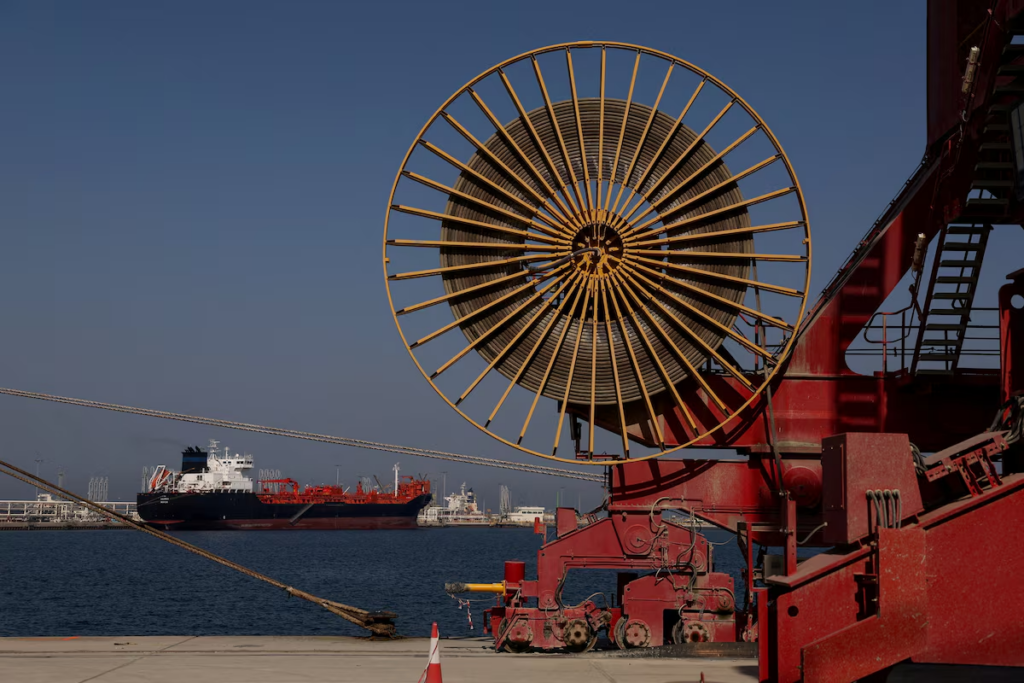
The Houthis' assault on Saudi Aramco's East-West pipeline prompted the state-owned oil company to resume exports through the Strait of Hormuz this month and next, after temporarily suspending shipments via Yanbu. This move enabled OPEC's top producer to recover exports to over 4 million barrels per day (bpd) in September, up from 2.4 million bpd in August, the lowest level in at least three years, according to provisional data from analytics firm Kpler.
JPMorgan analysts noted that Middle East oil flows remain robust despite the disruption, with total flows averaging 17.1 million bpd over the past 10 days, just 6.1 million bpd below the 2025 average. The most significant shift has come from Saudi Arabia, with satellite data indicating oil moving through the Strait of Hormuz averaged 2.9 million bpd over the past six days, a notable increase from just 700,000 bpd in August.
Written by urgent.news from MyJoyOnline Ghana's reporting — not their text. Machine-written — may contain errors; check the original before relying on it.